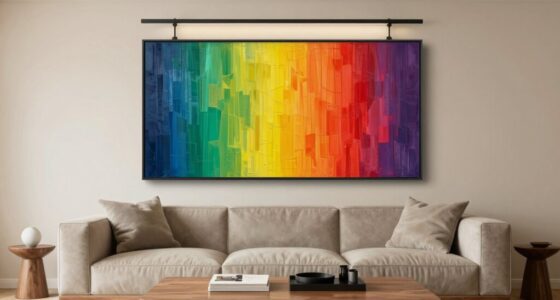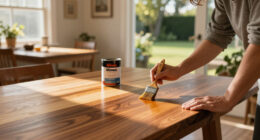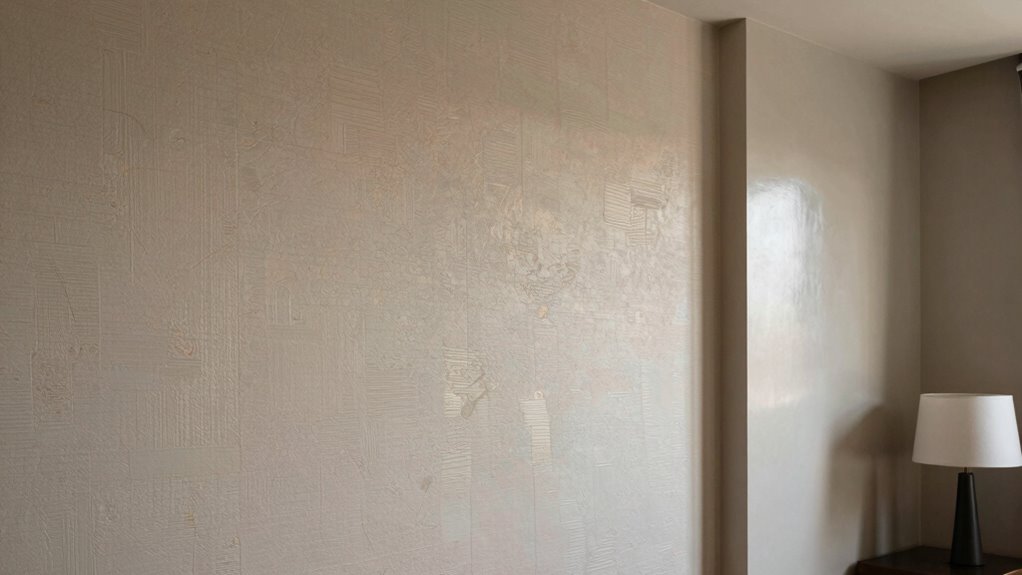

To brighten a low-light room, choose wall treatments that reflect light and add texture for visual interest. Light colors like whites, creams, or pastels help make the space feel more open, while textured finishes like shiplap or textured wallpaper add depth. Incorporate reflective surfaces such as metallic or high-gloss paints to bounce light around. Balancing darker tones with lighter accents also works well. Keep exploring for more ideas to make your space feel airy and inviting.

Get furniture and decor delivered free — and shop member deals
- Fast, free delivery on millions of items
- Access to Prime Big Deal Days deals on October 6–7
- Prime Video, Amazon Music and more included
Key Takeaways
- Opt for light-colored, reflective finishes like gloss or metallic paints to maximize light distribution.
- Incorporate textured wall treatments such as shiplap or textured wallpaper to add depth and bounce light.
- Use strategic lighting fixtures to enhance the effectiveness of wall treatments and brighten the space.
- Pair textured surfaces with light, neutral paint to create contrast and increase room brightness.
- Balance darker tones with lighter accents or reflective materials to prevent a gloomy atmosphere.
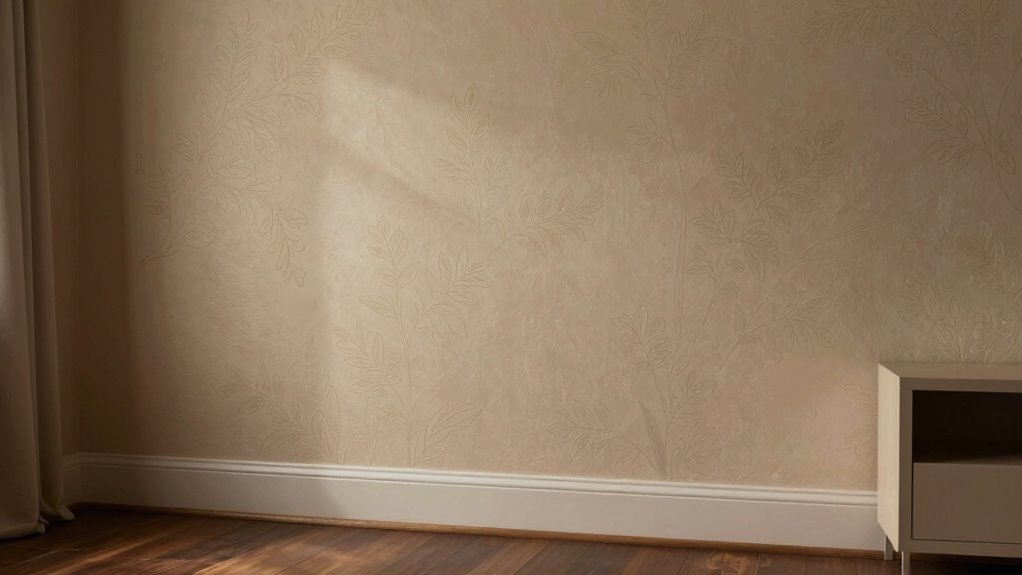
Have you ever wondered how to transform a plain wall into a stunning feature? In low-light rooms, this task can seem challenging, but with the right wall treatment, you can create a space that feels inviting and vibrant. The key is choosing the right texture options and color palettes to maximize the room’s potential despite limited natural light. Texture plays an essential role here—think about incorporating textured wall treatments like shiplap, textured wallpaper, or brick veneer. These add depth and visual interest, helping to bounce light around the room and prevent it from feeling flat or dull. Smooth, glossy finishes can reflect light effectively, making a wall seem brighter and more dynamic. Conversely, rougher textures absorb some light but can still work if paired with lighter, reflective colors. Incorporating reflective finishes can further enhance light distribution and amplify the effects of your chosen textures and colors. Additionally, selecting the right lighting fixtures can complement these treatments and further improve the room’s brightness. When designing for low-light spaces, it’s also beneficial to consider light-reflective materials that can maximize the available illumination. Using appropriate wall treatments can dramatically influence how light interacts within a space, creating a more welcoming atmosphere. Moreover, considering the room’s overall style can help you choose treatments that harmonize with your decor and purpose. Color palettes are equally important in low-light spaces. Bright, light hues such as soft whites, warm creams, or pastel shades can make a room feel more open and airy. These colors reflect the limited light that enters, giving the illusion of more brightness and space. Darker, rich colors like navy, deep green, or charcoal can add sophistication but require careful balancing. If you choose darker tones, consider incorporating accent walls with lighter shades or metallic accents to prevent the room from feeling enclosed or gloomy. When selecting a color palette, think about the overall vibe you want to create—warm neutrals can add coziness, while cooler tones can bring a serene, calming effect. Layering texture and color is essential for creating visual interest without relying on abundant light. For example, pairing a textured wallpaper with a light, neutral paint color on other walls can add dimension without overwhelming the space. You might also consider using light-colored wall panels or textured paints that reflect more light. If you want to add a touch of elegance, metallic or high-gloss paints on certain sections can help catch and reflect any incoming light, brightening the room naturally. Always keep the room’s overall purpose and style in mind; a cozy reading nook might benefit from warm, textured finishes, while a minimalistic office could look stunning with sleek, reflective surfaces and subtle color variations. Incorporating biodiversity-inspired design elements, like natural materials or plant-themed accents, can also enhance the room’s ambiance and connection to nature.
As an affiliate, we earn on qualifying purchases.
Frequently Asked Questions
Which Wall Treatments Are Best for Enhancing Natural Light?
To enhance natural light, choose wall color options like soft whites, light neutrals, or pastels that reflect more light. Incorporate reflective surface materials such as glossy paint, high-gloss finishes, or mirrors to amplify brightness. These choices bounce natural light around your space, making it feel brighter and more open. Pairing light colors with reflective surfaces maximizes the effect, transforming even low-light rooms into welcoming, luminous areas.
Can Dark Wall Treatments Make a Room Feel Brighter?
Dark wall treatments generally don’t make a room feel brighter because they absorb light. However, if you’re interested in color psychology and want to create a cozy, sophisticated vibe, deep hues can work with strategic lighting and lighter accents. Staying updated on wall treatment trends, like matte or textured finishes, helps you balance dark shades effectively. Remember, contrast and proper lighting are key to making a dark wall treatment feel inviting rather than gloomy.
Are There Specific Textures That Reflect More Light?
Ever wondered if certain textures can boost your room’s brightness? Yes, light enhancing textures like reflective surfaces, high-gloss finishes, or metallic accents bounce more light around, making your space feel more open. Smooth, shiny surfaces reflect natural and artificial light better than matte or textured finishes. Incorporate these reflective surfaces into your wall treatments to brighten low-light rooms effectively and create a lively, inviting atmosphere.
How Do Wall Treatments Affect Room Acoustics?
Wall treatments considerably impact your room’s acoustics by influencing sound absorption and acoustic enhancement. Textured or soft materials, like fabric panels or plush wall coverings, absorb sound, reducing echoes and improving clarity. Conversely, hard surfaces reflect sound, potentially causing unwanted noise. Choosing the right treatment helps you control sound quality, making your space more comfortable. So, consider your room’s acoustics when selecting wall treatments to optimize sound absorption and acoustic enhancement.
What Maintenance Is Required for Glossy Finishes?
Glossy finishes shine like a mirror, demanding regular care to keep their luster. Their durability means they resist scratches and stains, but you should wipe them gently with a damp cloth to remove dust and fingerprints. Maintenance tips include avoiding abrasive cleaners and using microfiber cloths. With proper care, your glossy walls stay stunning and reflective, turning your space into a sleek, sophisticated haven that sparkles with minimal effort.
textured wallpaper for low-light rooms
As an affiliate, we earn on qualifying purchases.
As an affiliate, we earn on qualifying purchases.
Conclusion
So, now that you know how to select the right wall treatment for your low-light room, aren’t you excited to transform your space? Remember, choosing the right colors, textures, and finishes can make a huge difference in brightening and energizing the room. Don’t settle for dull walls—embrace your creativity and make your space feel more inviting. After all, isn’t it worth creating a cozy, luminous retreat just for you?
As an affiliate, we earn on qualifying purchases.
As an affiliate, we earn on qualifying purchases.
Fall Picks
fall essentials
As an affiliate, we earn on qualifying purchases.