
TL;DR

Get furniture and decor delivered free with Prime
- Fast, free delivery on millions of items
- Prime Video, Amazon Music and more included
- Member-only deals all year
Students at Oslo Metropolitan University designed Gjenreis, a modular brick system that allows walls to be assembled, dismantled, and reconfigured without mortar. The project promotes circular construction and material reuse, highlighting innovative interior solutions.
Oslo Metropolitan University students have introduced Gjenreis, a modular brick wall system that can be assembled, disassembled, and reconfigured without mortar, emphasizing sustainable reuse of materials. The project was showcased at the Built by Design exhibition during 3daysofdesign, highlighting innovative approaches to circular construction and interior flexibility.
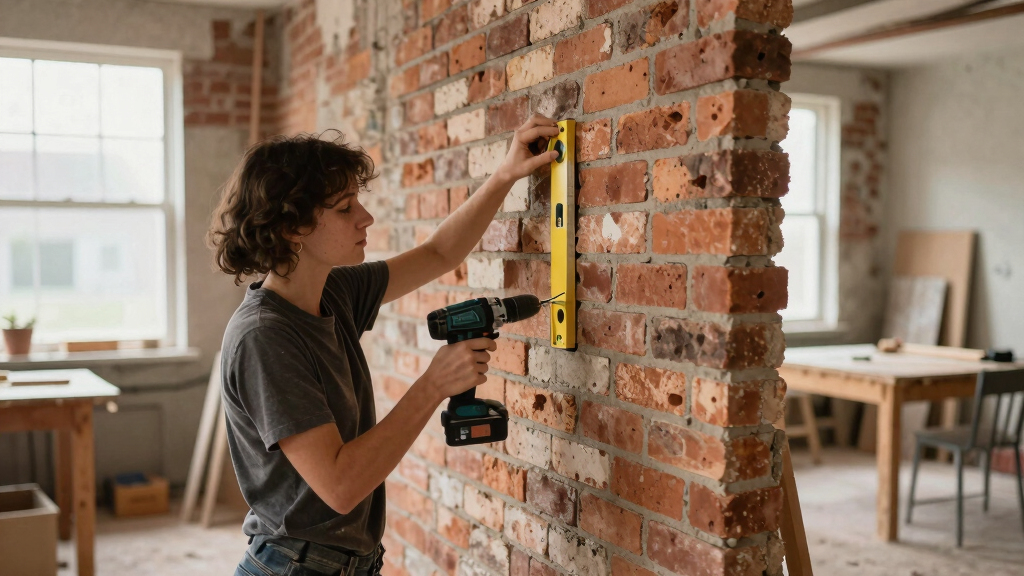
Gjenreis, developed as a bachelor project in product design, uses reclaimed bricks in a mortar-free assembly system designed for interior partitions in spaces such as restaurants, hotel lobbies, and open-plan offices. The system pairs weathered bricks with crafted wooden elements, creating a contrast that emphasizes the material’s history while supporting reusability. The modular design allows components to be stacked vertically or horizontally, enabling flexible spatial arrangements.
The project was part of the Built by Design exhibition, which features student work focused on material reuse and circular construction strategies. The design emphasizes sustainability by extending the lifespan of existing materials and reducing waste associated with traditional demolition and renovation practices.
Impact of Reusable Brick Walls on Sustainable Design
This development demonstrates a practical application of circular construction principles, allowing buildings to adapt over time without waste. The system offers a sustainable alternative to conventional demolition, reducing material consumption and promoting reuse of reclaimed bricks. Its flexibility makes it relevant for various interior environments seeking adaptable, eco-friendly solutions.
As an affiliate, we earn on qualifying purchases.
Background on Circular Construction and Material Reuse
The project emerges from a broader movement toward sustainable architecture, emphasizing reuse and reconfigurability. It builds on existing research and industry interest in modular systems that support circular economies. The design was developed during a course focused on critical reflection in design practice, in collaboration with industry partners, highlighting the importance of integrating sustainable materials into future construction methods.
“The Gjenreis system exemplifies how reclaimed materials can be integrated into flexible interior designs, reducing waste and extending material life.”
— an anonymous researcher
reclaimed brick interior partitions
As an affiliate, we earn on qualifying purchases.
As an affiliate, we earn on qualifying purchases.
Unanswered Questions About Long-Term Durability
It is not yet clear how the system performs over extended periods, particularly regarding the stability of mortar-free assembly under different environmental conditions. Further testing is needed to assess durability, safety, and compliance with building codes for permanent structures.
As an affiliate, we earn on qualifying purchases.
Next Steps for Testing and Adoption
Researchers plan to conduct long-term durability tests and seek regulatory approval for wider adoption. They also aim to collaborate with industry partners to develop commercial prototypes and explore integration into real-world projects, potentially influencing future interior construction standards.
As an affiliate, we earn on qualifying purchases.
Key Questions
Can the brick wall system support load-bearing structures?
Currently, the system is designed for interior partitions and is not intended to bear structural loads. Additional engineering would be required to adapt it for load-bearing applications.
What types of spaces are suitable for this modular system?
The system is ideal for environments requiring flexible interior layouts, such as restaurants, hotel lobbies, offices, and other commercial spaces that benefit from reconfigurable partitions.
Is the system compliant with building safety standards?
As a prototype, it has not yet undergone full safety certification. Further testing and development are needed before it can be considered for permanent or code-compliant installations.
How easy is it to assemble and disassemble the brick walls?
The modular design allows for straightforward assembly and disassembly without mortar, supporting quick reconfiguration by trained personnel.
Source: designboom
Halloween Picks
halloween
As an affiliate, we earn on qualifying purchases.