
To keep print and frame rotation easy, store prints flat in labeled, acid-free portfolios or archival boxes, placing tissue paper between them to prevent scratches. Store unused frames vertically on shelves or racks, wrapping them in soft materials for long-term safety. Use organized systems like labeled containers and display setups, such as picture ledges or clipboards, for quick swaps. With these tips, you’ll simplify changes and maintain your artwork’s quality. Keep exploring to learn more about seamless art organization.

Get furniture and decor delivered free — and shop member deals
- Fast, free delivery on millions of items
- Access to Prime Big Deal Days deals on October 6–7
- Prime Video, Amazon Music and more included
Key Takeaways
- Use labeled, acid-free portfolios or archival boxes for flat print storage to ensure easy access and organization.
- Store unused frames vertically on shelves, wrapped in bubble wrap or soft cloths for quick retrieval.
- Pre-arrange prints in display order and keep upcoming pieces nearby for seamless rotation.
- Utilize picture ledges, clipboards, or magnetic frames for fast, tool-free display changes.
- Maintain a clear, organized labeling system for storage containers and record display arrangements for efficient swaps.
If you love regularly changing your artwork or photos, organizing your prints and frames for easy rotation can make the process much simpler. The key is creating a system that allows you to switch out pieces quickly without damaging your prints or cluttering your space. Start by selecting appropriate framing materials—acid-free mats, protective sleeves, and sturdy frames—that preserve your prints and make swapping easier. Using uniform framing materials also gives your display arrangements a cohesive look, making it easier to swap pieces without needing to reframe each time.
Organize your prints and frames for easy, damage-free artwork rotation with uniform materials and clear labeling.
To keep things organized, consider storing your prints flat in large, labeled portfolios or archival boxes. Use acid-free tissue paper between prints to prevent scratches or creases. Label each storage container with its contents, so you can locate specific prints or photos without rummaging through everything. For frames that are not in use, store them vertically on shelves or in racks designed for frames, which prevents warping or damage. Wrap frames in bubble wrap or soft cloths for added protection, especially if you plan to store them long-term. Additionally, maintaining an organized storage system can help you quickly find and rotate your artwork when desired. Regularly checking your storage setup ensures that your organization remains effective and adaptable to changing needs.
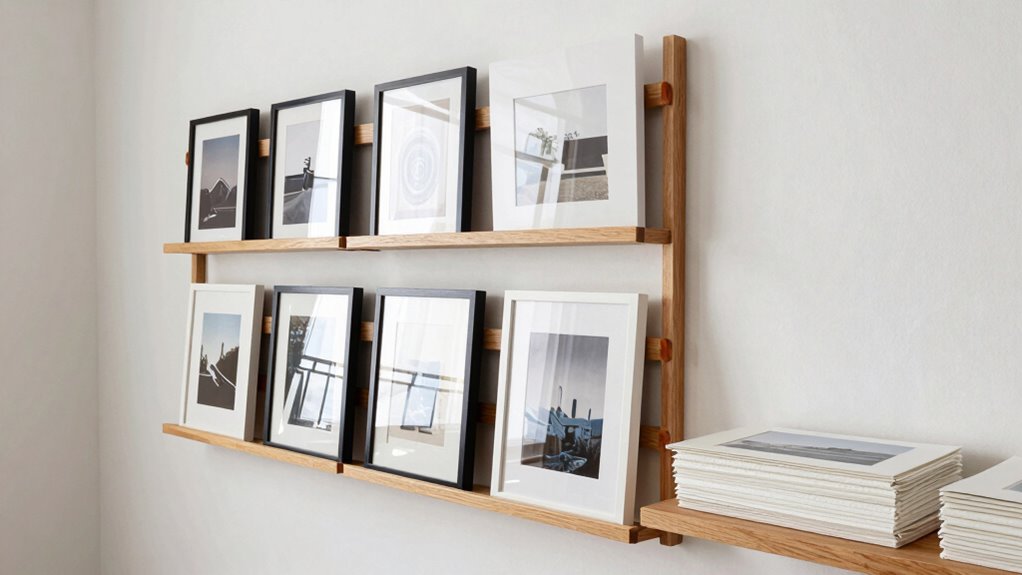
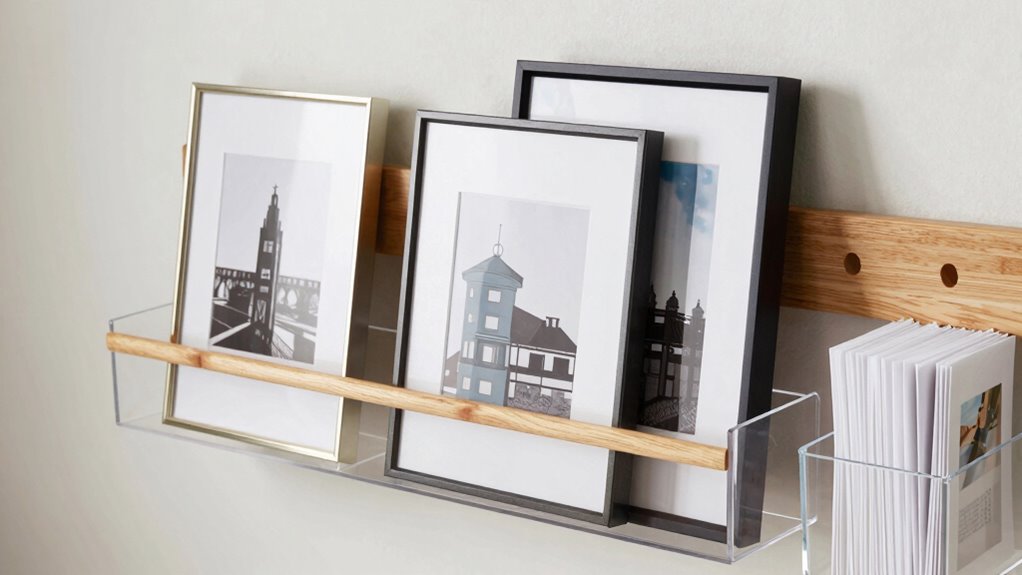
When it comes to display arrangements, think about how you want to rotate and showcase your artwork. Keep a dedicated space or wall where you can easily swap out prints, or use picture ledges that allow for quick changes without needing to remove the entire frame from the wall. This setup makes it simple to update your display without taking everything down. To streamline the process, pre-arrange your prints in the order you want to display them, then keep the next set nearby for quick access. If you prefer a more flexible approach, consider using clipboards, magnetic frames, or hanging systems that enable swift swaps without tools.
Incorporate your stored prints into your display arrangements by grouping similar themes or colors for a more curated look. When you want to change your decor, simply remove the current prints, grab the next set from your storage, and update your display. Regularly inspecting your stored prints for signs of damage or deterioration ensures they stay in pristine condition. This proactive approach minimizes surprises when you’re ready to rotate your artwork. Additionally, proper preservation techniques can extend the lifespan of your prints and protect your collection over time. Developing a dedicated labeling system for your storage containers can further simplify the process of finding and swapping artwork.
Ultimately, the secret to easy rotation lies in maintaining an organized storage system paired with versatile display arrangements. By investing in quality framing materials and keeping everything clearly labeled and accessible, you’ll find it effortless to keep your space fresh and your favorite prints front and center whenever you want.
acid-free art portfolios for prints
As an affiliate, we earn on qualifying purchases.
As an affiliate, we earn on qualifying purchases.
Frequently Asked Questions
What Materials Are Best for Storing Framed Prints Long-Term?
You should use archival quality materials like acid-free paper, tissue, and storage boxes to protect your framed prints long-term. Opt for sturdy storage furniture designed for artwork, such as flat files or specialized cabinets, to prevent damage. These materials help prevent deterioration from light, dust, and pollutants, ensuring your prints stay in excellent condition. Proper storage with the right materials makes rotation easier and maintains the longevity of your artwork.
How Do I Prevent Frames From Fading Over Time?
To prevent your frames from fading over time, make certain to use UV protection glass or acrylic, which filters harmful rays. Store prints in acid-free materials to avoid discoloration and deterioration. Keep your frames out of direct sunlight, and consider rotating your artwork periodically to minimize exposure. Regularly inspecting and maintaining your frames guarantees they stay vibrant and preserved, protecting your artwork for years to come.
What Is the Optimal Humidity Level for Storing Prints?
Think of your prints as delicate blooms needing just the right climate to flourish. Keep humidity levels around 40-50% to prevent damage, like cracking or warping. Effective climate control acts as a guardian, warding off degradation. Maintaining this balance ensures your artwork remains vibrant, resisting the silent march of time. Proper storage with ideal humidity safeguards your prints, allowing them to tell their stories for years to come without fading or deterioration.
Should I Store Prints Vertically or Horizontally?
You should store prints vertically, as this provides better frame protection and reduces the risk of warping or bending. Vertical storage makes it easier to access and rotate your prints without damaging them. If you want display alternatives, consider using flat storage or stacking them with interleaving sheets to prevent scratches. This way, your prints stay in good condition, and rotation remains simple and safe.
How Often Should I Rotate My Art Collection?
You should rotate your art collection every few months—think of it as breathing new life into your space! By mixing up framing techniques and display arrangements, you keep your walls fresh and exciting. Regular rotation prevents artwork from fading or getting damaged, ensuring your collection stays vibrant and enthralling. Plus, it keeps guests guessing which masterpiece you’ll reveal next, making your home a dynamic, ever-changing gallery!
archival storage boxes for artwork
As an affiliate, we earn on qualifying purchases.
As an affiliate, we earn on qualifying purchases.
Conclusion
By organizing your prints and frames thoughtfully, you create a colorful gallery that’s as easy to change as flipping through pages. Picture your collection as a vibrant garden, each piece a blooming flower waiting for its turn in the spotlight. With simple storage solutions, you’ll effortlessly rotate your artwork, keeping your space fresh and inspiring. When everything’s neatly stored, your art can dance freely, transforming your home into a dynamic, living masterpiece.
frame storage racks for pictures
As an affiliate, we earn on qualifying purchases.
As an affiliate, we earn on qualifying purchases.
As an affiliate, we earn on qualifying purchases.
Halloween Picks
halloween
As an affiliate, we earn on qualifying purchases.