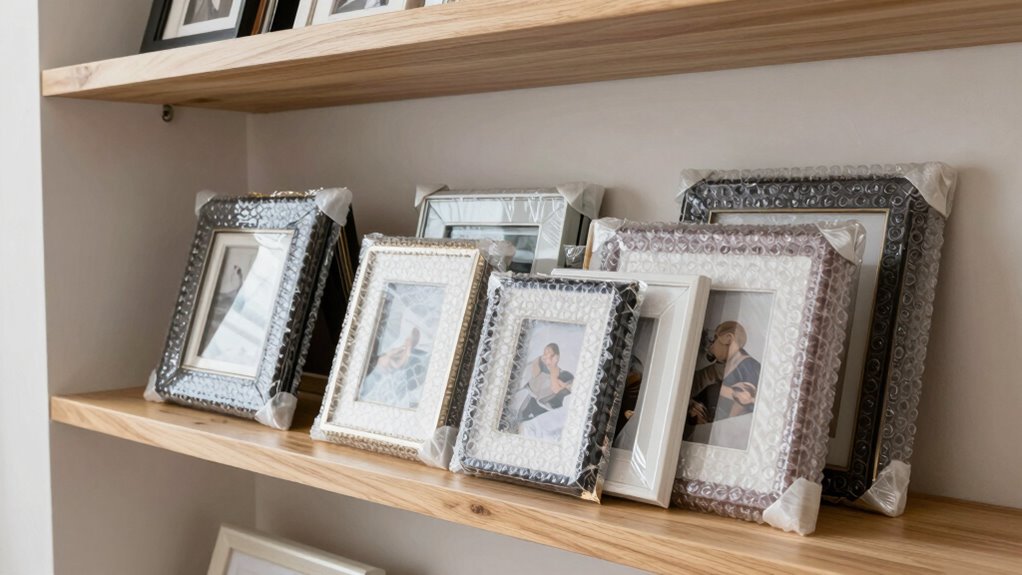

To store extra frames safely, wrap each one with acid-free tissue or bubble wrap, especially around corners and glass edges. Keep them upright, using spacers like foam or felt pads between frames to prevent pressure and warping. Store in sturdy, padded boxes or racks in a climate-controlled area, avoiding extreme temperatures and sunlight. Proper labeling and careful handling help preserve their condition and value. Continue exploring to discover even more tips on safeguarding your frames effectively.
Key Takeaways
- Wrap each frame with acid-free tissue or bubble wrap, focusing on corners and glass edges for protection.
- Use soft spacers like foam or felt pads between stacked frames to prevent contact and pressure.
- Store frames upright in sturdy racks or boxes designed for artwork, avoiding stacking without padding.
- Label storage containers clearly and handle frames by the sides to prevent damage to corners and glass.
- Keep frames in a climate-controlled environment, away from extreme heat, cold, humidity, and direct sunlight.
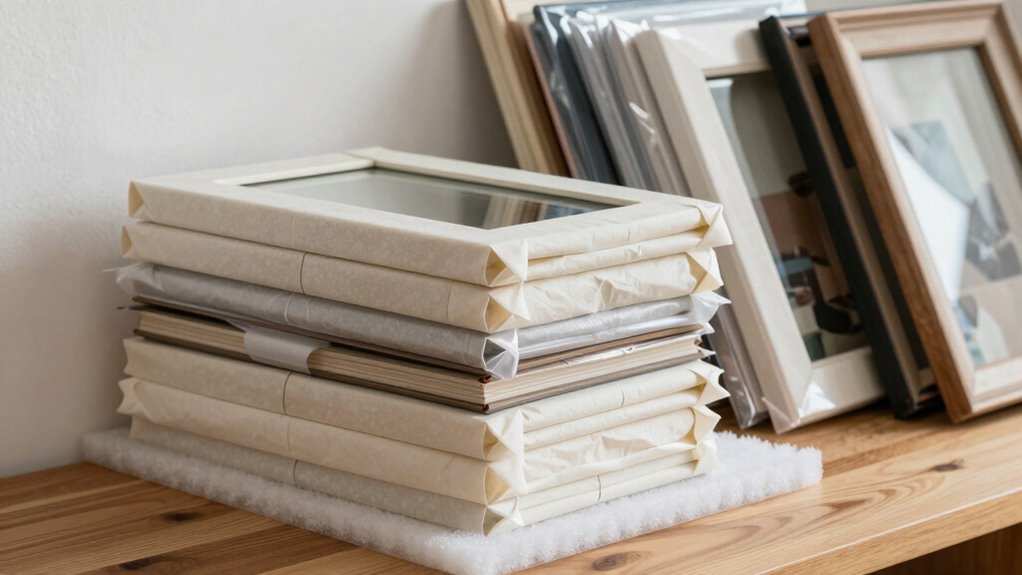
Storing extra frames safely is vital to prevent damage to their corners and glass. When you’re dealing with multiple frames, especially if they’re valuable or delicate, proper storage becomes fundamental. Choosing the right framing materials and employing effective storage techniques can make all the difference in preserving their condition over time. You want to avoid scratches, chips, and warping, so understanding how to handle and store these items correctly is key.
First, consider the framing materials used in your frames. Frames made of wood, metal, or plastic each have specific needs. Wooden frames are prone to warping and should be stored in a dry, cool environment, away from direct sunlight. Metal frames, on the other hand, are more durable but can develop rust if exposed to moisture. Plastic frames are usually the easiest to store, but they can become brittle over time if exposed to extreme temperatures. Knowing the materials helps you choose the most suitable storage approach and protects your investment.
When it comes to storage techniques, your goal is to keep frames upright and separated while preventing pressure on the glass and corners. Start by wrapping each frame with acid-free tissue paper or bubble wrap, especially around the corners and glass edges. This creates a protective barrier that cushions against accidental bumps and prevents scratches. If you’re stacking multiple frames, place a soft spacer—like foam or felt pads—between them to avoid direct contact. This prevents glass from rubbing against the frame or other glass surfaces, reducing the risk of cracks or chips. Additionally, appropriate storage solutions can help optimize space and further protect your frames from accidental damage. Using storage racks or boxes designed specifically for artwork can further support and safeguard your frames during long-term storage.
Use sturdy, flat storage boxes or racks designed specifically for artwork or picture frames. These containers should have enough padding and support to keep the frames stable and upright. Avoid stacking frames directly on top of each other without proper padding, as the weight can cause warping or damage over time. Also, store frames in a climate-controlled environment, avoiding areas prone to extreme temperature fluctuations, high humidity, or direct sunlight. This guarantees the framing materials do not expand, contract, or deteriorate prematurely. proper storage practices can help prevent the buildup of dust and dirt that may accumulate over time.
Label your storage containers clearly, so you can easily find the frames you need without unnecessary handling. When retrieving a frame, lift it carefully from the sides rather than by the corners or glass, which can be fragile. By following these storage techniques and selecting appropriate framing materials, you help guarantee your extra frames stay pristine, with their corners and glass intact for years to come. Proper storage isn’t just about keeping things safe; it’s about preserving their beauty and value for future use or display.
acid-free tissue paper for framing
As an affiliate, we earn on qualifying purchases.
As an affiliate, we earn on qualifying purchases.
Frequently Asked Questions
How Long Can I Safely Store Frames Before Damage Occurs?
You can safely store frames for up to two years if you use proper frame padding and label storage. Make sure you keep them in a cool, dry place away from direct sunlight to prevent damage. Use acid-free materials for padding and clearly label each frame to avoid unnecessary handling. Regularly check on your stored frames, and if you notice any damage or deterioration, address it promptly to preserve their condition.
What Types of Storage Containers Are Best for Fragile Frames?
For fragile frames, foam-filled, sturdy storage containers work best. You should prioritize proper protection with plenty of padding, like bubble wrap or soft cloth, to prevent pressure points. Use frame padding to cushion corners and glass, and wrap each frame carefully with protective wrapping before placing it in the container. This combination keeps your frames safe from shocks, scratches, and breakage, ensuring they stay pristine for years.
Can I Store Frames Outdoors or in Humid Environments?
You shouldn’t store frames outdoors or in humid environments, as moisture can damage the glass, wood, and delicate corners. If outdoor storage is unavoidable, use waterproof, airtight containers and keep the frames elevated off the ground. In humid environments, add silica gel packets to control moisture. Always guarantee the storage area is dry, cool, and protected from direct sunlight to prevent warping, mold, or other damage to your frames.
How Do I Prevent Mold or Mildew on Stored Frames?
Imagine a gentle rain washing away worries—this is how mold prevention works for your frames. To keep mildew growth at bay, guarantee your storage area is cool, dry, and well-ventilated. Use silica gel packets or moisture absorbers inside the storage container to control humidity. Regularly check your frames, and if you spot any signs of mold or mildew growth, clean them immediately with a soft cloth and mild solution.
Is It Better to Disassemble Frames for Storage or Keep Them Intact?
It’s better to keep your frames intact for storage. Disassembling can risk damaging corners or glass, especially if not done carefully. Use frame padding to protect edges and corners, and store them vertically, leaning against a wall or using wall mounting hooks to prevent warping. This approach keeps your frames safe, preserves their integrity, and makes re-hanging easier without the hassle of reassembling each time.
artwork storage boxes with padding
As an affiliate, we earn on qualifying purchases.
As an affiliate, we earn on qualifying purchases.
Conclusion
Storing extra frames carefully guarantees they stay pristine and ready for display when you need them. Use sturdy materials and proper padding to protect corners and glass from damage. Remember, a cautious approach now saves you from costly repairs later—an ounce of prevention is worth a pound of cure. By treating your frames with care, you’ll keep your cherished memories safe and beautiful for years to come.
As an affiliate, we earn on qualifying purchases.
As an affiliate, we earn on qualifying purchases.