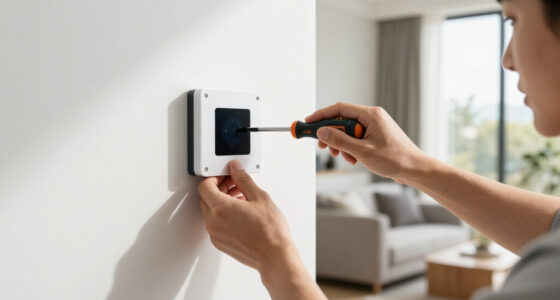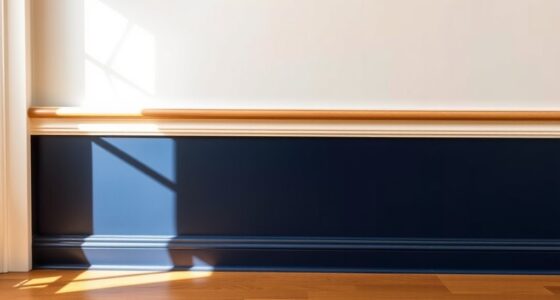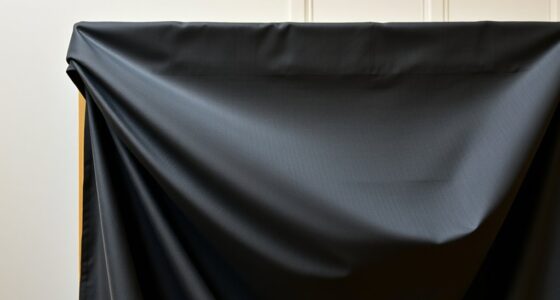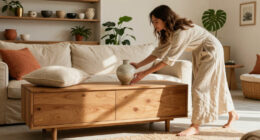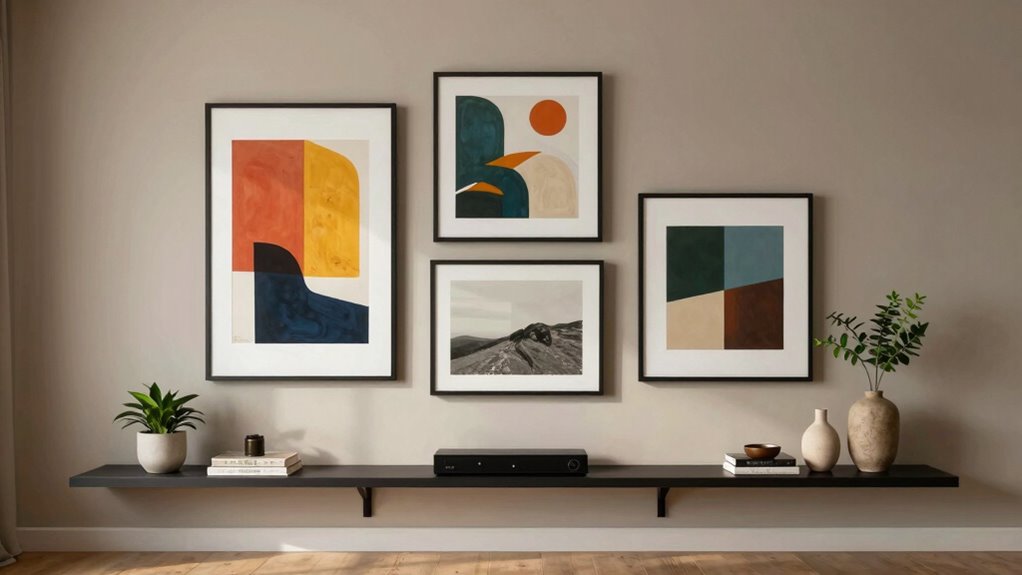
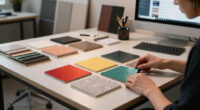
To keep your media wall from looking too tech-heavy, opt for neutral colors like warm beiges and soft grays to create a calming backdrop. Incorporate textured materials such as wood or fabric to add warmth and softness, balancing sleek surfaces with cozy elements. Use contrast through finishes and textures carefully, avoiding clutter and overwhelming details. Keep the design simple, harmonious, and thoughtfully coordinated. If you want to learn more about creating a stylish, inviting space, there’s plenty more to discover.

Get furniture and decor delivered free — and shop member deals
- Fast, free delivery on millions of items
- Access to Prime Big Deal Days deals on October 6–7
- Prime Video, Amazon Music and more included
Key Takeaways
- Use neutral, muted colors and incorporate pops of color sparingly to create a calming, balanced backdrop.
- Integrate warm, textured materials like wood or fabric to soften the high-tech appearance.
- Balance smooth and textured finishes to add visual and tactile warmth to the media wall.
- Keep the design simple with clean lines and avoid clutter to maintain an inviting atmosphere.
- Ensure the media wall complements the overall interior style, blending seamlessly with the room’s decor.
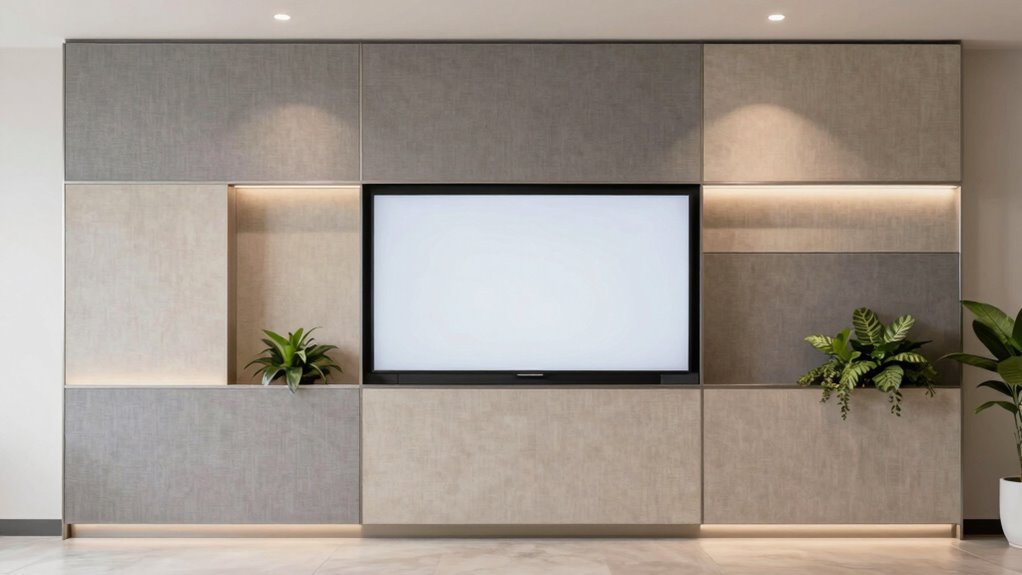
Media walls can be striking focal points in any space, but without careful design, they risk looking overly technical and cold. To prevent this, you need to pay close attention to how you approach color balance and material selection. The right choices will soften the overall look, making your media wall feel inviting rather than intimidating. Start by considering the color palette. Bright, stark colors often emphasize a futuristic, tech-heavy vibe that can feel overwhelming. Instead, opt for neutral tones—warm beiges, soft grays, or muted earth shades—that create a calming backdrop. These hues help the media wall blend seamlessly with the rest of your room, reducing visual clutter and preventing it from dominating the space. If you want to add pops of color, do so sparingly with accessories or accent pieces, rather than on the wall itself. This subtle approach maintains visual interest without overpowering the room. Incorporating material diversity can further enhance the visual appeal and comfort of your media wall. Material selection plays an equally essential role in achieving a balanced aesthetic. Instead of choosing cool, industrial materials like glass or metal exclusively, incorporate warmer, textured materials that add depth and softness. For example, wood veneer or matte-finished panels can break up the sleek, high-tech look and introduce a tactile element that feels inviting. Combining different materials—such as a wood frame around a sleek, matte screen—can create contrast that’s visually appealing and less sterile. You might also consider fabric wall coverings or acoustic panels that not only serve a functional purpose but also introduce a cozy, textured element. Using material contrast thoughtfully can help prevent the media wall from looking overly clinical. Paying attention to the balance of textures and finishes ensures that your media wall complements your overall interior style. When selecting materials, aim for a mix of smooth and textured surfaces, balancing modernity with comfort. This approach helps your media wall feel integrated into the room’s overall design, rather than standing out as a stark, technical feature. Ultimately, achieving a balanced media wall requires thoughtful coordination of color and materials. By choosing a harmonious color palette and mixing textures and finishes, you create a space that feels modern yet warm, sleek yet welcoming. Keep in mind that simplicity often works best—avoid cluttered designs and instead focus on clean lines and well-considered material choices. When done right, your media wall becomes a stylish centerpiece that enhances your space without making it feel overly tech-heavy. It becomes part of your home’s personality, inviting you to enjoy your media system without feeling overwhelmed by its presence.
As an affiliate, we earn on qualifying purchases.
Frequently Asked Questions
What Are Some Budget-Friendly Ways to Enhance Media Wall Aesthetics?
You can boost your media wall’s look without breaking the bank by experimenting with color schemes and texture options. Choose warm, inviting colors or bold accents to add visual interest. Incorporate textured materials like fabric panels, wood finishes, or decorative tiles to break up the tech-heavy vibe. These simple updates will make your media wall more stylish and inviting, all while staying budget-friendly and easy to implement.
How Can Lighting Improve the Appearance of a Tech-Heavy Media Wall?
Lighting can dramatically improve your media wall’s appearance by adding warmth and dimension. Use ambient lighting to create a soft, overall glow that reduces the tech-heavy look. Incorporate accent illumination, like LED strips or spotlights, to highlight specific features or textures. This combination balances the high-tech elements, making your media wall feel inviting and stylish rather than overwhelming or cold.
What Materials Can Soften the Modern, Tech-Heavy Look?
If you’re worried about your media wall feeling too sterile, adding textured finishes and natural elements can make a big difference. Use materials like wood panels, fabric-covered surfaces, or stone accents to soften the look. These elements bring warmth and visual interest, balancing the sleek tech components. You’ll create a more inviting space that feels modern yet cozy, making your media wall a stylish focal point rather than a cold, tech-heavy feature.
How Do Scale and Proportion Affect Media Wall Design?
Scale and proportion are key to creating a balanced media wall that feels harmonious. You should match the size of your media elements to your wall and furniture, guaranteeing they don’t overpower the space. Maintaining scale balance prevents cluttered looks, while proportion harmony ensures visual flow. Adjusting these aspects helps your media wall integrate seamlessly, making it a cohesive focal point rather than an overwhelming tech-heavy feature.
Can Artwork or Decor Be Integrated Into a Media Wall Effectively?
You can effectively integrate artwork or decor into a media wall by balancing the decor with the technology. Choose artwork that complements the wall’s style and size, avoiding clutter. Use decor to add warmth and personality, but keep it proportional so it doesn’t overpower the media components. This artwork integration creates visual interest, while decor balance guarantees your media wall remains functional and visually appealing without feeling too tech-heavy.
As an affiliate, we earn on qualifying purchases.
Conclusion
To keep your media wall inviting, balance sleek tech elements with cozy decor, avoiding a cold, overly modern look. Remember, a well-designed media wall can boost your home’s value—studies show that homes with thoughtfully integrated tech features sell 10% faster. So, blend functionality with warmth, adding personal touches like artwork or greenery. This way, your media wall becomes a stunning centerpiece that’s both high-tech and welcoming, enhancing your space without overwhelming it.
fabric wall coverings for media wall
As an affiliate, we earn on qualifying purchases.
As an affiliate, we earn on qualifying purchases.
As an affiliate, we earn on qualifying purchases.
Fall Picks
fall essentials
As an affiliate, we earn on qualifying purchases.