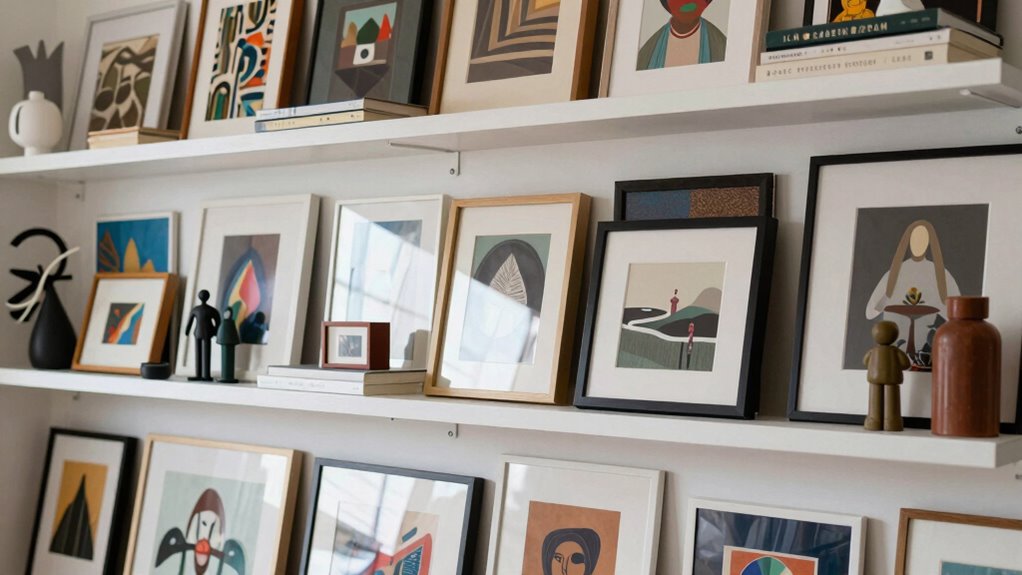
The main reason floating shelves around art look messy is poor arrangement and spacing. When you place items without considering size, color, and how much space they take up, everything can seem crowded or chaotic. Mixing too many items or clashing colors also adds to the disorder. Properly arranging your shelves with attention to balance, spacing, and coordination makes a big difference. Stick around to discover how small details can transform your display into a polished look.

Get furniture and decor delivered free — and shop member deals
- Fast, free delivery on millions of items
- Access to Prime Big Deal Days deals on October 6–7
- Prime Video, Amazon Music and more included
Key Takeaways
- Poor item arrangement and overcrowding disrupt visual balance and create a cluttered appearance.
- Lack of cohesive color coordination among decorations causes visual chaos.
- Insufficient or inconsistent shelf spacing makes displays look disorganized.
- Failing to consider scale and proportion results in an unpolished, messy look.
- Ignoring visual hierarchy and balance diminishes the overall harmony of the display.
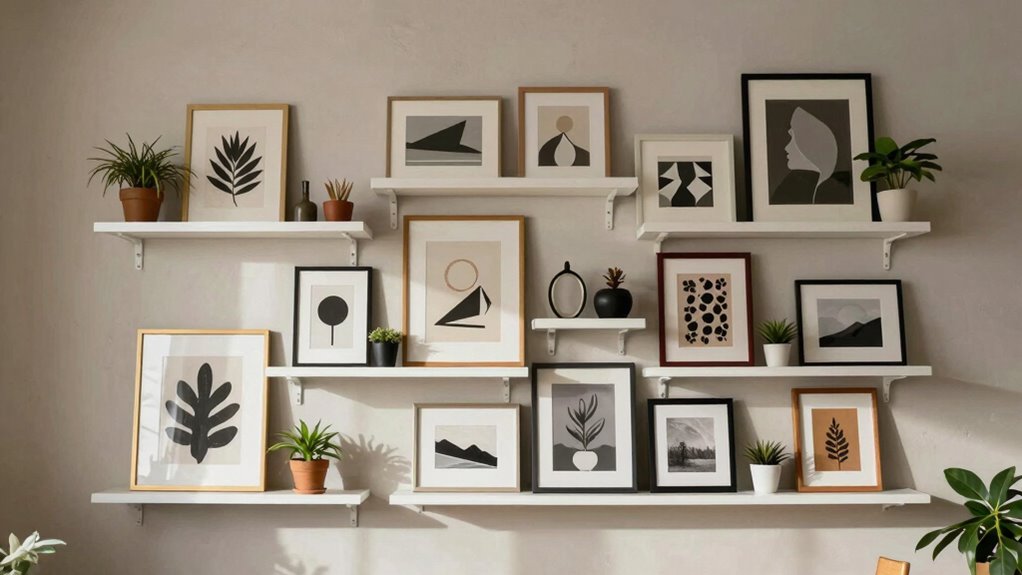
Floating shelves can often look messy when art and decorative items are haphazardly arranged or too crowded. The main issue isn’t necessarily the shelves themselves but how you choose and position the items on them. When you add multiple pieces without considering color coordination or shelf spacing, chaos naturally ensues. These small details have a big impact on the overall look, making your display appear cluttered rather than curated.
Color coordination plays a fundamental role in creating a harmonious and intentional display. If your art and decorative items clash in hue or pattern, the result is visually jarring. You might think mixing colors adds interest, but without a clear palette or balance, it just looks disorganized. To avoid this, select colors that complement each other or stick to a specific theme. For example, pairing neutral tones with a few pops of bold color can keep the display lively but cohesive. When your items follow a consistent color scheme, your shelves look intentional and polished instead of chaotic.
Consistent color schemes create polished, intentional floating shelf displays, avoiding chaos and enhancing visual harmony.
Shelf spacing is another key factor that impacts the overall aesthetic. If your decorations are crammed together or placed too close to the edges, it creates a crowded, unbalanced appearance. Conversely, leaving too much empty space can make the display feel incomplete. The ideal approach is to leave enough room between items so each piece has its own space to breathe. This doesn’t mean you need perfect symmetry, but maintaining a sense of rhythm and proportion is essential. For example, if you have a large piece of art, position smaller decorative items at a respectful distance to prevent overwhelming the shelf. Proper shelf spacing helps your display look organized and allows each piece to stand out. Additionally, understanding visual balance can help you arrange items more effectively, ensuring a pleasing composition. Paying attention to visual hierarchy can also guide you in creating a more cohesive and aesthetically pleasing display, making your art stand out beautifully. Moreover, considering proportional placement can enhance the overall harmony of your arrangement. Achieving this balance can be simplified by paying attention to scale and proportion, which are crucial for a polished look. Incorporating spatial awareness into your design process can further refine the arrangement, ensuring each element complements the others seamlessly.
As an affiliate, we earn on qualifying purchases.
Frequently Asked Questions
How Can I Prevent Floating Shelves From Sagging Under Weight?
To prevent floating shelves from sagging under weight, you should focus on proper weight distribution and shelf reinforcement. Distribute your items evenly across the shelf to avoid excess stress on one spot. Additionally, consider adding brackets or reinforcements beneath the shelf for extra support. Using high-quality, sturdy materials also helps. Regularly check the brackets and wall anchors to guarantee they remain secure, maintaining the shelf’s integrity over time.
What Are the Best Materials for Floating Shelves to Display Art?
For displaying art, choose floating shelves made from materials offering durability and aesthetic options like solid wood or metal. Solid wood provides strength and a natural look that complements various art styles, while metal shelves add a modern touch and sturdy support. Avoid weaker materials like particleboard, which can sag or break under weight. Selecting high-quality materials guarantees your shelves stay secure and enhance your art display beautifully.
How Do I Choose the Right Size of Shelves for My Artwork?
To choose the right size of shelves for your artwork, consider shelf positioning and artwork spacing. You want shelves that complement your pieces without overwhelming them. Measure your artwork’s dimensions, then select shelves that are slightly wider for balanced display. Proper spacing between artworks guarantees a clean, organized look. Larger shelves accommodate bigger pieces, while smaller shelves work for smaller art, creating a harmonious and visually appealing arrangement.
Can Floating Shelves Be Installed on Uneven or Textured Walls?
Sure, floating shelves can be installed on uneven or textured walls, but it’s like trying to balance a book on a wobbly table—expect some texture mismatch and uneven mounting. You’ll need longer anchors and a level to compensate for irregularities. While it’s doable, be prepared for a slightly rocky ride, and consider wall repairs or shims for a smoother, more polished look.
What Are Some Creative Ways to Arrange Art on Floating Shelves?
You can get creative with art on floating shelves by mixing display lighting and color coordination. Use small LED lights to highlight key pieces and create visual interest. Arrange artwork in a cohesive color palette to make the display feel intentional, not cluttered. Vary the heights and sizes of the art, and incorporate decorative objects to add depth. These strategies make your shelves look curated and stylish, avoiding messiness.
As an affiliate, we earn on qualifying purchases.
Conclusion
So, next time your floating shelves seem cluttered around your art, ask yourself—are you giving each piece enough space to breathe? Sometimes, less truly is more. By simply stepping back and reassessing your arrangement, you’ll find a way to showcase your art beautifully without the mess. After all, isn’t your space meant to highlight your creativity, not hide it? Embrace simplicity, and let your art shine effortlessly.
adjustable floating shelf brackets
As an affiliate, we earn on qualifying purchases.
As an affiliate, we earn on qualifying purchases.
color-coordinated wall art shelves
As an affiliate, we earn on qualifying purchases.
As an affiliate, we earn on qualifying purchases.
Fall Picks
fall essentials
As an affiliate, we earn on qualifying purchases.