
To smartly mix smooth and textured wall finishes, start by choosing a cohesive color palette to create harmony. Use textured finishes selectively as feature walls to add depth and visual interest without overwhelming the space. Balance larger, bold textures with smoother surfaces for contrast, and enhance your design with strategic lighting to highlight textures and colors. By combining these techniques thoughtfully, you can transform any room into a stylish, dynamic space—if you explore more, you’ll discover even more expert tips.

Get furniture and decor delivered free with Prime
- Fast, free delivery on millions of items
- Prime Video, Amazon Music and more included
- Member-only deals all year
Key Takeaways
- Use textured walls as accent features to create focal points without overwhelming the space.
- Maintain a cohesive color palette to unify smooth and textured finishes visually.
- Vary texture scale based on room size for balanced visual interest and proportion.
- Highlight textured surfaces with strategic lighting to enhance depth and tactile appeal.
- Incorporate eco-friendly materials to achieve stylish, sustainable wall finishes.

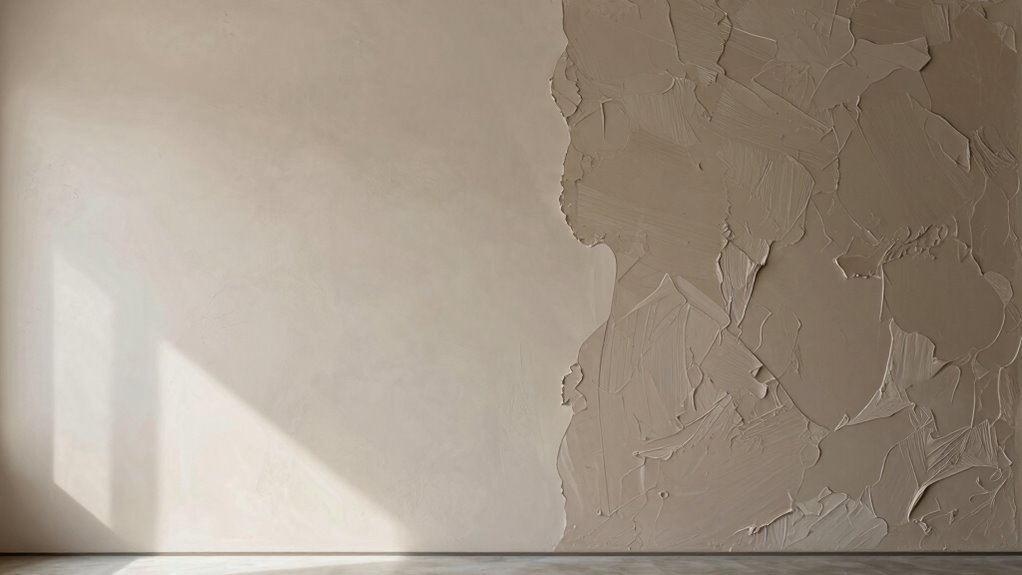
Mixing wall finishes can transform a space, but doing so wisely guarantees a cohesive and stylish look. When you combine smooth and textured walls, you create visual interest that draws the eye and adds depth to your rooms. The key lies in understanding how to balance these finishes through effective decorative techniques and color coordination. If you approach this thoughtfully, you’ll avoid a chaotic or disjointed appearance and instead craft a harmonious environment that feels both dynamic and intentional.
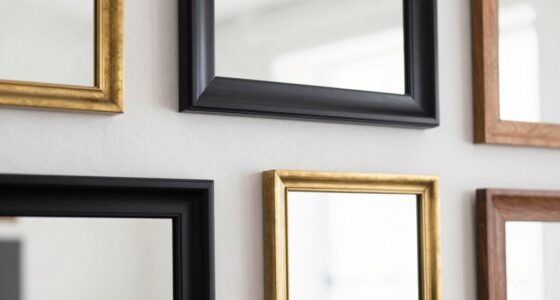
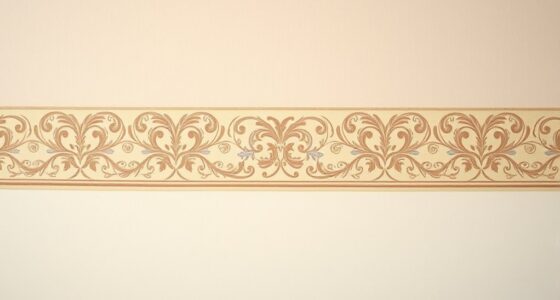
Start by considering the role of decorative techniques. Textured finishes, like stucco, Venetian plaster, or embossed wallpaper, add tactile richness and personality. Smooth finishes, such as painted drywall or matte paint, serve as a neutral backdrop that lets the textured areas stand out. When you plan the layout, think about which wall will be the focal point. Typically, you want the textured finish on a feature wall, while the surrounding walls stay smooth to prevent overwhelming the space. This contrast emphasizes the textured area without competing for attention, creating a balanced aesthetic. Incorporating decorative techniques like these can help highlight specific architectural features and enhance the overall design. Additionally, using techniques like accent lighting can further enhance the visual impact of textured surfaces.
Color coordination is equally vital. To guarantee your mix of finishes looks cohesive, choose a unified color palette. You might opt for shades within the same family—light neutrals with darker accents, or soft pastels paired with bolder hues. When your colors coordinate well, the different textures tie together seamlessly, elevating the overall design. For example, if your textured wall features a warm beige, keep the smooth walls in a matching or complementary tone, so the textures become a subtle yet striking feature. Using the same color across different finishes creates harmony, while slight variations in tone can enhance the sense of depth and dimension. Paying attention to color harmony ensures that your room feels thoughtfully designed and visually appealing. Considering lighting options can also dramatically influence how textures and colors appear, highlighting their best qualities and creating a welcoming atmosphere.
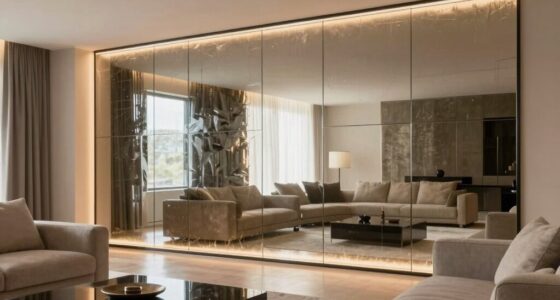
Pay attention to lighting as well. Natural and artificial light will highlight the textures and colors differently, so you should test your color choices in your space at various times of day. This step helps you see how the finishes interact under different lighting conditions, ensuring the overall look remains balanced and polished. Additionally, consider the scale of textures—smaller, more subtle textures work well in smaller rooms or for understated elegance, while larger, more pronounced textures can add drama in bigger spaces. Incorporating biodiversity-friendly practices, such as using eco-friendly paints and finishes, can further enhance your space’s sustainability and environmental harmony. This not only benefits the environment but can also contribute to healthier indoor air quality. Selecting environmentally conscious materials can also support your commitment to sustainable living and reduce your ecological footprint.
textured wall finishes wallpaper
As an affiliate, we earn on qualifying purchases.
As an affiliate, we earn on qualifying purchases.
Frequently Asked Questions
How Do I Choose the Right Textures for Different Rooms?
To choose the right textures for different rooms, consider current wall texture trends and the room’s purpose. In living areas, opt for subtle textures that add depth without overwhelming, while bedrooms benefit from calming, soft finishes. Use color pairing techniques to complement wall textures with existing decor. Think about the mood you want to create and select textures that enhance that ambiance, ensuring a cohesive and stylish look throughout your space.
What Tools Are Best for Applying Mixed Finishes?
For applying mixed finishes, your best tools include paint rollers, brushes, and texture sprayers, depending on the application technique. Use high-quality rollers for smooth areas and angled brushes for detailed work. Texture sprayers are ideal for creating textured effects quickly. Proper tool selection guarantees even application and clean lines, making your project easier. Always clean tools thoroughly after use to maintain their effectiveness for future application techniques.
How Long Does It Take for Textured Finishes to Dry?
Textured finishes typically take about 24 to 48 hours to dry, but drying times can vary based on the thickness of the texture pattern and environmental factors like humidity and temperature. You should guarantee proper ventilation and avoid touching the surface during this period. If the texture pattern is thicker or if conditions are humid, it might take longer. Always check the manufacturer’s recommendations for the best results.
Can I Apply Textured Finishes Over Existing Paint?
Yes, you can apply textured finishes over existing paint, but you need to take into account paint compatibility to ensure good adhesion. First, clean the surface thoroughly to remove dust and grease, then lightly sand to create a better grip. This process enhances textural contrast and ensures the textured finish adheres well. Always test a small area first to avoid unexpected reactions, and consult product instructions for the best results.
How Do I Maintain Textured Wall Finishes Over Time?
To maintain textured wall finishes over time, you should regularly perform surface preparation, like gentle dusting with a soft brush or vacuum. Use decorative techniques such as touch-up painting or reapplying a thin layer of the original texture to keep the finish looking fresh. Avoid harsh cleaning tools that can damage the surface. Consistent care helps preserve the texture’s integrity and appearance, ensuring your walls stay beautiful longer.
smooth wall paint for accent walls
As an affiliate, we earn on qualifying purchases.
As an affiliate, we earn on qualifying purchases.
Conclusion
By thoughtfully blending smooth and textured finishes, you craft a space that’s both inviting and visually mesmerizing. Remember, the key is to balance the old-world charm of textured walls with modern sleekness. Think of it as weaving a tapestry—each finish adding its own story. With a little patience and a keen eye, you’ll transform your walls into a masterpiece that feels as timeless as a Renaissance painting, making your home truly stand out from the crowd.
accent lighting for textured walls
As an affiliate, we earn on qualifying purchases.
As an affiliate, we earn on qualifying purchases.
eco-friendly wall finishing materials
As an affiliate, we earn on qualifying purchases.
As an affiliate, we earn on qualifying purchases.
Halloween Picks
halloween
As an affiliate, we earn on qualifying purchases.