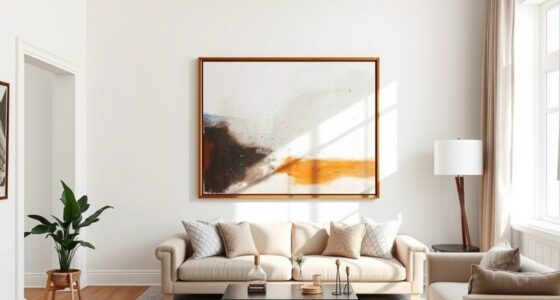

To borrow light without clutter, strategically place mirrors where they reflect natural or artificial light sources, like near windows or lamps. Use larger mirrors sparingly for impact, and hang them at angles to maximize brightness. Smaller mirrors can be layered subtly across different spots to enhance depth and light dispersion without overwhelming your space. Thoughtful placement keeps your room feeling open and bright. Keep exploring for more tips on creating a luminous environment with mirrors.

Get furniture and decor delivered free with Prime
- Fast, free delivery on millions of items
- Prime Video, Amazon Music and more included
- Member-only deals all year
Key Takeaways
- Select a few strategically placed mirrors that enhance natural or artificial light without overcrowding the space.
- Use large, well-placed mirrors to reflect more light with fewer pieces, maintaining a clean, uncluttered look.
- Hang mirrors opposite windows or light sources to maximize brightness without adding extra fixtures.
- Opt for sleek, minimalistic mirror designs that blend seamlessly with your decor.
- Incorporate multiple smaller mirrors thoughtfully to layer light subtly without creating visual chaos.
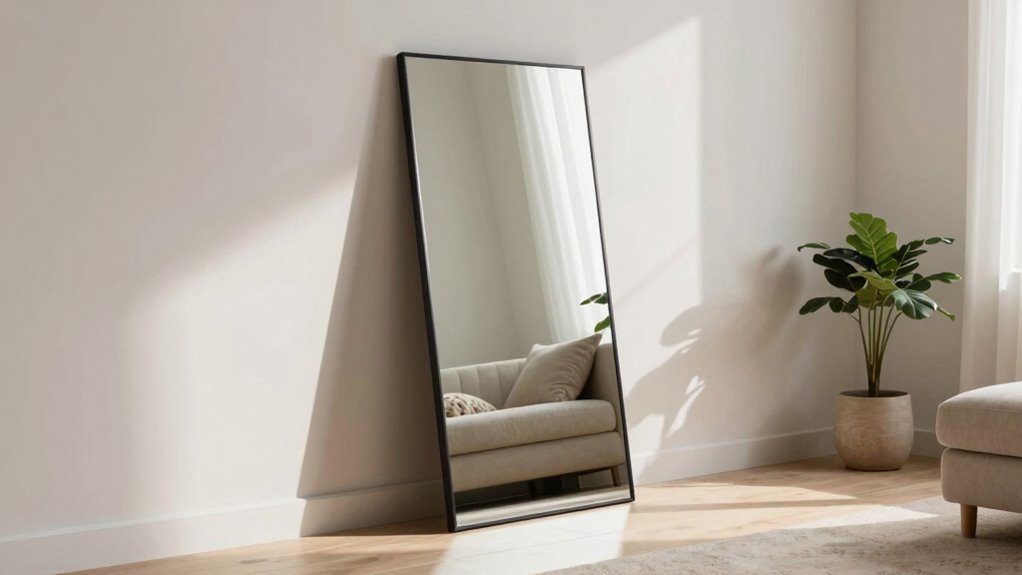
Mirrors are a clever solution for brightening up your space without adding clutter, but using them effectively requires some know-how. One of the most important aspects is mirror placement, which directly influences how well you can harness light reflection to illuminate your rooms. Instead of placing a mirror randomly, think strategically about where natural light enters your space. Positioning a mirror opposite a window allows it to bounce sunlight deeper into the room, creating a brighter, more open feel without the need for extra lamps or fixtures.
Strategically placing mirrors opposite windows enhances natural light and makes rooms feel brighter and more open.
When considering mirror placement, pay attention to the angles. A mirror hung slightly higher or lower than eye level can maximize light reflection, especially if it’s angled toward a specific light source. For example, angling a mirror toward a sunny window or a bright lamp can amplify the light’s reach. Keep in mind that the size of the mirror also matters—larger mirrors tend to reflect more light and make a space feel bigger, but they shouldn’t overwhelm the room’s design. Find a balance that complements your decor while serving its purpose of light reflection.
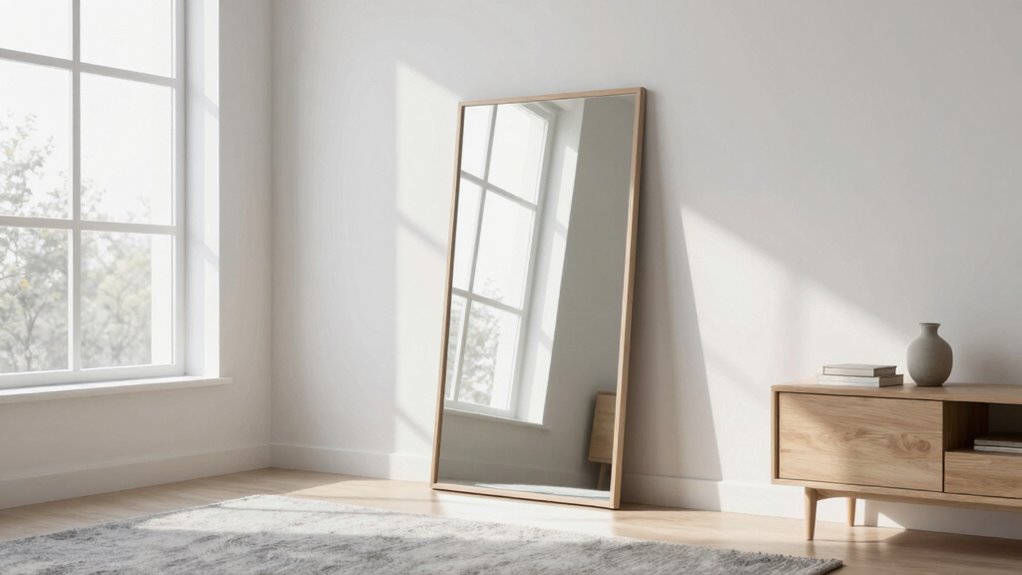
In rooms with limited windows or natural light, strategically positioning a mirror can help compensate for darker corners. Place mirrors near light fixtures or in areas where they can catch and reflect artificial lighting. This technique not only boosts brightness but also adds depth to the room without cluttering the space. You can even lean a large mirror against a wall instead of hanging it, which provides flexibility in placement and avoids additional hardware or visual clutter. Incorporating light reflection techniques can further enhance the effectiveness of your mirror placement. Additionally, understanding the impact of light reflection on room brightness can help you optimize your mirror arrangement for maximum effect.
Another tip is to use multiple smaller mirrors in different spots to create a layered effect of light reflection. This method disperses light throughout the room, making the space feel more open and inviting. Just be cautious not to overdo it—too many mirrors can create visual chaos, defeating the purpose of a clean, uncluttered look. For optimal results, understanding how light reflection works in your space can help you plan the most effective placement.
Ultimately, the key to using mirrors to borrow light without doubling clutter lies in thoughtful placement and understanding how light reflection works in your space. With a little planning, you can transform your rooms into brighter, more welcoming areas, all while maintaining a sleek, clutter-free aesthetic.
As an affiliate, we earn on qualifying purchases.
Frequently Asked Questions
What Types of Mirrors Are Best for Reflecting Light?
You should choose large, plain mirrors with minimal or decorative frames that complement your space. Flat, glass mirrors work best for reflecting light effectively. Position your mirror thoughtfully, such as opposite windows or light sources, to maximize brightness. Avoid overly ornate frames that can distract or create clutter. Proper mirror placement combined with stylish decorative frames helps brighten your room without overwhelming it, making your space feel more open and inviting.
How Do I Choose the Right Mirror Size for My Space?
Choose a mirror size that complements your space; larger mirrors work well in big rooms, while smaller ones fit cozy areas. Consider decorative frame options to enhance style without clutter. Use mirror placement tips like positioning them opposite windows to maximize light, and avoid overwhelming walls with oversized pieces. Balance proportions carefully, ensuring the mirror isn’t too dominant or too small, creating harmony and brightening your room effectively.
Can Mirrors Be Used to Brighten Small or Dark Rooms Effectively?
Yes, mirrors can effectively brighten small or dark rooms. Choose a large, strategically placed mirror to reflect natural light and make the space feel larger. Opt for decorative frame options that complement your decor, adding style without clutter. Keep your mirror clean by regularly using gentle mirror cleaning tips, like a microfiber cloth and glass cleaner, to maintain maximum brightness. Proper placement and maintenance make mirrors a powerful tool for enhancing light and ambiance.
How Do I Position Mirrors to Maximize Natural Light?
You should position your mirrors opposite windows or light sources to maximize natural light. Adjust mirror placement so they reflect light deep into the room, bouncing it around effectively. Tilt or angle the mirrors slightly to optimize light reflection, avoiding glare. Keep mirrors clean and uncluttered around them to enhance light flow. This strategic mirror placement helps brighten your space naturally without creating clutter or overwhelming the room.
Are There Any Safety Concerns With Placing Mirrors Near Windows?
Yes, there are mirror safety concerns near windows. You should guarantee proper window placement to prevent mirrors from falling or shattering in strong winds or storms. Use secure mounting hardware and avoid placing mirrors where they could be knocked over easily, especially in high-traffic areas. Regularly check mirror safety to keep your space safe, and consider shatterproof glass for added protection if mirrors are close to windows.
As an affiliate, we earn on qualifying purchases.
Conclusion
By strategically placing mirrors, you can flood your space with natural light, transforming even the dullest corners into radiant havens. It’s like turning your home into a mirror maze of brilliance, where clutter disappears into the shimmer and shine. With a little planning, you’ll create an environment so luminous and inviting, you’ll swear sunlight itself has taken up permanent residence. Embrace these tricks, and watch your space glow brighter than the dawn!
adjustable wall mirror for light reflection
As an affiliate, we earn on qualifying purchases.
As an affiliate, we earn on qualifying purchases.
As an affiliate, we earn on qualifying purchases.
Columbus Day / Indigenous Peoples' Day Picks
long weekend sales
As an affiliate, we earn on qualifying purchases.