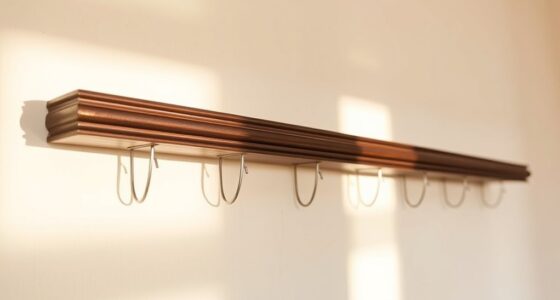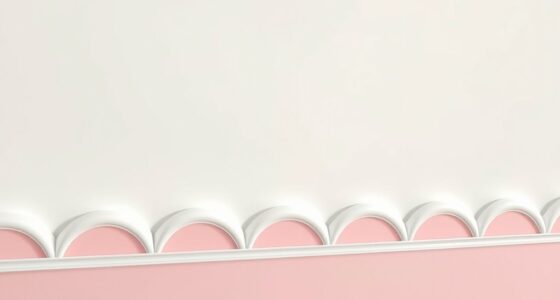

To plan hidden doors in paneled walls, focus on seamless integration by matching the door’s finish, grain, and style with the existing wall panels. Use concealed hinges or push-to-open mechanisms to avoid hardware visibility, and consider custom cabinetry or false panels for a smooth, unified look. Pay attention to lighting and visual cues that hint at the door’s location without revealing it. If you keep these tips in mind, you’ll discover more ways to perfect your concealed door project.
Key Takeaways
- Match door finish, grain, or style with existing wall panels for seamless concealment.
- Select appropriate mechanisms (push-to-open, magnetic, electronic) based on usage frequency and aesthetic.
- Assess wall materials to determine suitable hiding techniques, such as false panels or concealed hinges.
- Incorporate subtle lighting and visual cues to hint at the door’s presence without revealing it.
- Plan for integrated features like hidden compartments or cabinetry to enhance functionality and concealment.
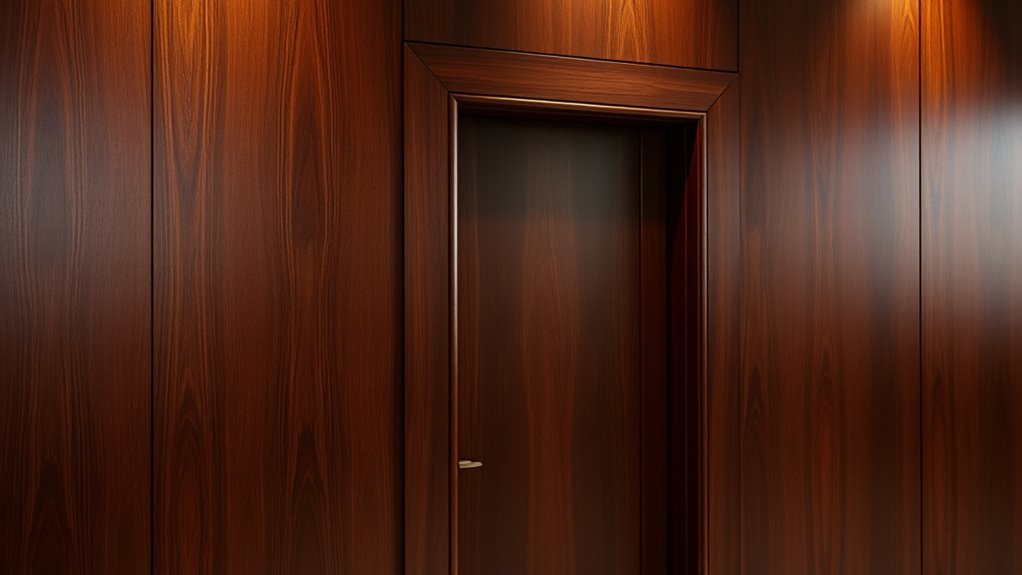
Hidden doors in paneled walls have long captivated the imagination, offering a clever way to conceal secret rooms or passageways. When planning to incorporate such doors into your space, you need to take into account how seamless and functional you want the concealment to be. Custom cabinetry plays a crucial role here, as it allows you to design a door that blends perfectly with your existing wall paneling. You might choose to match the finish, grain, or style of your panels so that the door looks like an integral part of the wall rather than a separate element. This attention to detail ensures that the hidden door doesn’t stand out and maintains the aesthetic integrity of your space.
Wall concealment techniques are essential for success in your project. You’ll want to carefully evaluate the type of panels and materials used in your walls, as this influences the method you’ll employ to hide the door. For example, if your walls are made of wood paneling, you could install a pivot or sliding door behind a false panel that matches the grain and color perfectly. If your walls feature decorative molding or intricate designs, you might opt for a concealed hinge system that keeps the door flush with the surface. The key is to choose a technique that minimizes gaps and visible hardware, creating a truly hidden entry point.
When planning your hidden door, consider how frequently you’ll need to access whatever lies behind it. This impacts your choice of mechanisms—whether you want a manual latch, a magnetic catch, or an electronic opener. If you’re aiming for maximum secrecy, you might prefer a push-to-open mechanism that requires no visible handles or hardware. Also, think about the space required for the door to swing open, especially if it’s a swinging door. You’ll need to measure carefully to avoid obstructing furniture or other fixtures.
Lighting is another factor to keep in mind. Your goal is for the wall to look uniform, so plan for concealed lighting or subtle cues that hint at the door’s presence without giving it away. Using custom cabinetry, you can incorporate specialized features such as hidden compartments or storage behind the paneling, making your concealed wall both functional and discreet. Additionally, understanding the technology involved in hidden doors can help you choose the most effective and seamless solutions for your project.

Shiftshade Mirror Wall Full Length,12X14 Inch Unbreakable Mirror Tiles for Bedroom Home Gym Door, Acrylic Mirror Full Body Shatterproof Mirror Stickers for Walls,Mirror Sheets (4pcs)
(Acrylic Material) : The mirror is made of acrylic material;Eco-friendly plexiglass mirror. shatterproof, it is a great alternative...
As an affiliate, we earn on qualifying purchases.
Frequently Asked Questions
What Are the Best Materials for Hidden Door Panels?
For hidden door panels, choose materials that blend seamlessly with your wall’s aesthetics. Wood veneer and MDF are popular for their smooth finish and easy paneling customization, allowing you to match or contrast with surrounding decor. Solid wood offers durability and a high-end look, while lightweight materials simplify installation. Consider your style, budget, and the door’s function to select the best materials for a discreet, stylish hidden door that enhances your space.
How Much Does Installing a Hidden Door Typically Cost?
Installing a hidden door typically costs between $1,500 and $5,000, depending on factors like door size, materials, and complexity of installation. Cost estimates vary based on your chosen design, whether it’s custom or prefab, and the level of craftsmanship required. You should also consider installation factors such as wall type, structural modifications, and finishing details, as these can influence both cost and time needed for a seamless, discreet setup.
Are Hidden Doors Secure Against Unauthorized Access?
Hidden doors can be remarkably secure if you choose the right locking mechanisms and concealment techniques. However, security concerns and privacy implications remain, especially if the door’s design isn’t foolproof. Intruders might detect the secret if they know what to look for, so you must carefully select high-quality locks and discreet hinges. Keep in mind, the thrill of secrecy comes with responsibility—regular checks are essential to maintain security.
How Do I Maintain or Repair a Concealed Door?
To maintain or repair your concealed door, start by inspecting the hidden door mechanisms regularly for wear or damage. Keep the hinges, latch, and any moving parts clean and lubricated to guarantee smooth operation. If you notice any issues, carefully adjust or replace faulty components. For complex repairs, consider consulting a professional experienced in concealed door maintenance to avoid damaging the door or compromising its hidden nature.
Can Hidden Doors Be Added to Existing Paneled Walls Easily?
Yes, you can add hidden doors to existing paneled walls, but it requires careful planning. Use disguise techniques like matching the paneling style or incorporating historical examples, such as secret passageways in old castles. You’ll need to cut into the wall, reinforce the structure, and make certain the door blends seamlessly. With patience and precision, your concealed door will look natural and maintain the aesthetic of your space.

FICTOR Home Gym Mirror for Wall, 50"x25"x3 PCS Large Workout Mirrors with Tempered Glass, Full Length Frameless Body Mirror for Garage, Dance, Yoga, Bedroom
[Delivery & Support]: The full body mirror is securely packaged with thick foam to ensure it arrives intact.Should...
As an affiliate, we earn on qualifying purchases.
Conclusion
As you finish your secret passageway, think of it as a hidden treasure chest tucked behind a painted mural. Just like a masterful artist conceals their masterpiece, you’ve crafted a space that invites curiosity and wonder. These hidden doors are your gateway to mystery, blending seamlessly into your home’s story. With each careful plan and installation, you’re creating a secret garden, a whisper of adventure waiting to be discovered whenever you choose to open it.

Honyee Home Gym Mirror, 48" x 24" x 3PCS, Wall Mounted Frameless Mirror with Polished Edge, Tempered Glass Mirror, Large Workout Mirror for Home Gym/Yoga Room/Dancing Room and More (48" x 24", 3PCS)
CLASSIC DESIGN: This simple and classic frameless gym mirror is an ideal mirror for your home gym, yoga...
As an affiliate, we earn on qualifying purchases.

Delma Home Gym Mirror,48''x24''x2PCS Silver,Large Full Body Tempered Glass Frameless, Wall-Mounted for Gym, Yoga, Garage, Bedroom, Bathroom
The accurate size of fitness mirror is 47.6x23.8 inches, 2 pieces in total. Mirror thickness is about 0.2...
As an affiliate, we earn on qualifying purchases.