
To prevent art from floating away above your sofa, start by measuring and hanging your pieces so they’re about two-thirds to three-quarters the width of the sofa, with the center at about 60-66 inches from the floor. Use adjustable fixtures or picture lights for warm, direct lighting, and make certain your frames match or coordinate for a cohesive look. Precise measurement and hardware are key. Keep in mind, small adjustments in placement and style make a big difference—there’s more to optimize your display.

Get furniture and decor delivered free — and shop member deals
- Fast, free delivery on millions of items
- Access to Prime Big Deal Days deals on October 6–7
- Prime Video, Amazon Music and more included
Key Takeaways
- Hang art approximately two-thirds to three-quarters the width of the sofa for proper visual balance.
- Position the artwork’s center at about 60-66 inches from the floor for optimal eye level.
- Use adjustable or picture lights to create a warm, inviting focal point above the sofa.
- Ensure proper hardware and secure hooks support the artwork’s weight, preventing slippage.
- Maintain a cohesive style and size for frames to create a unified, intentional gallery display.

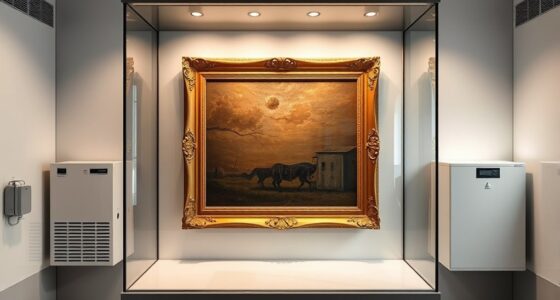
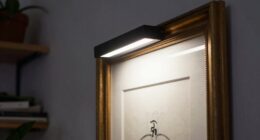
Ever wonder how to perfectly hang art above your sofa? It’s a common dilemma, but with a few key tips, you can create a stunning focal point that feels balanced and intentional. One of the essential elements is understanding how gallery lighting can enhance your artwork. Proper lighting isn’t just about visibility; it’s about highlighting the art’s details and making the colors pop. Think about installing adjustable fixtures or picture lights that cast a warm glow directly onto your pieces. This not only draws attention but also prevents your art from feeling lost or overlooked in the room. When positioning lighting, aim for it to be slightly above and angled downward toward the art, avoiding glare and shadows that can distract from the artwork’s beauty. To ensure your art is displayed with visual harmony, consider art placement guidelines that help you create a balanced and inviting look.
Proper gallery lighting highlights artwork’s details and colors, creating a warm, inviting focal point above your sofa.
Another important aspect to think about is the frame styles of your art. Your choice of frames can dramatically influence how the art interacts with your space. Sleek, modern frames can give a contemporary feel, while ornate vintage frames add character and elegance. If you’re mixing different frame styles, aim for a cohesive look by choosing frames with similar finishes or colors. This consistency helps your eye travel smoothly across the display without feeling disjointed. When hanging multiple pieces, consider using frames that complement each other in size and style, creating a unified gallery wall that anchors the sofa without overwhelming it. Incorporating visual balance principles can further enhance the harmony of your display. Additionally, understanding art proportions can help you select pieces that fit perfectly within your space. A good understanding of wall space measurements can also prevent overcrowding and make your display feel thoughtfully curated. Remember, even the smallest adjustments in these art display techniques can significantly elevate the overall aesthetic.
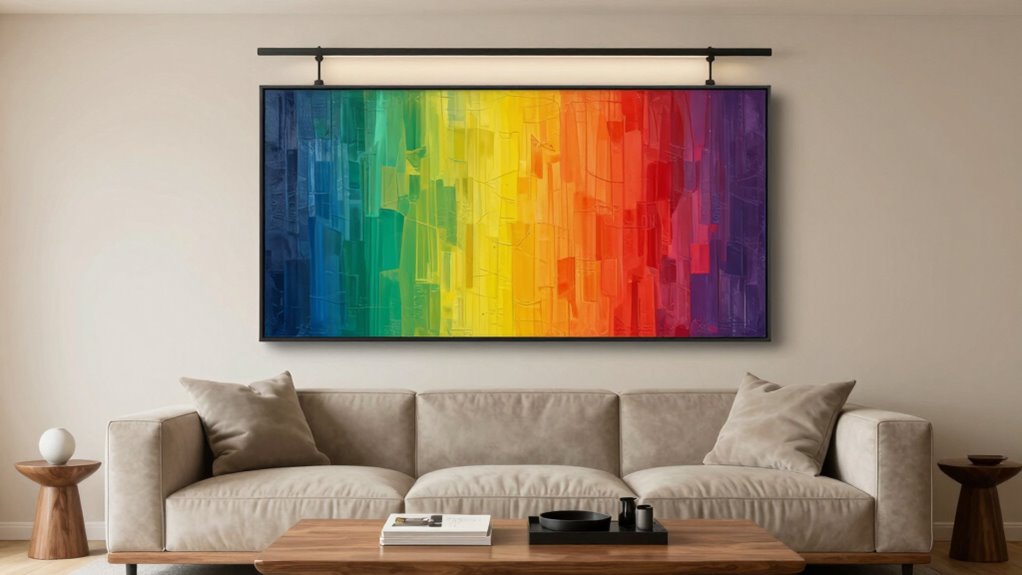
It’s also vital to pay attention to the size and placement of your art. Generally, the art should be about two-thirds to three-quarters the width of your sofa. For height, hang the art so that its center is roughly 60 to 66 inches from the floor, which is eye level for most viewers. This positioning ensures the artwork feels integrated into the space rather than floating above it. To prevent the art from feeling disconnected or floating away, anchor it visually with furniture or accessories below. For instance, placing a console table or decorative items beneath the art helps ground the piece and creates a cohesive look. When measuring, always double-check your marks to avoid unnecessary adjustments later.
Finally, don’t forget to measure carefully and use good-quality hardware. Secure hooks and brackets that can support the weight of your frames, especially if you’re using heavier art or elaborate framing. Take your time to mark the right spots on the wall, and use a level to ensure everything hangs straight. When all these elements—lighting, frame styles, size, and placement—come together, your art will feel intentionally curated and perfectly placed above your sofa.
adjustable picture hanging hooks
As an affiliate, we earn on qualifying purchases.
As an affiliate, we earn on qualifying purchases.
Frequently Asked Questions
What Are the Best Frame Styles for Above Sofas?
You should choose sleek, simple frame styles like black metal or thin wooden frames for above sofas, as they complement various decor. Consider gallery lighting to highlight the art and make it stand out without overwhelming the space. Opt for durable, high-quality frame materials that support the artwork’s weight and maintain their look over time, ensuring your art stays attractive and well-supported above your sofa.
How Do I Choose the Right Art Size?
Did you know that most gallery layouts use art pieces that are two-thirds the length of the sofa? To choose the right art size, consider your wall spacing—leave about 4-6 inches between the art and the sofa for balance. Opt for larger pieces for a bold statement or a collection of smaller artworks for visual interest. Keep the proportions in mind to make certain your art complements your space perfectly.
Can I Mix Different Art Styles Above One Sofa?
Yes, you can mix different art styles above one sofa, but focus on creating visual harmony. Combine contrasting styles, like modern and vintage, by unifying them with similar color schemes or frames. Balance the arrangement by varying sizes and spacing, ensuring the display feels cohesive. This approach adds personality and depth to your space, making it inviting and interesting without overwhelming the eye.
How Often Should I Update or Change the Artwork?
Frequently invigorating your framed favorites keeps your space lively and inviting. Typically, you should update or change artwork every 1 to 2 years, depending on art preservation needs and your evolving style. Use display lighting to highlight new pieces and protect older works from fading. Regular updates prevent your decor from feeling stale, ensuring your art remains vibrant, valuable, and visually mesmerizing.
What Are the Common Mistakes to Avoid When Hanging Art?
When hanging art, avoid common mistakes like poor art placement and ignoring wall spacing. Guarantee your art is centered at eye level and maintains proportional wall spacing, so it doesn’t look crowded or floating away. Don’t hang pieces that are too small or too large for the space. Use proper hardware and measure carefully to keep everything aligned. These tips help your artwork look balanced, cohesive, and visually appealing.
As an affiliate, we earn on qualifying purchases.
Conclusion
Hanging art above your sofa can truly transform your living space, making it feel more inviting and stylish. Remember, the right placement and sizing are key—aim for your art to be about two-thirds the width of your sofa. Did you know that a well-decorated wall can increase your home’s value by up to 12%? So, take your time, choose pieces you love, and hang them with confidence—you’ll create a cozy, eye-catching focal point in no time.
As an affiliate, we earn on qualifying purchases.
decorative modern picture frames
As an affiliate, we earn on qualifying purchases.
As an affiliate, we earn on qualifying purchases.
Halloween Picks
halloween
As an affiliate, we earn on qualifying purchases.