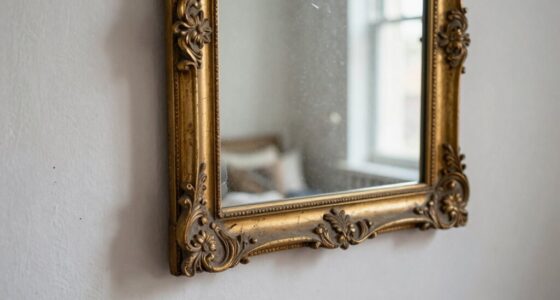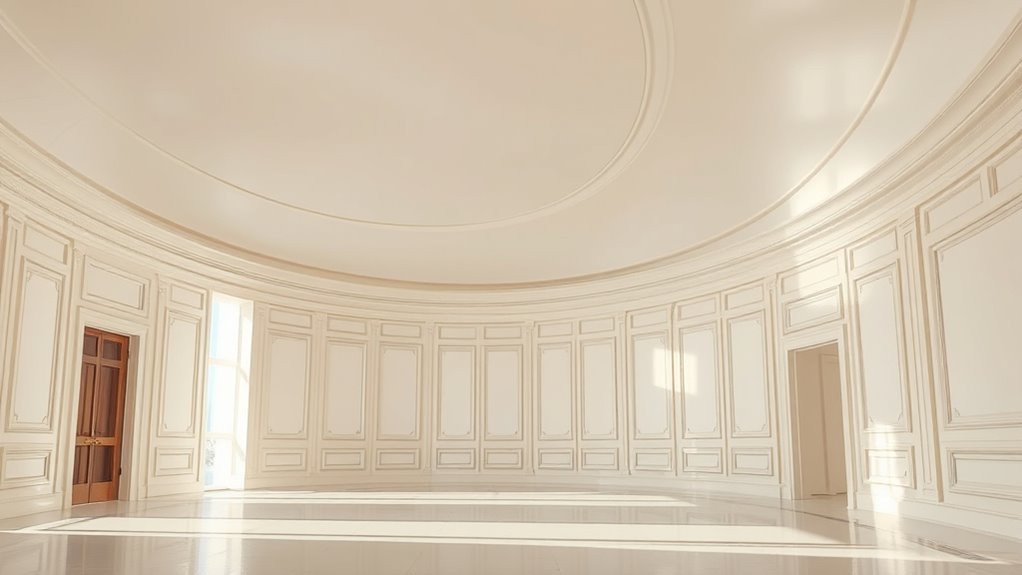

To enhance curved walls, choose flexible paints or specialty coatings that conform to complex shapes, and use high-quality brushes or foam applicators for even coverage. Consider lightweight, flexible paneling options like thin veneer panels, and guarantee precise measurement and cutting for seamless installation. Adding strategic lighting can highlight the curves and improve visual impact. Mastering these techniques can turn challenging walls into stunning focal points—discover more ways to perfect your design as you continue exploring.

Get furniture and decor delivered free — and shop member deals
- Fast, free delivery on millions of items
- Access to Prime Big Deal Days deals on October 6–7
- Prime Video, Amazon Music and more included
Key Takeaways
- Use flexible paints or specialty coatings to ensure proper adhesion and smooth application on curved surfaces.
- Select lightweight, adaptable paneling like thin veneer for seamless fitting along curved walls.
- Employ high-quality, contoured brushes and foam applicators for precise, even coverage on curves.
- Measure and cut panels accurately to match wall contours, ensuring a polished, professional finish.
- Enhance the visual impact with strategic lighting that emphasizes the natural flow and depth of the curved design.
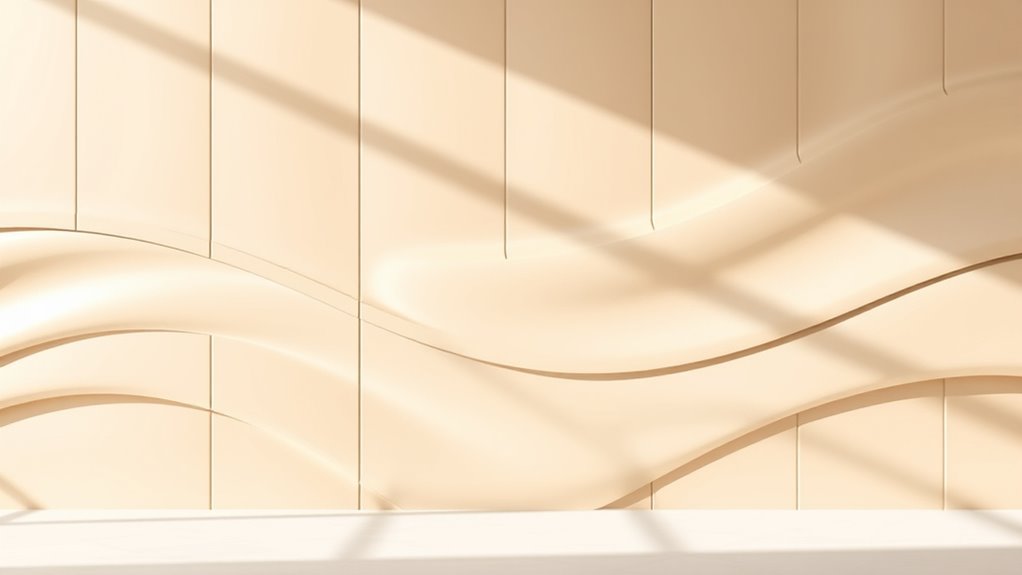
Curved walls can add a stunning architectural feature to any space, but they also present unique challenges when it comes to painting and paneling. Unlike straight walls, their gentle or dramatic curves require careful planning to achieve a seamless and visually appealing finish. When tackling these surfaces, your focus should be on effective color coordination and thoughtful material selection. These elements are essential to enhance the natural flow of the curves, creating an elegant and cohesive look that complements the room’s design.
Color coordination plays a crucial role in emphasizing the shape of curved walls. Light, neutral shades tend to highlight the fluidity of the curves, making the space feel open and airy. Darker or bolder hues can add depth and drama, but you need to take into account how they interact with the wall’s contours. To maintain harmony, you might choose a monochromatic palette, using different shades of the same color to create subtle variation without overwhelming the eye. Alternatively, contrasting colors can be used strategically along the curves to accentuate their form, but this approach requires precision to prevent visual chaos. Remember, the goal is to enhance the architectural feature without creating visual discord, so selecting complementary colors that work well together is key.
Using monochromatic or contrasting colors highlights and enhances curved wall features seamlessly.
Material selection is equally critical when working on curved walls. Traditional flat paints may not conform well to intricate curves, especially if the surface is uneven or textured. For smoother, more precise results, consider using flexible paints or specialty coatings designed for challenging surfaces. These products tend to have better adhesion and can accommodate the subtle bends of the wall without cracking or peeling. When paneling is involved, choose materials that are lightweight and flexible, such as thin veneer panels or specialized wall coverings that can contour to curves. If you opt for paneling, think about using adhesive solutions that are designed for irregular surfaces, which will help ensure a secure fit and a seamless appearance.
In addition, the tools you use make a difference. For painting curved walls, high-quality brushes and rollers with contoured edges or foam applicators can help you achieve even coverage along the curves. When installing panels, carefully measure and cut each piece to match the wall’s contours, and use flexible adhesive to follow the shape smoothly. It is also helpful to consider the impact of lighting on curved surfaces, as proper illumination can enhance their visual appeal and highlight the architectural details. By paying attention to material choices and color coordination, you’ll not only make the process easier but also produce a polished, professional look that highlights the beauty of your curved walls.
flexible wall paint for curved surfaces
As an affiliate, we earn on qualifying purchases.
As an affiliate, we earn on qualifying purchases.
Frequently Asked Questions
What Types of Paint Are Best for Curved Walls?
For curved wall textures, you should use high-quality acrylic or latex paints, as they offer excellent flexibility and adhesion. Satin or eggshell finishes work best for curved walls because they provide a smooth, durable surface that highlights the wall’s shape. Avoid flat paints, which can crack on curves. Make sure to choose a paint with good coverage and easy blending to achieve seamless, professional-looking results on your curved walls.
How Do I Measure Curved Surfaces Accurately?
Did you know that measuring curved surfaces accurately is essential for a perfect finish? To do this, use flexible measuring tools like a tailor’s tape or a flexible ruler. You can also create templates by tracing the curve onto cardboard or paper, then cut out and use these as guides for precise measurements. These template techniques help guarantee your measurements are spot-on, making your project much easier and more accurate.
Can I Use Wallpaper on Curved Walls?
Yes, you can use wallpaper on curved walls, but choose wallpaper patterns that complement the curve and emphasize flow. Opt for flexible wallpaper designed for curves, and select a strong adhesive that can handle uneven surfaces. Use a smoothing tool to minimize bubbles and guarantee a snug fit. This approach helps your wallpaper stay in place and look seamless, even on tricky curved surfaces.
What Tools Are Essential for Paneling Curved Surfaces?
To panel curved surfaces, you’ll need flexible measuring tools like a tape measure and a contour gauge to accurately capture the wall’s shape. A jigsaw is essential for cutting paneling to fit the curves, while a level helps verify even installation. Use paneling techniques such as bending or cutting panels strategically to follow the wall’s contour. These tools and methods help you achieve a seamless, professional finish on curved walls.
How Do I Repair Damage on Curved Painted Walls?
Imagine you’re a painter in an old film, fixing a scratch on a curved wall. Start by gently cleaning the damaged area, then sand it lightly to smooth out rough edges. Use wall surface preparation techniques like filling cracks with spackle and sanding again. When applying paint, follow smooth, consistent paint application techniques, using a high-quality brush or roller to blend repairs seamlessly into the curved surface.
As an affiliate, we earn on qualifying purchases.
Conclusion
Now that you’ve learned how to tackle curved walls with painting and paneling, you’ll be better equipped to transform your space. Remember, every challenge is an opportunity in disguise; with patience and precision, you can turn even the trickiest curves into stunning features. Don’t be afraid to roll up your sleeves and get creative—sometimes, the biggest rewards come from the most unexpected bends in the road. Keep at it, and your walls will tell a beautiful story.
contoured paint brushes for walls
As an affiliate, we earn on qualifying purchases.
As an affiliate, we earn on qualifying purchases.
specialty coatings for textured walls
As an affiliate, we earn on qualifying purchases.
As an affiliate, we earn on qualifying purchases.
Fall Picks
fall essentials
As an affiliate, we earn on qualifying purchases.