When choosing archival mounting tapes and adhesives, guarantee they meet conservation standards by being pH-neutral, acid-free, and free from harmful solvents. These materials should be stable, reversible, and compatible with your specific surfaces, such as paper, photographs, or textiles. Proper application involves a thin, even layer to prevent damage or discoloration over time. Continuing with this guidance will help you select the best products to protect your materials long-term.
Key Takeaways
- Select acid-free, pH-neutral mounting tapes and adhesives designed specifically for archival preservation.
- Ensure adhesives are chemically inert, solvent-free, and stable over time to prevent deterioration.
- Use double-sided, removable, and reversible adhesive products suitable for delicate materials.
- Apply adhesives thinly and evenly to avoid staining, warping, or long-term damage.
- Test adhesives on small areas first and follow conservation standards for proper application and future reversibility.

When preserving valuable documents and artwork, choosing the right mounting tapes and adhesives is crucial to guarantee long-term safety. Your goal is to prevent deterioration, damage, or unwanted chemical interactions that could compromise the integrity of the materials. To achieve this, you need to understand the importance of using materials that adhere to established conservation standards and employ proper restoration techniques. Archival mounting tapes and adhesives are specifically designed to meet these standards, ensuring they are pH-neutral, acid-free, and free from harmful solvents or volatile organic compounds. These qualities are critical because they minimize the risk of acid migration or discoloration over time, which can be detrimental to delicate surfaces.
When selecting mounting tapes and adhesives, it’s essential to consider their compatibility with the materials you’re working with. For example, paper, photographs, textiles, or paintings each demand different types of adhesives that won’t cause warping, staining, or embrittlement. High-quality archival tapes are often double-sided and made to be both strong and removable, allowing for adjustments without damaging the original piece. Similarly, adhesives used in restoration techniques are carefully formulated to provide a stable bond without introducing any chemical reactions that could accelerate deterioration. These choices follow conservation standards that prioritize reversibility, meaning you can remove or re-treat the adhesive in the future without harming the artwork or document.
In addition to material quality, applying these adhesives correctly is fundamental. Proper technique ensures even adhesion, avoids bubbles, and prevents long-term stress points. For instance, when mounting artwork, you want to ensure that the adhesive is applied in a thin, consistent layer, avoiding excess that could seep into or stain the material. This meticulous approach aligns with best restoration techniques, which emphasize precision and care. It’s also wise to test adhesives on small, inconspicuous areas first, confirming they won’t cause damage or discoloration. Furthermore, understanding the chemical composition of adhesives helps in selecting the most suitable products for sensitive materials, reducing the risk of damage over time.
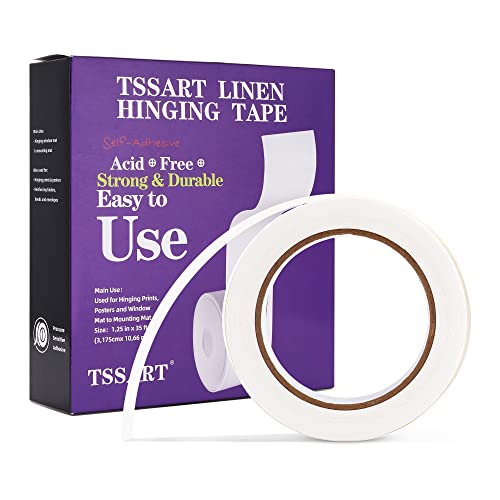
TSSART Linen Hinging Tape – Self-Adhesive Hinging Tape for Prints Matte Frames, Artwork Matting – Acid Free 1.25inch x 35ft
TSSART LINEN HINGING TAPE – Made of quality linen fabric, bendable and durable, help make fast work of…
As an affiliate, we earn on qualifying purchases.
As an affiliate, we earn on qualifying purchases.
Frequently Asked Questions
Are Archival Mounting Tapes Acid-Free?
Yes, archival mounting tapes are typically acid-free, guaranteeing they won’t damage your artwork or documents over time. They feature acid-free properties, which prevent deterioration and maintain your items’ integrity. Plus, many use non-yellowing adhesives, so your mounted pieces stay looking fresh and vibrant without discoloration. When choosing tapes, always check for these qualities to ensure your materials remain preserved and unaffected by harmful acids or aging.
Can Adhesives Damage Delicate Archival Materials?
Think of delicate archival materials as fragile butterflies resting on your palm. You might worry that adhesives could harm them, but with proper tape conservation, you can protect their beauty. Some adhesives risk damaging over time, compromising their longevity. Choosing acid-free, archival-quality adhesives guarantees your treasures stay pristine, avoiding harm while providing secure support. With careful selection, you preserve their story without risking damage, letting their history soar freely.
What Is the Recommended Storage Temperature for Mounted Items?
You should store mounted items at a temperature between 65 and 70°F (18-21°C) to guarantee optimal preservation. Maintaining consistent temperature control helps prevent expansion and contraction that could damage delicate materials. Environmental stability is vital; avoid fluctuations that might cause deterioration. Keep humidity levels steady around 40-50%, and store in a cool, dry place away from direct sunlight. Proper storage conditions help preserve your mounted items for the long term.
How Long Do Archival Adhesives Typically Last?
Archival adhesives usually offer a reliable lifespan, thanks to their good aging properties and adhesive longevity. Typically, you can expect them to last several decades when stored properly, maintaining their bond without deterioration. However, factors like environmental conditions can influence their durability. To guarantee your mounted items stay secure over time, choose high-quality adhesives designed for long-term preservation and monitor storage conditions regularly.
Are There Eco-Friendly Options for Archival Mounting Tapes?
Yes, there are eco-friendly options for archival mounting tapes. You can choose biodegradable tapes made from natural materials, which break down over time without harming the environment. Additionally, look for tapes with recycled adhesive options that use less new material and reduce waste. These sustainable choices help protect your collections while minimizing ecological impact, making them ideal for environmentally conscious preservation efforts.

Lineco Books by Hand pH Neutral Adhesive, Archival Quality Acid-Free Dries Clear and Quick Water Soluble Lay-Flat Property, 16 Ounces (1 Pack)
Quality: Archival material created and made in USA. Lineco is a leading and trusted brand for archival and…
As an affiliate, we earn on qualifying purchases.
As an affiliate, we earn on qualifying purchases.
Conclusion
Choosing the right archival mounting tapes and adhesives is like selecting a trusted guardian for your treasures; they keep your pieces safe without causing harm. By understanding their properties and proper application, you ensure your artwork or documents stand the test of time, shining like stars in a clear night sky. Remember, the right adhesive doesn’t just stick; it preserves, safeguarding your valuable memories for generations to come.

Lineco Self-Adhesive Linen Hinging Tape, 1.25 Inch x 35 Feet, Neutral pH Acrylic Adhesive, Acid-Free, Hinging Artwork, White
Linen tape is an acid free tape
As an affiliate, we earn on qualifying purchases.
As an affiliate, we earn on qualifying purchases.

Scotch Photo Mount Adhesive, 10.3oz, Safe for Color Photos, Illustrations and Pictures (6094)
Safe for color photos, illustrations and pictures
As an affiliate, we earn on qualifying purchases.
As an affiliate, we earn on qualifying purchases.