
TL;DR
Get ready for Prime Big Deal Days — try Prime free
Exclusive member deals on October 6–7, plus fast free delivery. Cancel anytime.
Start your free trialAs an affiliate, we earn on qualifying purchases.
A new photo collection showcases Truman Capote’s homes in New York, Brooklyn, Palm Springs, and the Hamptons. The images reveal his distinctive style and the spaces where he created his iconic works.
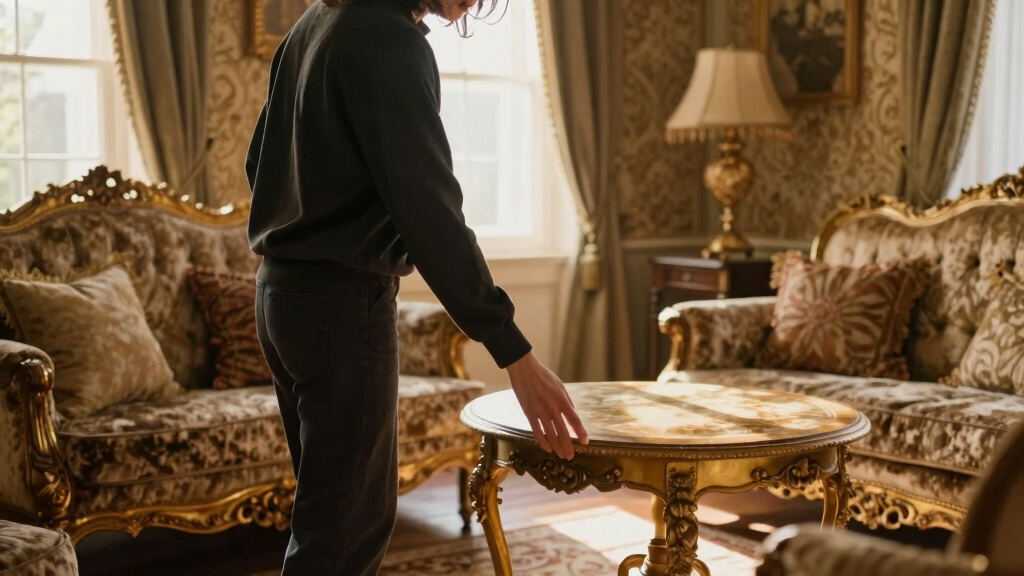
Newly published photos offer a rare glimpse into Truman Capote’s personal residences, showcasing his ornate interior design and the spaces where he crafted his literary masterpieces. These images reveal the author’s distinctive taste and the environments that influenced his work, offering fans and historians a closer look at his private life.
The collection includes images of Capote’s Brooklyn Heights home, where he lived in the 1950s and reportedly wrote Breakfast at Tiffany’s and In Cold Blood. The house, known for its spiral staircase and animal-themed decor, was later sold for $12 million in 2012.
Other photos depict his European retreat in Portofino, Italy, where he traveled in the 1950s to escape New York’s distractions, and his Palm Springs residence, which he purchased in 1968. Capote also owned a rustic beach house in Sagaponack, the Hamptons, designed to evoke “run-down comfort,” as he described it.
These images, sourced from a recent publication, provide a visual narrative of Capote’s lifestyle, blending luxury, eclectic taste, and a desire for solitude and inspiration.
Why Capote’s Homes Offer Insight into His Creative World
The photographs illuminate how Capote’s environment reflected and influenced his creative process. His taste for ornate, eclectic, and sometimes rustic spaces underscores his personality and his approach to writing—seeking inspiration from diverse settings. For fans and scholars, these images deepen understanding of his life beyond his literary achievements, revealing the personal spaces where he sought comfort, solitude, and artistic inspiration.As an affiliate, we earn on qualifying purchases.
Capote’s Residences and Their Place in His Life
Truman Capote’s residences spanned continents and styles, mirroring his globe-trotting lifestyle and eclectic personality. His move to New York in the 1930s marked the beginning of his immersion into high society and creative circles. His Brooklyn Heights home, acquired in 1955, became a hub for his writing and social life. During the 1950s, he traveled through Europe, seeking quiet and inspiration, notably in Portofino, Italy.
In the 1960s, Capote’s move to Palm Springs and Sagaponack reflected his desire for privacy and leisure, while also hosting gatherings of influential friends. These homes were more than personal retreats—they were integral to his creative process and social identity.
The recent publication of photos offers a rare, detailed visual record of these spaces, which have been largely private until now.
“Capote’s homes were an extension of his personality—ornate, eclectic, and deeply personal.”
— Gerald Clarke, biographer
As an affiliate, we earn on qualifying purchases.
Unanswered Questions About Capote’s Residences’ Current Status
It is not yet clear whether the homes are preserved as historic sites, privately owned, or open to the public. Details about their current condition or any planned public exhibitions remain unconfirmed.As an affiliate, we earn on qualifying purchases.
Future Plans for Capote’s Homes and Public Access
Further details are expected to emerge regarding any preservation efforts or public exhibitions of Capote’s residences. Fans and scholars may anticipate potential tours or releases of additional photographs that offer more insight into his personal spaces.
As an affiliate, we earn on qualifying purchases.
Key Questions
Are Capote’s homes open to the public?
It is currently unclear whether any of Capote’s residences are accessible to visitors or preserved as museums. Further announcements are expected.
What is the significance of these photos for Capote’s legacy?
The images provide a rare, intimate look into his personal environment, offering insights into his personality, aesthetic preferences, and creative process, enriching his historical legacy.
Where can I see these photos?
The photos have been published in a recent feature, available through the source publication or accompanying exhibitions, if any are announced.
Did Capote design his homes himself?
While he expressed strong opinions about interior decor, there is no evidence he was directly involved in designing his homes. His taste, however, was distinctly reflected in their decor.
Source: Architectural Digest
Fall Picks
fall essentials
As an affiliate, we earn on qualifying purchases.