TL;DR

Get furniture and decor delivered free — and shop member deals
- Fast, free delivery on millions of items
- Access to Prime Big Deal Days deals on October 6–7
- Prime Video, Amazon Music and more included
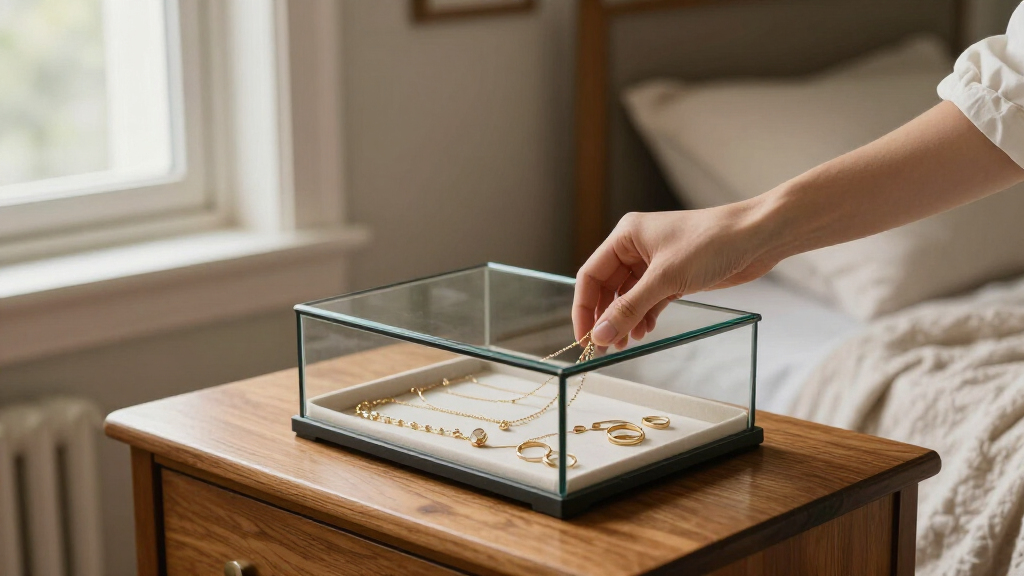
Interior designers use the Jewelry-Box Theory to explain why some rooms feel deeply personal. The approach emphasizes layering foundational elements with heirlooms and statement pieces to create a collected, meaningful space.
Interior design experts are increasingly adopting the Jewelry-Box Theory to explain why some rooms evoke a sense of deep personal connection. The Very British Edit: The Summer Decor Finds That Make Indoor-Outdoor Spaces Feel Like the Most Luxurious Rooms in the House This approach compares interior spaces to jewelry collections, emphasizing layering foundational pieces with heirlooms and statement objects to create a personal, collected feel. The theory is gaining recognition as a practical framework for achieving intimacy and character in interior design. You can find more inspiration in decor trends that elevate outdoor spaces.
The Jewelry-Box Theory draws parallels between decorating and assembling a jewelry collection, where a room’s foundation is established with simple, dependable elements such as rugs, colors, or textures, serving as the base. Interior designers highlight that layering diverse objects—fine craftsmanship, antiques, contemporary art—creates a rich dialogue within the space, making it memorable and personal.
Heirlooms or objects with personal history, like a grandparent’s clock or travel souvenirs, act as the room’s storytellers. To enhance your space, consider exploring decor ideas that make indoor-outdoor spaces feel luxurious. These pieces, often not chosen for aesthetic alone but for their sentimental value, foster a sense of continuity and intimacy. The statement piece, such as a bold artwork or chandelier, functions as a centerpiece that defines the room’s character, much like a striking cocktail ring.
Designers emphasize that restraint is essential; overdoing it can lead to visual chaos, and a well-curated space balances richness with simplicity. The theory underscores that rooms should reflect the personality and history of their inhabitants, making them uniquely personal and meaningful.
Why the Jewelry-Box Approach Resonates in Modern Design
The Jewelry-Box Theory offers a practical framework for creating spaces that feel authentic and emotionally resonant. It encourages layering personal objects, heirlooms, and statement pieces, which can foster a sense of belonging and identity within a room. For homeowners and interior designers, this approach emphasizes the importance of personal history and individuality, potentially transforming how spaces are curated and experienced. As more people seek homes that reflect their stories and personalities, understanding this theory could influence future design trends and personal decorating strategies.
decorative heirloom display shelves
As an affiliate, we earn on qualifying purchases.
As an affiliate, we earn on qualifying purchases.
Origins and Development of the Jewelry-Box Theory in Interior Design
The analogy of rooms to jewelry collections has been part of interior design discourse for some time, but recent discussions in publications like Architectural Digest have formalized it as a theoretical approach. The concept emphasizes layering and personal curation, drawing from traditional notions of collecting and heirloom preservation. Designers like Laura Gonzalez and Summer Thornton advocate for this method, which aligns with broader trends toward personalization and meaningful décor. The theory underscores that a well-layered space, like a curated jewelry box, reflects the personality and history of its owner, making it more than just a visual aesthetic.
“Rooms become memorable when they feel layered rather than coordinated. Just as a jewelry collection might combine inherited diamonds with playful costume pieces, interiors can mix fine craftsmanship with unexpected finds.”
— an interior design expert
statement chandelier for living room
As an affiliate, we earn on qualifying purchases.
As an affiliate, we earn on qualifying purchases.
Unanswered Questions About the Jewelry-Box Decorating Method
While the theory is gaining popularity, it remains a conceptual framework rather than a strict methodology. It is not yet clear how universally applicable it is across different cultures or interior styles, or how it might evolve with changing design trends. Additionally, there is limited empirical research on its long-term impact on residents’ emotional well-being or space functionality. More case studies and expert analysis are needed to validate its effectiveness and explore potential limitations.
As an affiliate, we earn on qualifying purchases.
Future Exploration and Application of the Jewelry-Box Concept
Interior designers and researchers are expected to further explore how the Jewelry-Box Theory can be integrated into broader design practices. Future developments may include formal guidelines for layering, studies on emotional impacts, and case studies demonstrating its application across diverse styles and cultures. As personalization continues to influence interior design, this concept may become a foundational principle for creating spaces that are both functional and deeply personal.
As an affiliate, we earn on qualifying purchases.
Key Questions
How can I apply the Jewelry-Box Theory to my home?
Start with a dependable base—like a neutral rug or wall color—and layer in personal heirlooms, artwork, and statement pieces. Balance these items with restraint to avoid clutter, and choose a bold piece as a focal point to define the space.
Does the Jewelry-Box Theory suit all interior styles?
It is most effective in eclectic, traditional, and personalized spaces. Its principles can be adapted to modern or minimalist interiors by focusing on meaningful objects and layered textures.
Is this approach more about aesthetics or emotional connection?
While it enhances visual appeal, the Jewelry-Box Theory primarily aims to foster emotional resonance by incorporating objects with personal stories and significance.
Are there any risks to over-layering in this method?
Yes, over-layering can lead to visual chaos and reduce the room’s sense of calm. Restraint and careful curation are essential to maintain balance and harmony.
Can the Jewelry-Box Theory be used in commercial spaces?
Yes, especially in boutique hotels or personalized retail environments where creating an intimate, story-rich atmosphere enhances customer experience.
Source: Architectural Digest
Fall Picks
fall essentials
As an affiliate, we earn on qualifying purchases.