
TL;DR

Get furniture and decor delivered free with Prime
- Fast, free delivery on millions of items
- Prime Video, Amazon Music and more included
- Member-only deals all year
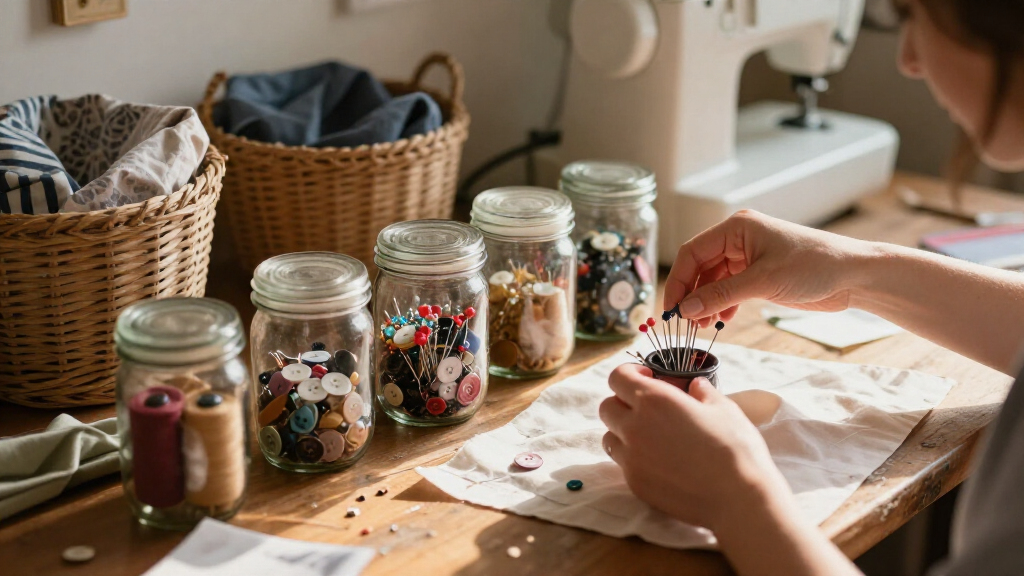
A Hunker report describes a DIY by YouTube creators TheSorryGirls that repurposes a Mason jar as a small sewing kit by adding a fabric pincushion to its lid. The project uses the jar’s separate lid and screw ring and can be made with fabric, filling, scissors and hot glue.
TheSorryGirls’ Mason jar DIY turns a glass canning jar into a compact hand-sewing kit by adding a padded fabric pincushion to its lid, according to a report by Hunker. The design uses the jar’s removable metal lid and screw-on ring to combine storage with a place to keep pins close at hand.
The pincushion is made by layering padding between fabric pieces and attaching the assembly to the underside of the jar’s metal lid. The fabric is cut larger than the lid so its edges can be pulled around and glued in place. Hunker says the fill can include fabric scraps, foam, batting or a sponge, making the project adaptable to materials a crafter already has.
Once the fabric cushion is secured, it is fitted into the jar’s screw ring and attached to the jar. The glass container then holds sewing supplies, while the padded lid provides a spot to insert pins. The report describes the project as requiring little more than scissors and a hot glue gun, rather than specialized cutting equipment.
Hunker also notes two possible variations: makers can hand-sew the cushion instead of gluing it, or attach an adhesive-backed magnet beneath the lid to hold pins. The report mentions that some fruit-cup containers can fit under a Mason jar ring, creating a smaller compartment inside the jar for items such as straight pins or safety pins. That fit depends on the container and jar components being used.
A Jar Holds More Than Supplies
The project brings storage and a pincushion together, so users do not need to keep those parts of a small sewing kit in separate containers. A screw-top jar can also keep loose notions contained, which may be useful for hand sewing at home or on the go, including a basic emergency kit.
For readers interested in reuse, the idea gives an intact glass jar another household use. Its appeal is practical rather than a claim of major waste reduction: the source does not quantify how many jars the project could divert from disposal or compare its environmental effects with buying a sewing kit. Its straightforward materials and optional adaptations make it a small craft project that can be adjusted to available supplies.
As an affiliate, we earn on qualifying purchases.
Why Mason Jar Parts Matter
The design relies on a feature specific to many canning jars: a flat metal lid and a separate screw-on ring. The ring holds the padded lid in place, while the glass jar remains available for storing sewing items. Hunker contrasts this with projects that use ordinary jars, which may require extra cleaning or modification; Mason jars often have no printed product label to remove.
The report places the sewing kit among other jar-reuse crafts and refers to a previous TheSorryGirls project involving a makeup-brush holder. It also mentions a separate pickle-jar lantern project that required a hole saw, distinguishing that more involved work from this sewing-kit version. The sewing kit’s construction, as described, does not require drilling or cutting the jar.
“The project makes a good kit for hand-sewing, especially a portable or emergency sewing kit.”
— Hunker’s report on TheSorryGirls’ project
As an affiliate, we earn on qualifying purchases.
Details the Report Does Not Give
The source does not provide a publication date for the project, a direct statement from TheSorryGirls, or a link to a full materials list and measured instructions. It also gives no information about the finished kit’s dimensions, cost, durability or how well different jar sizes accommodate sewing supplies.
The fruit-cup insert is described as a possible addition, not a guaranteed fit for every jar. The report does not identify which containers work or provide measurements, so users would need to check the fit before relying on the insert. It also does not assess the safety or long-term performance of a glued cushion compared with a sewn one.
As an affiliate, we earn on qualifying purchases.
Check the Fit Before Making
The source describes a DIY method rather than a scheduled product launch or other pending event, and it does not announce a follow-up from TheSorryGirls. Anyone trying the project can begin by matching the lid and ring to the jar, choosing fabric and cushion fill, and checking that the finished padding sits securely in the ring. Those considering the optional inner container should test its size before adding supplies.
Because the method uses hot glue, makers should follow the glue gun’s instructions and take care around hot surfaces. The report provides no updates on whether the creators have shared additional versions or detailed measurements.
As an affiliate, we earn on qualifying purchases.
Key Questions
What is the sewing-kit project?
It repurposes a Mason jar for sewing supplies and adds a fabric pincushion to the metal lid, according to Hunker’s report on TheSorryGirls.
What materials are used for the pincushion?
The described method uses fabric, padding such as scraps, foam, batting or a sponge, and hot glue. The report says the cushion can also be hand-sewn instead.
Does the project require special tools?
Hunker says the basic version needs scissors and a hot glue gun. It does not describe drilling or cutting the glass jar.
Can the jar store pins as well as other sewing supplies?
Yes. The jar can hold sewing items, and the report says a suitably sized fruit-cup container may fit beneath the ring as an extra compartment for pins. The fit is not specified for every jar.
Source: rss
Fall Picks
fall essentials
As an affiliate, we earn on qualifying purchases.