TL;DR

Get furniture and decor delivered free with Prime
- Fast, free delivery on millions of items
- Prime Video, Amazon Music and more included
- Member-only deals all year
A design roundup presents window treatments as both practical fixtures and part of a room’s visual scheme. Examples credited to named design firms show options for managing daylight and privacy while coordinating fabrics, colors and textures with existing decor.
A design roundup on window treatments shows how curtains, shades and blinds can help manage daylight and privacy while shaping the look of a room, with ideas for modern window treatments. The roundup credits examples to interior-design firms including Danielle Rose Design Co., Inside Stories and Allison Handler Design; the pictured options range from light-filtering shades to patterned curtains and floor-to-ceiling panels.
According to the roundup’s room descriptions, the featured window coverings address different needs rather than serving as a single decorative choice. In a bedroom example credited to Kate Hartman, curtains admit some morning light but can be drawn around the space at night. A House of One example pairs panel curtains with large sliding glass doors to block early light. Another House of One room uses a coastal palette of blue and white with blinds that can be closed at bedtime.
The roundup also describes treatments designed to blend into their surroundings. In an Inside Stories living room, curtains match the wall color. An Arterberry Cooke example uses simple, light-filtering white shades in a minimalist setting, with an understated kitchen treatment alongside white countertops and wooden cabinetry.
Other examples use window treatments to add color, pattern and texture, including DIY alternatives to traditional treatments. The roundup credits Phillip Harrison Interiors with pairing patterned curtains with bright magenta walls and rugs in a home office, and combining striped walls, mosaic flooring and colorful blinds in a nook. In an Allison Handler Design example, shades coordinate with throw pillows, while woven blinds are layered with curtains. These are presented as design examples; the source provides no measurements, product specifications or performance testing.
Make Any Space Feel More Like You With the Right Window Treatments
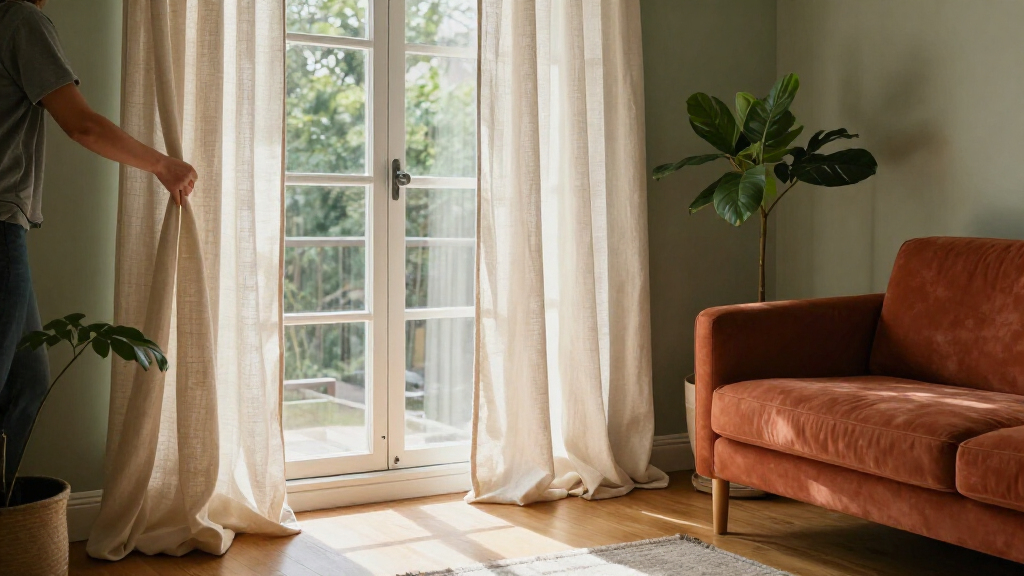
Curtains, shades and blinds can shape a room while helping manage daylight and privacy. The right choice depends on the room’s needs and the look you want.
Start with the room’s needs
The examples use different coverings for bedrooms, shared spaces and minimalist rooms.
Consider daylight, morning light or a darker room at bedtime.
Choose whether coverings should be drawn or closed when needed.
Decide whether the treatment should blend in or add a focal point.
Three ways to shape a room
Match the walls
Inside Stories pairs living-room curtains with the wall color for a quieter look.
Keep it simple
Arterberry Cooke uses light-filtering white shades in a minimalist setting.
Make a focal point
Phillip Harrison Interiors pairs patterned curtains with bright magenta walls and rugs.
Coordinate or contrast
The roundup shows both approaches across bedrooms and shared spaces.
- Match curtains to wall color.
- Pick up colors from throw pillows or wallpaper.
- Pair woven blinds with curtains.
- Use prints or plaid to add pattern.
- Pair colorful blinds with striped walls.
- Layer textures for a stronger decorative effect.
Examples for different rooms
The featured designs illustrate options; they do not establish product performance.
| Room or need | Example shown |
|---|---|
| Bedroom | Curtains that admit some morning light and can be drawn at night |
| Sliding glass doors | Panel curtains described as blocking early light |
| Bathroom | Baby-blue blinds coordinated with wallpaper |
| Kitchen | Simple white shades with white countertops and wooden cabinetry |
Balancing Daylight and Privacy
The roundup illustrates how window coverings can affect both a room’s appearance and its use. Its examples include a bedroom with glass doors where the treatment is described as limiting early light, and shared living and dining spaces where coverings can allow daylight while offering privacy. The described choices include light-filtering shades, curtains that can be drawn, and flexible panels; the source does not provide testing or ratings for their performance.
The examples also show treatments either blending into a room or acting as a focal point. Matching fabric to wall color reduces visual contrast, while prints or plaid add pattern. For readers planning a room, the roundup’s examples suggest considering light control and privacy before selecting colors, patterns and materials. These are design considerations, not evidence that a particular treatment will work equally well in every home.
Products Worth Considering

Philips Hue Festavia Globe Outdoor String Lights, 8 Bulbs, 22 ft

Levoit Vital 100S-P Air Purifier with Washable Pre-Filter

Levoit Core 400S-P Smart Air Purifier for Large Rooms
As an affiliate, we earn on qualifying purchases.
Design Choices Across the Home
The source is a collection of room examples, not a reported study or announcement of a new product. It credits projects to multiple design firms and photographers and includes examples for bedrooms, kitchens, bathrooms, dining rooms and living areas. The material supplies no date, location, pricing or details on when the designs were completed.
Among the approaches described in the roundup are woven shades alongside rattan and natural colors; sheer drapery against dark walls; cafe-style curtains on a gold rod; baby-blue bathroom blinds coordinated with wallpaper; and plaid panels in a cabin-like living room. These examples illustrate the roundup’s design point: coverings can coordinate with furnishings or contrast with them, depending on the intended effect.
Product Details Remain Unspecified
The roundup does not identify specific brands or models, fabric compositions, dimensions, prices or installation methods. It also provides no measurements of how much light each treatment blocks, whether fabrics provide insulation, or how the featured designs perform over time. The examples should not be read as tested product recommendations or guarantees of privacy.
The supplied material does not state when the roundup was published or whether the pictured rooms remain available to view in their original form. It includes no direct quotations from designers; the design choices are described through captions and credits.
Choose by Room and Use
Based on the design examples in the roundup, readers considering a change can start by identifying a room’s main needs: daylight, privacy, reduced early-morning light or a stronger decorative accent. They can then compare curtains, blinds and shades against those needs and consider whether the treatment should match the walls, pick up colors elsewhere or introduce a contrasting texture.
The source offers no scheduled follow-up, product launch or expert guidance beyond the design examples. Decisions about measurements, materials, installation and cost will depend on the individual window and the products selected.
Key Questions
What is the main point of the window-treatment roundup?
It presents curtains, shades and blinds used to manage light and privacy while complementing a room’s colors, patterns and textures.
Which treatments are shown for bedrooms?
The roundup describes curtains that admit some morning light, panel curtains used with sliding glass doors, and coastal-style blinds that can be closed for sleep. It does not specify product models or light-blocking ratings.
Can window coverings coordinate with existing decor?
The examples include curtains matched to wall color, shades that pick up colors already in a room, and blinds coordinated with wallpaper. Other pictured rooms use contrasting patterns as a focal point.
Does the source recommend a particular brand or product?
No. The roundup credits design firms for room examples but does not name product brands, provide prices or compare product performance.
What remains unknown about the featured designs?
The supplied source material does not provide publication timing, product specifications, dimensions, installation details, costs or measured performance for light control and privacy.
Source: goodhousekeeping.com