
TL;DR

Get furniture and decor delivered free with Prime
- Fast, free delivery on millions of items
- Prime Video, Amazon Music and more included
- Member-only deals all year
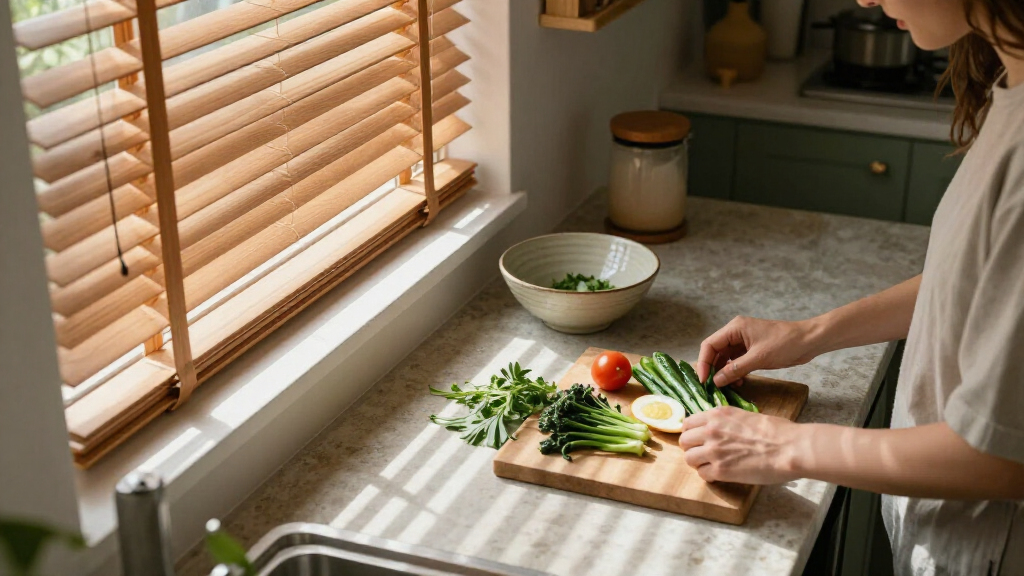
Interior designer Craig Gritzen told Hunker that wide-slat faux-wood blinds are his preferred choice for kitchen windows, citing their resistance to humidity and ease of cleaning. He also named vinyl roller shades, café curtains and Roman shades as alternatives, depending on the window and the need for privacy.
Interior designer Craig Gritzen recommends wide-slat faux-wood blinds for kitchen windows, saying their resistance to humidity and ease of cleaning suit a room exposed to cooking moisture and grease. In an interview with Hunker, the Los Angeles-based designer said the blinds can also complement kitchen finishes without drawing attention away from counters or cabinets.
Gritzen, founder and principal designer of Curated Style Collective, said he favors faux-wood blinds in a warm wood tone or a color that fits the kitchen’s design. He recommended choosing a restrained finish rather than one with an exaggerated wood grain. The design goal, he said, is for the blinds to blend into the room while other features remain prominent.
The material’s practical appeal is a central part of his recommendation. According to Gritzen, faux-wood composites are more resistant than natural wood to the humidity common in kitchens and are less prone to fading, cracking or warping in moist conditions. He also described the blinds as non-porous and easier to wash, including in kitchens where airborne cooking grease can settle on surfaces.
Gritzen also suggested using an extractor hood to reduce cooking residue in the room. He identified high-quality vinyl as another easy-to-clean material, and named vinyl roller shades as an alternative when occupants want a covering that can be raised out of sight to let in more natural light. Café curtains and Roman shades can also suit kitchens, though, he said, fabric coverings need regular washing because grease can collect on them.
Choosing Blinds for Kitchen Conditions
The recommendation addresses two practical pressures on kitchen window coverings: moisture and cooking residue. A material that tolerates humidity and can be cleaned easily may require less upkeep than a covering that absorbs grime or is vulnerable to warping. That can matter particularly at windows near sinks or cooking areas, where splashes, steam and grease may be more frequent.
The advice is a designer’s preference, not a finding from comparative product testing. The best fit can depend on a kitchen’s layout, exposure to sunlight, privacy needs and how close the window is to cooking activity. Faux wood is one option among several, rather than a universal solution for every window.
Products Worth Considering

eufy E25 Robot Vacuum and Mop Combo with HydroJet Roller Mop

Bose TV Speaker Compact Soundbar with Bluetooth and HDMI-ARC, Black

Shark Navigator Robot Vacuum with Self-Empty Base, Dark Grey (RV2120AE)
As an affiliate, we earn on qualifying purchases.
Alternatives Depend on the Window
The Hunker report frames its advice around an interview with Gritzen, rather than a product review or a test of blinds across brands. His main distinction is between traditional vinyl blinds and faux wood: he favors faux wood for its appearance and claimed resistance to kitchen conditions, while also endorsing some other composite materials for cleaning.
His alternatives serve different needs. Vinyl roller shades can be raised to open up a window and maximize light, but that option may be less suitable where privacy is needed. Café curtains and Roman shades can preserve an airy look and may be installed without drilling, according to the report, but their fabric needs routine laundering. Leaving a window uncovered is another possibility if privacy is not a concern and the view is desirable.
“My favorite type of blinds for kitchen windows are simple wide-slat faux wood blinds in either a warm wood tone or color finish that works with the design direction.”
— Craig Gritzen, founder and principal designer of Curated Style Collective, speaking to Hunker
Limits of the Recommendation
The source does not provide independent product testing, measurements comparing how different blinds handle grease or humidity, or brand-specific performance data. It also does not specify how long faux-wood blinds last under particular kitchen conditions or how their cleaning requirements compare across manufacturers.
Gritzen’s comments reflect his professional design judgment. The report does not establish that every faux-wood product will resist moisture or remain easy to clean to the same degree. Buyers may need to check the manufacturer’s care instructions and material specifications for a particular product.
What to Check Before Buying
The report does not announce a product launch, policy change or scheduled follow-up; it offers design guidance. Readers considering blinds can compare material and care instructions, then weigh privacy, light control and the window’s exposure to moisture and cooking grease.
For a low-maintenance look, Gritzen’s preferred option is wide-slat faux wood with a subtle finish. For a window where unobstructed light matters more, a roller shade that lifts out of view may be a better fit. Fabric coverings remain an option for those willing to wash them regularly.
Key Questions
Which blinds does the designer recommend for kitchen windows?
Craig Gritzen recommends simple, wide-slat faux-wood blinds in a finish that suits the kitchen. He favors subtle wood grain rather than a finish designed to closely imitate natural wood.
Why does he prefer faux wood in a kitchen?
Gritzen says faux-wood composites are more resistant to kitchen humidity than natural wood and less prone to fading, cracking and warping. He also describes them as non-porous and easier to clean. The source does not include independent tests comparing products.
Are vinyl blinds unsuitable for kitchens?
No. While the headline contrasts faux wood with traditional vinyl blinds, Gritzen also says high-quality vinyl can be a good easy-clean option and calls vinyl roller shades one of his favorite alternatives.
What other kitchen window coverings does he mention?
He also names café curtains and Roman shades, which can keep a space feeling airy. Fabric options need regular washing because cooking grease can collect on them.
Source: rss