
TL;DR
Livingetc’s wall-art advice says a painting or print can add color, contrast and a personal narrative to a room. The guidance recommends considering scale, proportion and sightlines, while mixing styles to create a collection that reflects the people who live there.
Livingetc’s wall-art guidance argues that paintings and prints can help a room feel more personal by adding color, contrast or a visual narrative. Its practical advice is to choose art that appeals to you, then consider scale, proportion and sightlines when deciding where to display it.

Get furniture and decor delivered free with Prime
- Fast, free delivery on millions of items
- Prime Video, Amazon Music and more included
- Member-only deals all year
The advice treats art as more than a finishing touch for an empty wall. A single painting or print can connect different ideas in a room, bring in an unexpected color or provide contrast against a quieter scheme. The piece may also influence the direction of the room’s design, though the guidance does not present that as a requirement. Its central point is that personal enjoyment is reason enough to choose an artwork.
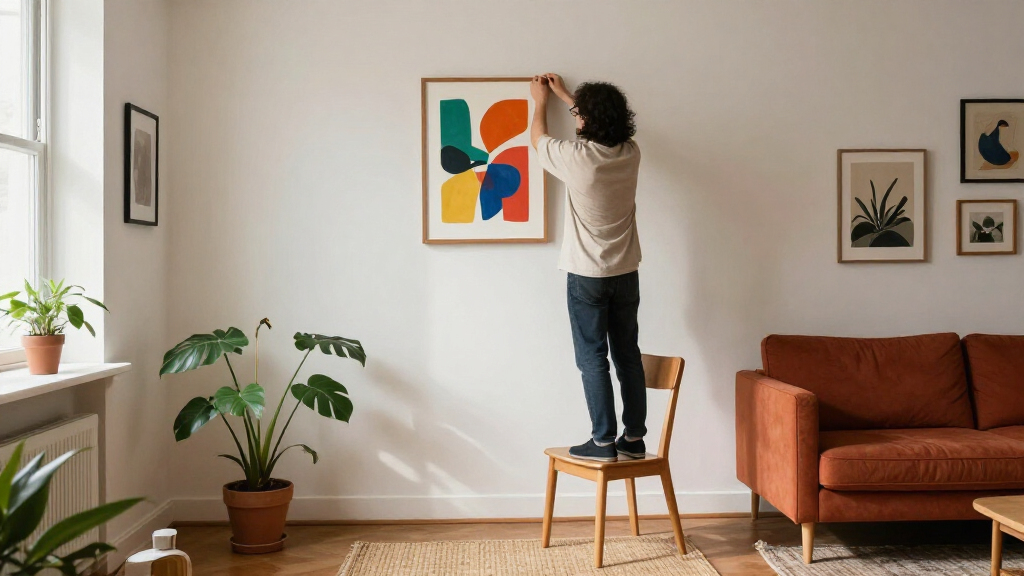
Placement is a separate decision. Livingetc recommends noticing where the eye naturally settles on entering a room and using that as one clue to where art might work. A large, dramatic piece above a sofa can make a strong focal point, while a smaller framed work may suit a neglected nook. The publication points readers toward a separate hanging guide for more placement advice.
The guidance also encourages mixing art styles rather than limiting a room to one visual category. Its examples include pairing a moody photograph with an abstract canvas or placing a delicate pencil sketch beside a bold graphic print. The aim, it says, is a layered collection that tells a personal story, not a set of works chosen to meet a strict decorating rule.
Make your walls feel personal
Livingetc’s guidance: choose art you love, then place it with the room’s scale and sightlines in mind.
Choose what speaks to you
A painting or print can add color, contrast, or a visual story to a room.
Add a new note
Art can introduce a color that appears nowhere else in the room.
Shift the mood
A piece can stand out against a quieter scheme and draw attention.
Tell your story
Personal preference matters more than following one decorating style.
Match the art to its place
Think about proportions and where your eye naturally settles when you enter.
- A large, dramatic piece can anchor the wall above a sofa.
- Check how its size relates to nearby furniture.
- A smaller framed work may suit a neglected corner.
- Consider whether it sits in your natural sightline.
Mix styles for a layered collection
Livingetc suggests combining different kinds of work to make a collection feel personal.
An abstract canvas, photograph, drawing, or graphic print can be a starting point.
Consider a moody photograph beside an abstract canvas, or a pencil sketch beside a bold print.
Adjust the arrangement based on the room and the way the pieces look as a group.
Art as a Personal Design Anchor
The advice matters to readers making decorating choices because wall art can change how a room is read without requiring every surface or furnishing to be replaced. A work can introduce a color that appears nowhere else, create a point of contrast or draw attention to a particular part of the room. In that sense, selecting a piece is both a visual decision and a way to make a space feel connected to its occupants.
The emphasis on scale and sightlines offers a practical counterpoint to taste. A piece may be appealing on its own but feel out of proportion in a particular location, or be missed if it sits outside the natural line of sight. Thinking about those factors can help people decide whether a wall calls for one large work, several differently sized pieces or a smaller framed image in an overlooked corner. The recommendations are design guidance, not a guarantee that one arrangement will suit every room.
Products Worth Considering

Levoit Vital 100S-P Air Purifier with Washable Pre-Filter

Dyson Cyclone V10 Origin Cordless Vacuum

Google Nest Learning Thermostat (4th Gen) with Nest Temperature Sensor (2nd Gen), Obsidian
As an affiliate, we earn on qualifying purchases.
From Empty Walls to Mixed Collections
The Livingetc item is framed as advice for people looking for wall art and a way to display it. It brings together two related questions: what kind of art to choose and how to place it. Rather than prescribing a single style, it gives examples that range from abstraction to portraiture, photography, drawing and graphic prints. The selection is presented as a matter of individual preference, with variety and personal meaning favored over matching every piece.
The item also mentions Livingetc’s Design Lab by Livingetc Find service. It describes the service as free and says readers can share what they are looking for to receive three sourced pieces. The possibilities listed include a one-of-a-kind original artwork as well as other home items, such as a vase or sofa. The article also invites readers to sign up for the Livingetc newsletter, which it describes as featuring trend forecasts, style ideas and shopping inspiration.
““If you love it, that’s reason enough.””
— Livingetc
No Universal Hanging Formula
The advice does not specify measurements, hanging heights, spacing between works or recommended frame types. It also does not name particular artists, retailers or artworks. Its examples illustrate possible combinations, but it does not claim that those pairings will work in every home. Readers still need to judge the room’s dimensions, furnishings and viewing angles for themselves.
No publication date is provided in the supplied item, and it offers no reported survey or research about how wall art affects people’s experience of a room. The recommendations should be understood as editorial design guidance, not as findings supported by quantified evidence. The availability and selection of pieces through the mentioned sourcing service are not detailed beyond the description in the article.
Choosing and Placing a First Piece
For readers putting the advice into practice, the next step is to identify a piece they genuinely want to live with, then consider where it will be seen and how its size relates to nearby furniture. A person starting a collection could try contrasting styles or media, as Livingetc suggests, and adjust the arrangement based on how the works look together in the room. The publication points to its separate guide to hanging art for additional placement tips.
Readers who have a preferred style, color palette or artist but have not found a suitable work can submit a request to Design Lab by Livingetc Find, which the article says returns three sourced options. The publication also promotes its newsletter for design and shopping coverage. The article does not announce a new product, event or upcoming deadline; its next steps are reader-facing suggestions and services, rather than a scheduled development.
Key Questions
What kind of wall art can make a room feel more personal?
Livingetc recommends choosing art you enjoy, whether it is an abstract canvas, portrait, photograph, pencil sketch or graphic print. The guidance favors personal preference over a single prescribed style.
How should I decide where to hang a picture?
Consider scale, proportion and sightlines, including where your eye naturally settles when you enter the room. The article suggests that a large piece may suit the wall above a sofa, while smaller art can work in overlooked spaces.
Can different styles of artwork go on the same wall?
Yes. Livingetc suggests mixing styles, such as pairing a moody photograph with an abstract canvas or a pencil drawing with a graphic print, to create a more layered collection.
What is Design Lab by Livingetc Find?
The article describes it as a free sourcing service. Readers can share what they are looking for and receive three sourced pieces; the listed possibilities include original artwork and other home furnishings.
Source: livingetc.com