
TL;DR

Get furniture and decor delivered free with Prime
- Fast, free delivery on millions of items
- Prime Video, Amazon Music and more included
- Member-only deals all year
Vagabond Haven has introduced the Nature Pod, a compact, mobile cabin featuring ThermoWood exterior and a large rear panorama window. It can be ordered as a DIY kit or fully finished, designed for off-grid living or leisure use. The cabin emphasizes views and connection to nature.
Swedish manufacturer Vagabond Haven has launched the Nature Pod, a 6-meter (about 19’8”) mobile cabin designed to prioritize views and outdoor connection. The cabin features a large panorama window over the bed, ThermoWood cladding, and options for full off-grid living, starting at approximately €5,000 for the DIY kit.
The Nature Pod’s exterior is clad in ThermoWood, a thermally-treated Scandinavian pine that offers enhanced durability and insulation, making it suitable for outdoor use year-round. It is built on a platform of glulam beams supported by concrete blocks or a trailer, allowing mobility or permanent placement.
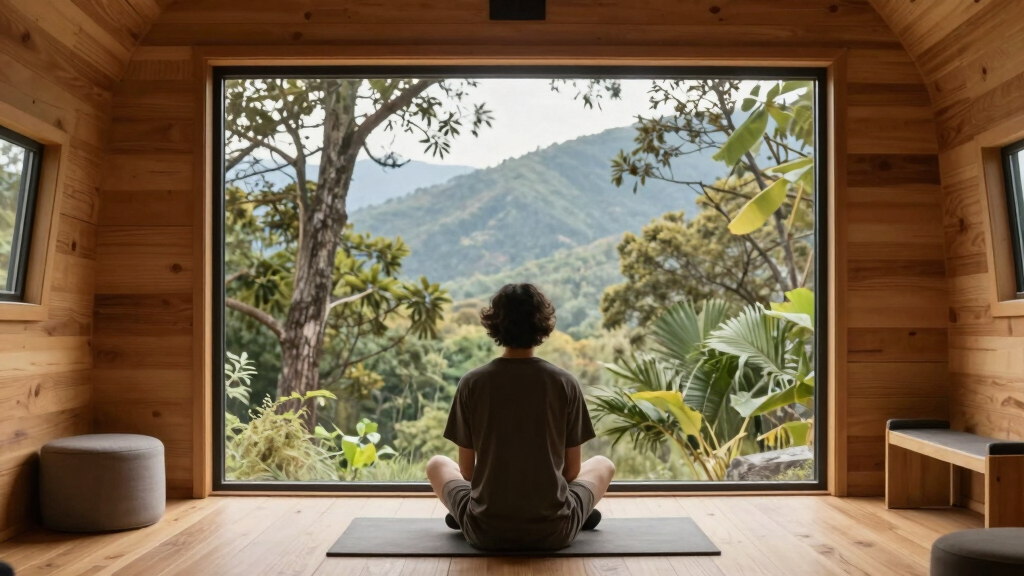
The defining feature is a floor-to-ceiling panorama window at the rear, positioned directly above the bed, providing expansive views of the landscape. The interior includes a queen-sized bed, a compact kitchen with a cooktop and refrigerator, and options for a bathroom with plumbing. An outdoor brass shower complements the setup, and the cabin can be customized with additional insulation, heating, and off-grid solutions.
Impact of the Nature Pod’s Design Focus on Outdoor Living
The Nature Pod’s emphasis on panoramic views and outdoor integration reflects a growing trend in tiny and recreational cabins toward maximizing natural surroundings. Its affordability and modular options make it accessible for a broad audience, potentially influencing small living and leisure markets. The use of ThermoWood enhances durability, making it a practical choice for year-round outdoor use, and its mobility offers flexibility for users seeking both permanence and portability.
As an affiliate, we earn on qualifying purchases.
Swedish company Vagabond Haven has a history of designing minimalist, functional tiny homes. The launch of the Nature Pod continues this tradition, aligning with wider trends in sustainable, small-scale living. ThermoWood has gained popularity in Scandinavian architecture for its stability and insulation properties, often used in outdoor structures. The concept of a mobile, view-focused cabin fits within a broader movement toward flexible, nature-connected retreats.
“The Nature Pod is designed to dissolve the line between inside and outside, offering a unique connection to nature with maximum views and comfort.”
— Vagabond Haven spokesperson
panoramic window for small cabin
As an affiliate, we earn on qualifying purchases.
As an affiliate, we earn on qualifying purchases.
Details Still Unconfirmed About Production and Availability
It is not yet clear how many units Vagabond Haven plans to produce or distribute, or the timeline for mass availability. The full range of optional configurations, such as off-grid systems and furnishings, may vary by order. Further details about long-term durability and user experiences are still emerging.
As an affiliate, we earn on qualifying purchases.
Upcoming Steps for Buyers and Market Impact
Vagabond Haven is expected to open its online configurator for pre-orders and inquiries soon. The company may also showcase completed units at upcoming tiny home or outdoor living expos. Market reception and user feedback will influence future design iterations and production volume.
As an affiliate, we earn on qualifying purchases.
Key Questions
Can I customize the interior layout of the Nature Pod?
Yes, Vagabond Haven offers an online configurator allowing customization of interior options, including kitchen, bathroom, and insulation features.
Is the cabin suitable for year-round living?
With additional insulation, heating, and off-grid solutions, the cabin can be adapted for year-round use, depending on climate and user needs.
What is the weight and mobility of the cabin?
The cabin is designed to be loadable onto a standard trailer or truck, with weight depending on configuration and added features. It supports mobility but requires appropriate vehicle and setup.
What are the options for installing plumbing and electrical systems?
Plumbing and electrical systems are included in configurations that specify these features; they can be scaled from basic to fully off-grid setups, with pre-installed options available.
How durable is ThermoWood in outdoor conditions?
ThermoWood is thermally treated Scandinavian pine that offers approximately 50% better dimensional stability and up to 30% better insulation than untreated timber, making it suitable for outdoor use in diverse climates.
Source: Tiny House Talk
Halloween Picks
halloween
As an affiliate, we earn on qualifying purchases.