
TL;DR

Get furniture and decor delivered free — and shop member deals
- Fast, free delivery on millions of items
- Access to Prime Big Deal Days deals on October 6–7
- Prime Video, Amazon Music and more included
A previously unseen 1915 film shows the renowned sculptor Auguste Rodin working at his Paris studio, the Hôtel Biron. This footage provides rare visual documentation of his process shortly before his death, offering valuable insights into his life and work.
A rare film from 1915 has been made publicly available, showing the sculptor Auguste Rodin working in his Paris studio at the Hôtel Biron, two years before his death. The footage offers a rare visual record of the artist actively engaged in his craft, providing new insights into his working methods and environment at a pivotal point in his career.
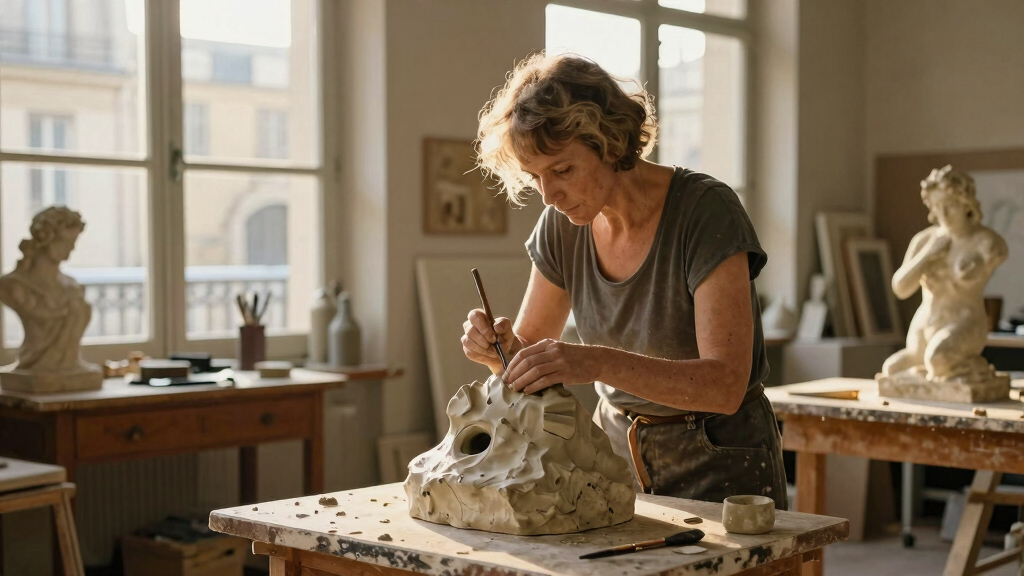
The film, shot in 1915, features Rodin at the age of 74, walking down the steps of the Hôtel Biron and working inside the studio by chiseling a marble sculpture. The Hôtel Biron, a historic mansion in Paris, served as Rodin’s studio and residence after he negotiated to occupy the space in 1909, in exchange for bequeathing his works to the French state. The footage was captured by Sacha Guitry and his cameraman, and it is now considered a significant visual document of the artist’s life during his later years.
Rodin’s studio was a hub for notable artists and intellectuals, including Jean Cocteau and Rainer Maria Rilke, who served as his secretary. The film shows Rodin working with a hammer and chisel, embodying his famous approach of ‘chopping off what he doesn’t need’ when creating sculptures. The footage also includes scenes of the artist in a garden and at the entrance of the building, highlighting his environment and daily routine.
New Visual Record of Rodin’s Creative Process
This film offers a rare, authentic glimpse into Rodin’s working environment and methods, enriching understanding of his artistic process. It is particularly valuable for scholars, art historians, and enthusiasts interested in the life of one of sculpture’s most influential figures. The footage also enhances historical knowledge of the Hôtel Biron, which later became the Musée Rodin, and provides context for the artist’s final years.
As an affiliate, we earn on qualifying purchases.
Historical Context of Rodin’s Later Years and Studio
Auguste Rodin, renowned for masterpieces like The Thinker and The Kiss, spent his final years at the Hôtel Biron, which he had secured in 1909 after a deal with the French government. The mansion, originally built in the 18th century, became a gathering place for notable artists and intellectuals. Rodin’s decision to donate his works to France and his residence at the Hôtel Biron cemented his legacy. The discovery of this film adds a new dimension to the visual documentation of his life during this period, complementing existing photographs and writings.
“This footage is one of the few visual records of Rodin in his studio, capturing his working process at a mature stage of his career.”
— an anonymous researcher
As an affiliate, we earn on qualifying purchases.
Remaining Questions About the Film’s Origin and Content
It is not yet clear how the film was preserved or who initially filmed it. The full extent of the footage and whether additional scenes exist remain unknown. Experts are also examining the film’s condition and authenticity to confirm its provenance and historical accuracy.
As an affiliate, we earn on qualifying purchases.
Further Analysis and Public Exhibition of the Film
Scholars and curators are expected to study the footage further, potentially including it in exhibitions or academic publications about Rodin. There may also be efforts to restore and digitize the film for broader public access, enhancing its role as a vital historical document.
art studio lighting for sculptors
As an affiliate, we earn on qualifying purchases.
As an affiliate, we earn on qualifying purchases.
Key Questions
How was this film discovered?
The film was uncovered in a private collection and later verified by experts as a genuine 1915 recording of Rodin at work in his studio.
What does the film reveal about Rodin’s working methods?
The footage shows Rodin actively chiseling marble, illustrating his approach of removing excess material to shape his sculptures, a hallmark of his style.
Why is this film considered significant?
Because visual documentation of Rodin working in his studio during his later years is extremely rare, making this footage a valuable resource for understanding his creative process and environment.
Will the film be publicly accessible?
Scholars and institutions are expected to study the footage further, with potential plans to include it in exhibitions or digital archives for public viewing.
Are there other unknown films of Rodin?
It is uncertain whether additional footage exists. Currently, this film is one of the few known visual records of Rodin at work in the early 20th century.
Source: The best free cultural & educational media on the web – Open Culture
Halloween Picks
halloween
As an affiliate, we earn on qualifying purchases.