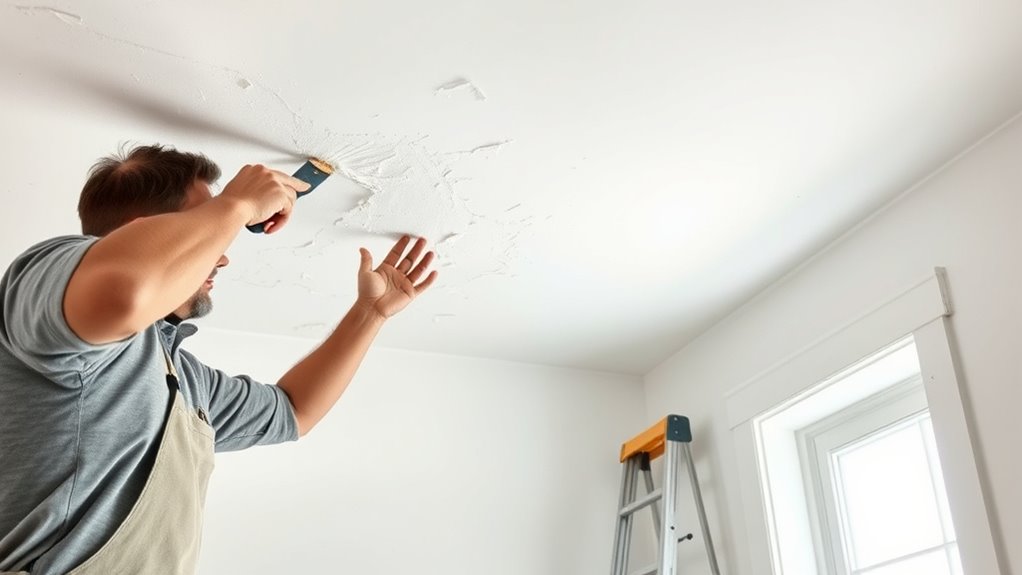
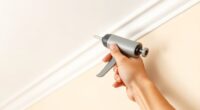
To fix flashing and lap marks, start by cleaning and lightly sanding the affected areas for a smooth surface. Apply a high-quality primer to guarantee proper adhesion and to cover stains or patches. Use a small brush or sponge to blend new paint seamlessly into the existing wall, working quickly and smoothly to avoid streaks. If you want flawless results, follow these steps carefully; continue exploring for even more expert tips.

Get furniture and decor delivered free — and shop member deals
- Fast, free delivery on millions of items
- Access to Prime Big Deal Days deals on October 6–7
- Prime Video, Amazon Music and more included
Key Takeaways
- Identify uneven patches, streaks, or lap marks to locate the flashing and lap mark issues accurately.
- Thoroughly clean and lightly sand affected surfaces before applying primer for better adhesion.
- Use high-quality primer to cover stains and patch spots, ensuring a uniform base for painting.
- Feather edges with a small brush or sponge, blending new paint seamlessly into existing surfaces.
- Apply additional thin coats if needed, and allow proper curing for a smooth, professional finish.

Wall and ceiling marks can quickly turn a fresh space into an eyesore, but fixing them is simpler than you might think. When you notice uneven patches, streaks, or lap marks, it’s tempting to think a complete repaint is necessary. However, with the right approach, you can repair these flaws seamlessly and restore your walls to their original beauty. The key lies in understanding how to properly prepare the surface and execute effective paint blending.
Start by inspecting the affected areas closely. Often, lap marks and flashing happen because of uneven application or insufficient drying time between coats. To fix this, first clean the surface thoroughly to remove dust or grease, ensuring the new paint adheres well. Lightly sanding the area can also help smooth out any ridges or bumps, creating an even surface for touch-up work. Using a seasonal checklist can help you determine the best time for painting to avoid issues caused by humidity or temperature fluctuations.
When applying primer techniques, choose a high-quality primer that matches your wall’s current color or the final paint. Primers help create a uniform base, especially if you’re covering stains or repairing patches. Applying a thin, even layer of primer over the affected area prevents the old marks from showing through the new paint. This step is essential because it enhances paint adhesion and minimizes the risk of further lap marks.
Once the primer dries, it’s time to blend the new paint with the existing wall. Paint blending is a critical step in ensuring your repairs are invisible. Use a small, high-quality brush or a sponge to feather the edges of the new paint into the surrounding area. Work quickly and lightly to avoid creating new streaks or ridges. If you’re using a roller, lightly dampen it before applying the paint to reduce the chance of uneven application. Always work in overlapping strokes to fade the repaired section into the rest of the wall seamlessly.
If you notice any differences in sheen or color, don’t hesitate to do a second light coat, focusing on blending the edges carefully. It’s better to build up coverage gradually rather than trying to cover everything in one thick layer. After the final coat, allow the paint to cure fully before evaluating the result. If needed, lightly sand and re-blend to achieve a perfect finish.
With patience and attention to primer techniques and paint blending, you can repair flashing and lap marks effectively. The result will be a smooth, professional-looking wall that no longer draws attention to your repairs. Fixing these imperfections doesn’t require extensive skills—just a bit of care and the right tools, and your walls will look flawless again.
As an affiliate, we earn on qualifying purchases.
Frequently Asked Questions
What Causes Flashing and Lap Marks to Appear Unexpectedly?
Flashing and lap marks happen unexpectedly mainly because of poor paint adhesion or improper primer selection. When you don’t use the right primer, your paint may not bond well, causing uneven drying and visible streaks. Additionally, applying paint too thick or in inconsistent layers can lead to these marks. To prevent this, guarantee you choose a suitable primer for your surface and apply paint evenly, allowing proper drying time.
Can Environmental Factors Worsen Wall and Ceiling Marks?
Did you know that over 60% of homeowners report humidity issues affecting wall finishes? Environmental factors like humidity and temperature fluctuations can definitely worsen wall and ceiling marks. High humidity causes paint to peel or develop mold, while temperature swings lead to cracking or uneven drying. These conditions make it harder to achieve a smooth finish, so controlling moisture and temperature is vital for preventing and fixing flashing and lap marks effectively.
Are There Specific Paints That Prevent Flashing and Lap Marks?
Yes, certain paint formulations can help prevent flashing and lap marks. Look for paints with high-quality pigments and good leveling properties, which promote smooth, even coverage. Using a primer suited to your wall or ceiling surface is essential, as it improves adhesion and reduces the chance of marks showing through. Always choose paints labeled as self-leveling or designed to hide lap lines for the best results.
How Long Should I Wait Before Repainting After Fixing Marks?
You should wait at least 24 hours before repainting after fixing marks. Proper drywall preparation is essential; guarantee the surface is smooth and dry. Apply a primer to seal repairs and create an even base. Once the primer is fully dry, typically 2-4 hours, you can reapply your paint. Rushing this process may cause flashing or lap marks to reappear, so patience ensures a flawless finish.
Do Different Wall Textures Require Special Repair Techniques?
Ever wonder if your wall’s texture affects repair? Different wall textures do require special repair techniques. Texture considerations are vital, so you need to match the existing surface for a seamless look. Proper surface preparation is essential—sanding, cleaning, and applying the right primer ensures the repair blends well. For rough or textured surfaces, using a stipple brush or sponge can help mimic the original finish, giving you professional results.
As an affiliate, we earn on qualifying purchases.
Conclusion
Now that you know how to fix flashing and lap marks, you’ll transform your walls and ceilings effortlessly. Did you know that improper finishing can reduce your home’s resale value by up to 10%? Taking the time to address these flaws not only improves your space’s appearance but also preserves its value. With these simple tips, you’ll guarantee your walls stay flawless and beautiful for years to come. Happy decorating!
As an affiliate, we earn on qualifying purchases.
As an affiliate, we earn on qualifying purchases.
Halloween Picks
halloween
As an affiliate, we earn on qualifying purchases.