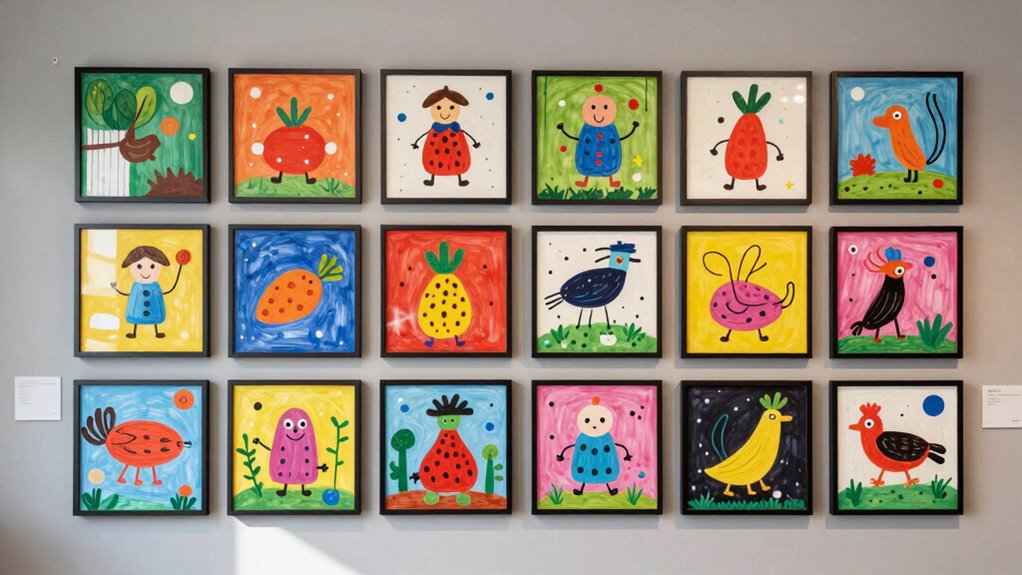

Using one consistent element in kids’ art displays creates a unified and polished look that immediately catches the eye. It helps tie all the pieces together, making the display more cohesive and less chaotic. This approach highlights your child’s growth and creativity while enhancing your home’s aesthetic. Choosing a single framing style or color scheme can reinforce visual harmony. Keep exploring to discover how these strategies can transform your display into a cherished showcase.

Get furniture and decor delivered free with Prime
- Fast, free delivery on millions of items
- Prime Video, Amazon Music and more included
- Member-only deals all year
Key Takeaways
- A consistent element creates visual harmony, making the display more cohesive and aesthetically pleasing.
- It helps unify diverse artworks, giving the collection a polished, professional look.
- Repeating a single element emphasizes importance and shows intentional curation.
- It simplifies maintenance by providing a shared feature for easy updates and rotations.
- Overall, it enhances the home’s decor and highlights children’s artistic growth effectively.
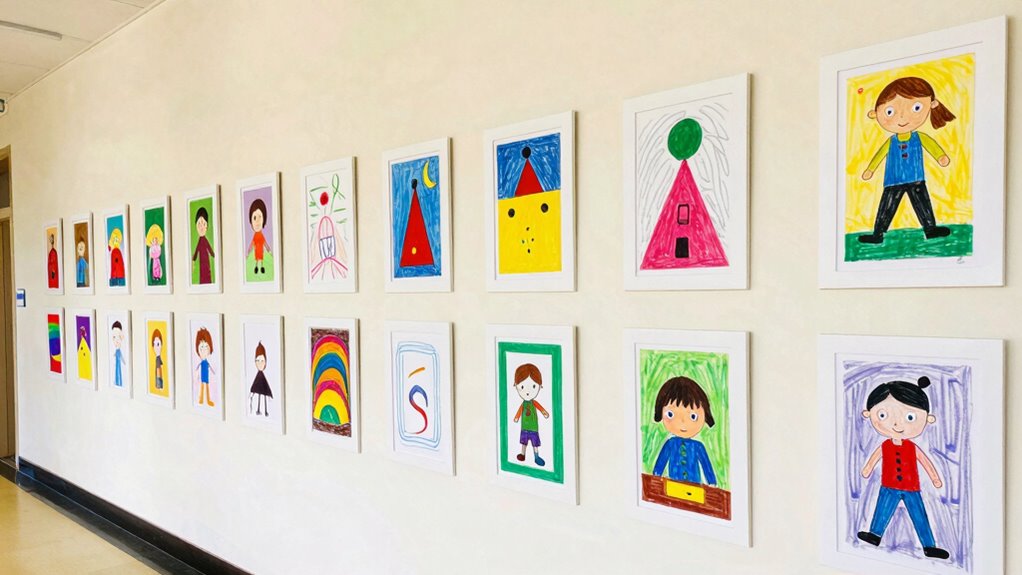
Displaying your child’s art consistently can transform your home into a vibrant showcase of creativity. When you take the time to curate and present their artwork thoughtfully, it becomes more than just scattered doodles on the fridge; it turns into a cohesive display that highlights their growth and imagination. One key to achieving this polished look is to incorporate a single, consistent element throughout the display, which instantly elevates the overall aesthetic. Incorporating visual harmony through consistent elements helps create a balanced and pleasing presentation.
Showcase your child’s art with consistency to create a vibrant, cohesive display that celebrates their growth and creativity.
Color coordination is a powerful tool in making kids’ art displays look unified. Instead of mixing all kinds of hues haphazardly, you can choose a specific color palette that complements your home’s decor. For example, if your living room features muted earth tones, selecting artwork with soft pastels or subdued shades will create harmony. Conversely, vibrant reds and blues can energize a space that’s more neutral. By intentionally selecting or encouraging your child to use certain colors, you establish a visual thread that ties all the pieces together. This consistency in color not only makes the display more visually appealing but also helps your child recognize the importance of presentation and aesthetic coherence. Additionally, establishing display routines can help maintain this consistency over time, making it easier to keep the display fresh and organized. Creating a dedicated space for artwork can further reinforce this routine and make updating the display a regular part of your family activities.
Frame styles are another essential element to focus on. Using the same type of frame throughout the display creates a sense of unity and professionalism, even when the artwork varies in style or medium. For instance, sleek black or white frames are versatile choices that work well with most color schemes and add a modern touch. Alternatively, choosing a uniform wooden frame can evoke warmth and a cohesive feel, especially if your decor leans toward natural textures. The key is to pick a frame style and size that suit the artwork and stick with it. This consistency prevents the display from becoming chaotic and allows your child’s creations to shine without visual distractions. When the frames match, your eye naturally moves across the display smoothly, making it more engaging and less cluttered. Additionally, consistent display practices make it easier to update or rotate the artwork without disrupting the overall look.
Maintaining a consistent element, whether it’s through color coordination or frame styles, simplifies the process of updating or rotating your child’s art. It makes the display more intentional and less hurried, reinforcing the idea that their work is valued. When every piece shares a common element, your home becomes a curated gallery rather than a jumble of random art, and the effort you put into this visual coherence can inspire your child’s own sense of pride and creativity. Ultimately, it shows that you respect and cherish their artistic efforts, making their art not just something to display, but a meaningful part of your home’s story.
Frequently Asked Questions
How Can I Introduce Consistency Gradually Without Overwhelming My Child?
You can introduce consistency gradually by starting with a single element, like color coordination or frame uniformity. Begin by choosing frames or colors that match your child’s artwork, then slowly expand this approach to new pieces. Keep the style simple and consistent, making it easier for your child to adapt. Over time, this creates a cohesive display without overwhelming them, fostering pride and a sense of achievement.
What Are Some Common Mistakes to Avoid When Creating a Cohesive Display?
Avoid common mistakes by paying attention to color coordination and frame uniformity. Don’t let each piece clash like mismatched socks; instead, choose a consistent color palette that ties everything together. Also, use similar frames for all artwork to create a unified look. Overloading the display with too many different styles can make it chaotic, so keep a balance. This way, your kids’ art becomes a harmonious gallery rather than a visual jumble.
Does Using One Element Limit the Variety of Artwork I Can Showcase?
Using one element doesn’t limit your art diversity or display flexibility; instead, it creates a cohesive look that highlights each piece. This consistent element acts as a unifying factor, making it easier to showcase a variety of artworks without the display feeling chaotic. You can still include diverse styles and mediums, while the shared element provides structure, allowing your child’s creativity to shine through in a balanced, visually appealing way.
How Often Should I Update or Rotate the Art Display for Freshness?
Think of your art display as a garden that needs seasonal pruning to stay vibrant. You should update or rotate your kid’s art every 4-6 weeks to keep it fresh and engaging. During this process, consider art preservation techniques and ideal display lighting to protect each piece. Regular updates prevent fading or damage, making your display a lively showcase of your child’s evolving creativity.
Can a Consistent Element Work With Different Art Styles and Mediums?
Yes, a consistent element can work with different art styles and mediums by creating art style harmony and ensuring medium compatibility. You can choose a simple frame, a specific color palette, or a unifying background that complements diverse artworks without overpowering them. This consistency ties everything together, making each piece stand out while maintaining a cohesive display that celebrates your child’s creativity across various styles and mediums.
Conclusion
When you create a kids’ art display with one consistent element, it’s like giving their creativity a steady heartbeat. It helps tie all their unique pieces together, turning a jumble of colors and shapes into a harmonious gallery. Keep that one element simple—like a matching frame or a unifying background—and watch how their artwork shines even brighter. Remember, consistency isn’t about sameness; it’s about giving their masterpieces a graceful stage to take center stage.
Halloween Picks
halloween
As an affiliate, we earn on qualifying purchases.