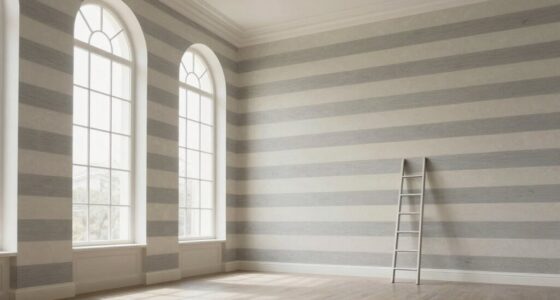
To make ceilings feel taller using art, focus on placing large, vertically oriented pieces or murals that draw the eye upward. Choose artwork with elongated shapes or abstract lines that emphasize height. Use light, cool colors in the art to create a receding effect that expands the space. Enhance these effects with upward or indirect lighting to highlight the art and extend vertical perception. Keep framing simple and avoid clutter to maintain a seamless view that boosts height. If you keep exploring, you’ll discover more ways to maximize your space.
Listen free for 30 days with Audible
Thousands of audiobooks and originals — cancel anytime.
As an affiliate, we earn on qualifying purchases.
Key Takeaways
- Select tall, vertically oriented artwork or murals that draw the eye upward along the walls.
- Use light, cool colors like soft blues and pastels in art to create a receding effect and enhance height.
- Incorporate upward or downward wall lighting to highlight artwork and emphasize vertical space.
- Hang art slightly lower on the wall to create a sense of elongation and vertical flow.
- Choose sleek, minimal framing to maintain visual continuity and support the illusion of taller ceilings.

Ever wondered how art can transform a space and make your ceilings appear taller? It’s a clever trick that relies on perception, and you can easily achieve it with the right choices. One effective way to do this is by using art strategically to draw the eye upward. When selecting artwork, think about color psychology—using certain hues can influence how spacious your room feels. Bright, cool colors like soft blues, greens, and pastel shades tend to recede visually, creating an illusion of more height. Conversely, dark or warm colors tend to advance, making a space feel more enclosed. So, opting for art with light, airy colors can help elongate your ceiling line.
Using light, cool colors in art can visually extend your ceiling height and create a more spacious feeling.
Lighting techniques also play an essential role. Proper lighting can enhance the effects of your art and emphasize the vertical space. Consider installing wall-mounted lights that cast upward or downward, highlighting artwork and creating a sense of height. Indirect lighting, such as LED strips hidden behind crown molding or along the top edges of your walls, can bounce light off the ceiling, making it seem higher. Additionally, using spotlights to focus on specific pieces of art draws attention upward and creates a visual pathway that guides the eye from the floor to the ceiling, amplifying the illusion of height. Understanding perception and visual tricks can help you better utilize these techniques for maximum effect. Incorporating visual perception principles into your decor choices can make a significant difference. To further enhance the illusion, using spatial cues like perspective and scale in your artwork can also contribute to a more spacious feeling. Recognizing spatial perception can help you select the most effective pieces to achieve this illusion.
Choosing the right art pieces is equally important. Large, vertically oriented artwork or murals that extend from near the floor to the ceiling can serve as a visual elongation of the wall. Abstract art with elongated lines or images that draw the eye upward can also reinforce the perception of increased height. When hanging art, place it slightly lower than usual, so it appears grounded and doesn’t cut off the vertical flow, further emphasizing height. Incorporating visual harmony in your arrangement ensures a cohesive look that guides the viewer’s gaze upward smoothly. Avoid cluttering walls with small pieces scattered across the space, which can make the ceiling feel even lower.
Finally, framing your art thoughtfully can enhance this effect. Thin, sleek frames or no frames at all keep the focus on the artwork and prevent visual interruption, maintaining a sense of vertical continuity. When combined with the right color choices and lighting techniques, your art becomes a powerful tool to manipulate perception. With these strategies, you can make your ceilings seem taller, opening up your space and giving it a more airy, expansive feel—without needing to do any major renovations.
As an affiliate, we earn on qualifying purchases.
Frequently Asked Questions
Can Specific Colors Influence Ceiling Height Perception?
Yes, specific colors can influence your perception of ceiling height. Color psychology shows that lighter shades, like soft blues and whites, make ceilings appear higher, creating a spacious feel. Perception illusions work when you use these colors strategically in art and decor. By choosing the right hues, you enhance the sense of openness, making your room feel taller and more airy without any structural changes.
Is There a Preferred Art Style for Taller Ceiling Illusions?
Ever wonder which art style best tricks your eyes into perceiving taller ceilings? Ceiling murals are your top choice—they create a seamless, expansive view that draws the eye upward. Abstract patterns also work well; their dynamic shapes and lines add depth and movement, making ceilings seem higher. These styles engage your gaze and create the illusion of space, making your room feel more open and airy without major renovations.
How Does Lighting Interact With Ceiling Art?
Lighting plays a vital role in enhancing ceiling art’s impact. You should use ambient illumination to softly highlight the artwork, creating a welcoming glow that draws the eye upward. Incorporate shadow play by positioning lights strategically to add depth and dimension, emphasizing the art’s details. This interplay between light and shadow makes the ceiling appear taller, giving the room a more spacious and dynamic feel.
Can Ceiling Art Suit Small Rooms Effectively?
You can definitely use ceiling murals as art focal points in small rooms; think of them as a window to another world that draws the eye upward. When you choose a bold, well-placed piece, it creates an illusion of height and space, much like an optical illusion. Small rooms benefit from this trick, making ceilings feel taller and more expansive without overwhelming the space.
What Are Common Mistakes to Avoid With Ceiling Art?
You should avoid cluttering your ceiling with overly busy designs or mismatched wall mural coordination, which can make the space feel chaotic. Be cautious with ceiling texture, as heavy or textured finishes can distract from your art, limiting its impact. Instead, opt for subtle textures and coordinated murals that draw the eye upward naturally, creating the illusion of height without overwhelming the room. Keep it simple and balanced for the best effect.
As an affiliate, we earn on qualifying purchases.
Conclusion
By incorporating art thoughtfully, you can transform your ceiling into an endless sky or a distant horizon, making your room feel spacious and open. Think of your walls as a canvas that guides the eye upward, creating a sense of height that wasn’t there before. With a little creativity, your ceiling becomes a gateway to a room that feels like it stretches beyond the limits of your walls—an artful illusion that elevates your entire space.
As an affiliate, we earn on qualifying purchases.
As an affiliate, we earn on qualifying purchases.
NFL season / tailgating Picks
team gear
As an affiliate, we earn on qualifying purchases.