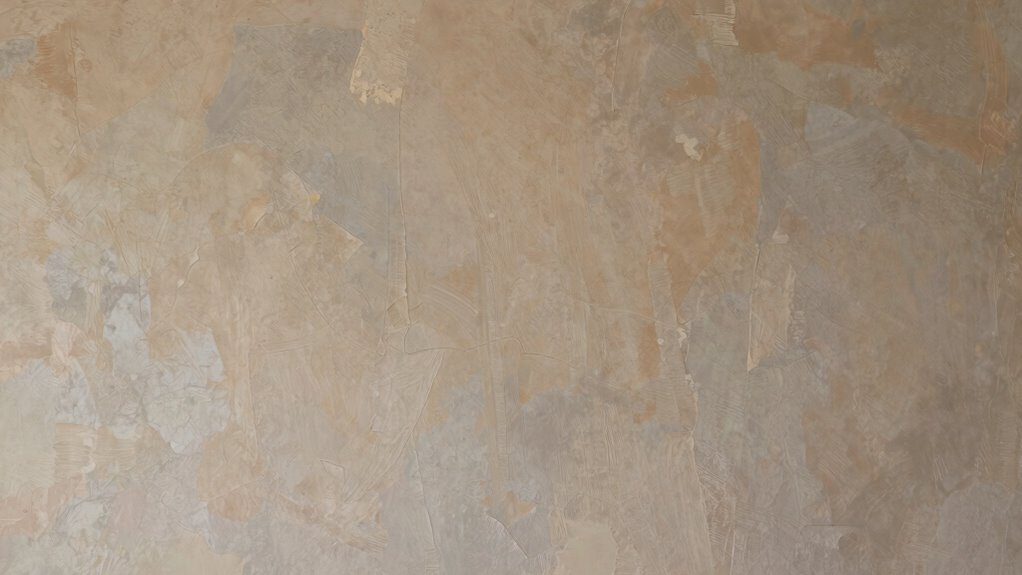

For a faux-finish wall treatment that ages beautifully indoors, choose textured techniques like sponging, rag rolling, or glazing with earthy tones such as taupe, olive, or terracotta. These finishes develop a charming patina over time, hiding imperfections and adding depth with layered textures. They’re durable, easy to touch up, and resist fading, ensuring a timeless look. Keep exploring to discover how to create these elegant finishes and make your walls stand the test of time.
Key Takeaways
- Choose earth-tone colors like taupe, olive, or terracotta for a timeless, aging-friendly finish.
- Use textured techniques such as sponging or rag rolling to create depth and conceal imperfections.
- Apply glazing layers to add translucency and richness that develop a desirable patina over time.
- Opt for durable, layered faux finishes that age gracefully and enhance character with minimal maintenance.
- Select finishes that respond well to light, highlighting texture and evolving attractively as they age.
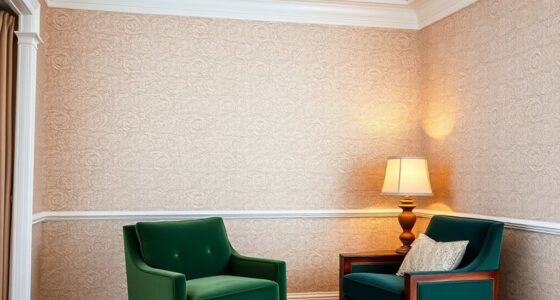
Are you looking for a creative way to elevate your home’s interior? Faux-finish wall treatments offer a remarkable option that combines artistry with practicality, especially when you want something that ages beautifully indoors. When selecting a faux finish, the key lies in choosing a versatile color palette. Earthy tones like warm taupe, muted olive, or soft terracotta tend to age gracefully, hiding minor imperfections and preventing the space from feeling dated. These colors blend seamlessly with various décor styles and tend to develop a charming patina over time, enhancing the room’s character rather than detracting from it.
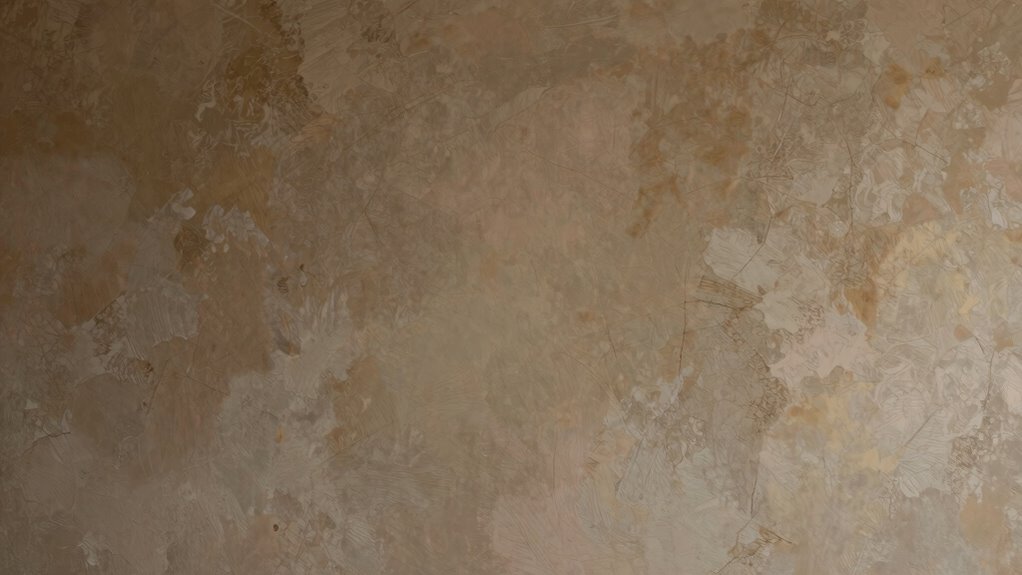
Texture techniques are at the heart of a successful faux-finish wall treatment. Whether you’re aiming for a subtle, velvety look or a more dramatic, layered effect, the right texture techniques can add depth and visual interest that stand the test of time. Techniques such as sponging, rag rolling, or glazing allow you to create a textured surface that mimics natural materials like stone, plaster, or aged wood. For example, a gentle sponge application using a sponge dauber or foam sponge can produce a soft, mottled effect that conceals scratches and blemishes, making it perfect for high-traffic or humid areas like kitchens and bathrooms. Rag rolling adds a dynamic, slightly rough texture that lends an authentic, handcrafted feel, while glazing introduces a translucent layer that enriches the color palette and highlights the surface’s dimensional qualities. Additionally, understanding how faux-finish techniques interact with light can help you achieve the desired depth and vibrancy in your space. Recognizing the aging process of faux finishes can also guide you in selecting finishes that develop a desirable character over time, rather than looking worn-out prematurely.
Texture techniques like sponging, rag rolling, and glazing add depth and natural charm to faux-finish walls.
One of the great advantages of faux finishes using these texture techniques is their durability. As they age, they tend to develop a patina that enhances their charm rather than detracting from it. Unlike paint that can chip or fade unevenly, well-executed faux finishes with layered textures tend to age gracefully and even improve with time. Plus, they’re easier to touch up when needed—simply reapply the same technique to refresh the finish without worrying about mismatched paint patches.
Ultimately, the secret to a faux-finish wall treatment that ages well indoors is in your choices of color palette and texture techniques. Opt for earthy, muted tones that won’t quickly go out of style, and focus on creating textured surfaces that add depth and character. This combination results in a timeless aesthetic that not only elevates your space but also stands up to the test of time, aging gracefully and becoming even more appealing as the years go by.
As an affiliate, we earn on qualifying purchases.
Frequently Asked Questions
How Long Does a Faux-Finish Wall Typically Last Indoors?
A faux-finish wall typically lasts around 5 to 10 years indoors, depending on the faux finish durability and how well you maintain it. You can extend indoor wall longevity by avoiding excessive moisture and using gentle cleaning methods. Proper application and occasional touch-ups also help preserve its appearance. With good care, your faux finish can stay vibrant and attractive for many years, making it a worthwhile investment.
Is Faux Finish Suitable for High-Moisture Areas Like Bathrooms?
Faux finish isn’t the best choice for high-moisture areas like bathrooms because its durability depends on the type and application. Regular faux finishes generally lack bathroom moisture resistance, making them prone to peeling or damage from humidity. If you want a faux finish in your bathroom, make certain you use a high-quality, sealed coating designed for moisture resistance. Proper sealing can improve its durability, but it’s still less ideal than moisture-specific wall treatments.
Can I Apply a Faux Finish Over Existing Painted Walls?
Yes, you can apply a faux finish over existing painted walls. Start by preparing the surface with cleaning and light sanding to guarantee proper adhesion. Use color blending techniques to match or complement the existing color, and employ texture techniques like sponging or rag rolling to create depth. This approach allows you to refresh your walls creatively while ensuring the new faux finish adheres well and lasts over time.
What Are the Safest Products to Use for Faux Finishing?
Safety is your top priority—think of your walls as a canvas where only the gentlest, most eco-friendly paints should be used. Opt for eco-friendly paints and non-toxic sealants, which are the safest options for faux finishing. These products reduce harmful fumes and environmental impact while providing durable, beautiful finishes. Always check labels to confirm they’re certified safe for indoor use, so your space remains healthy and stylish.
How Often Should Faux-Finish Walls Be Touched up or Maintained?
You should touch up your faux-finish walls about every 2-3 years to maintain color preservation and keep them looking fresh. Regular maintenance scheduling helps prevent chips and fading, especially in high-traffic areas or rooms with lots of sunlight. Keep an eye on the condition of the finish, and if you notice any wear or discoloration, don’t wait—touch up promptly to preserve the beauty and longevity of your faux-finish walls.
As an affiliate, we earn on qualifying purchases.
Conclusion
If you’re worried that faux-finish wall treatments might look cheap or outdated over time, rest assured they can actually age beautifully with proper care. When applied skillfully, these finishes develop a rich, layered patina that adds character and depth to your space. With regular upkeep, your walls will remain stunning and sophisticated, proving that a well-executed faux finish can be a timeless choice rather than a passing trend.
As an affiliate, we earn on qualifying purchases.
As an affiliate, we earn on qualifying purchases.