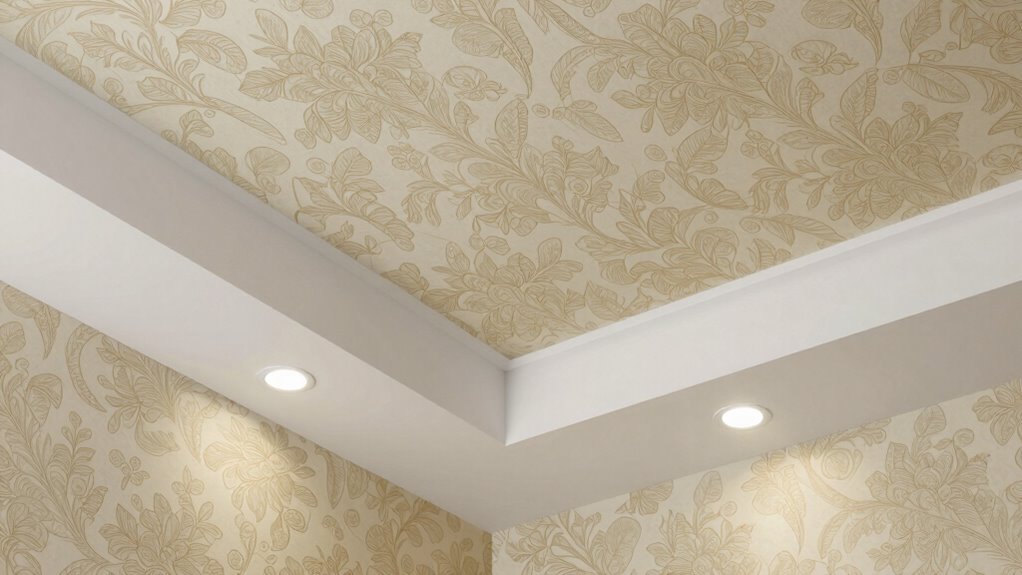

To plan a wallpaper ceiling around existing lighting, start by measuring the ceiling and noting the fixture locations, ensuring you know their sizes and positions. Choose a pattern that complements the space and aligns well with fixtures, using vertical or horizontal orientation to enhance room proportions. Carefully cut and match the pattern around fixtures for a seamless look, considering how lighting will affect shadows and ambiance. Keep these tips in mind, and you’ll create a stunning, well-coordinated ceiling that highlights your lighting features.
Key Takeaways
- Measure ceiling dimensions and note fixture locations to plan wallpaper pattern placement accurately.
- Choose pattern orientation (vertical, horizontal, diagonal) to enhance room proportions and complement lighting.
- Cut wallpaper precisely around fixtures, ensuring seamless pattern flow and a clean finish.
- Consider how lighting interacts with the pattern to create desired mood and minimize shadows.
- Incorporate lighting fixtures into the design by matching or cutting around them for a cohesive look.
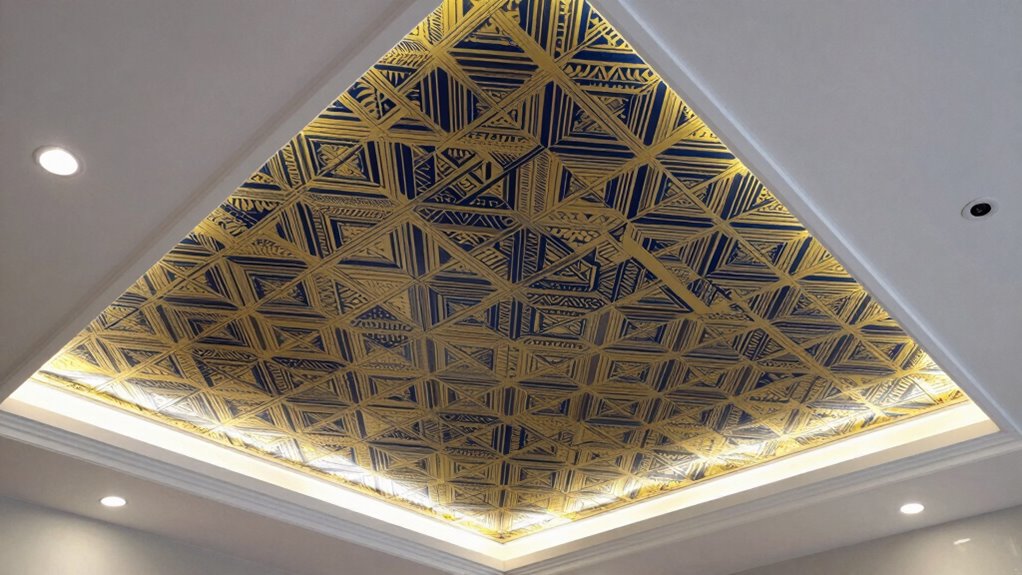
Planning a wallpaper ceiling around existing lighting can transform a room’s ambiance, but it requires careful measurement and strategic planning. The key is understanding how lighting placement influences the overall look and how your wallpaper pattern can enhance or detract from that effect. Before you start, take note of where your light fixtures are positioned and how they illuminate the space. This awareness can help you make more informed decisions about pattern placement and fixture integration. This also helps you anticipate potential shadow effects and avoid visual clutter, ensuring a cohesive design. Begin by measuring your ceiling thoroughly, paying close attention to the placement of any existing lighting fixtures. Determine the size of each fixture, including their distance from the edges of the ceiling, to ensure your wallpaper pattern aligns properly. If you have recessed lights, for example, you want to avoid covering them completely or creating an awkward visual obstruction. Instead, plan to cut the wallpaper around these fixtures or incorporate them into your design by choosing patterns that complement the lighting. When selecting a wallpaper pattern, think about how it interacts with the lighting. Large, bold patterns can add drama but may also overwhelm a space if not balanced with proper lighting placement. Smaller, more subtle patterns tend to work well if your lighting is already busy or if you want a calmer atmosphere. If your room has multiple light sources, like sconces or track lighting, plan the wallpaper pattern so it flows seamlessly from one section to another. This cohesion ensures that the lighting doesn’t create distracting focal points or shadows that clash with the wallpaper design. Additionally, lighting effects can be influenced by the wallpaper’s pattern and placement, creating different moods and visual effects depending on how the light interacts with the surface. Considering lighting considerations early in your planning process can help prevent costly adjustments later. Remember that the visual balance of your ceiling design hinges on how well the wallpaper pattern and lighting are integrated, making it essential to plan with both in mind. As you plan, keep in mind that the wallpaper’s orientation can influence how light interacts with the ceiling. Vertical patterns can make the ceiling seem higher, which might be desirable if you have low ceilings. Horizontal or diagonal patterns can add a sense of width or movement, especially when illuminated by strategic lighting placement. Taking into account wallpaper pattern orientation as part of your design process can help you achieve a balanced and harmonious look. When you come to the installation phase, carefully cut and align the wallpaper around light fixtures for a clean, professional look. Use the pattern to draw attention to or away from lighting features, creating an ambiance that’s both inviting and visually balanced.
wallpaper for ceiling with lighting cutouts
As an affiliate, we earn on qualifying purchases.
As an affiliate, we earn on qualifying purchases.
Frequently Asked Questions
Can I Install Wallpaper on a Textured or Uneven Ceiling?
You can install wallpaper on a textured or uneven ceiling, but first, you need to address the texture removal to create a smoother surface. Use a skim coat or joint compound to level out the uneven surface, then sand it down for a clean finish. This preparation guarantees the wallpaper adheres properly, resulting in a professional look. Skipping this step might cause bubbles, wrinkles, or peeling over time.
What Types of Lighting Fixtures Are Best for Wallpapered Ceilings?
For wallpapered ceilings, choose lighting fixtures that complement your design and minimize shadows, like flush mounts or recessed lighting. Lighting design is essential; fixtures with diffused or soft light work best to highlight your wallpaper without causing glare. Proper fixture placement ensures even illumination and enhances the visual appeal. Avoid hanging fixtures that protrude excessively or create uneven shadows, keeping your wallpaper’s pattern and texture in focus.
How Do I Ensure Safety When Working Around Ceiling Lights?
You guarantee safety by turning off the power at the circuit breaker before starting. Use insulated tools to prevent electrical shocks and avoid touching any wiring. Check lighting compatibility to confirm your fixtures can handle wallpaper installation without overheating. Always follow electrical safety guidelines and, if unsure, consult a professional electrician. Keep your workspace dry and clear of any conductive materials to prevent accidents. Prioritizing safety keeps your project successful and risk-free.
Is It Necessary to Turn off the Electrical Power Before Wallpapering?
Yes, you should turn off the electrical power before wallpapering around ceiling lights. Electrical safety is essential to prevent shocks or accidents. A power shutdown ensures you can work safely and avoid damaging the light fixtures or wiring. Always double-check that the power is off at the circuit breaker before starting your project. Taking this precaution keeps you safe and helps you complete your wallpapering efficiently.
How Do I Remove Wallpaper if I Want to Change the Lighting Later?
Think of your ceiling as a canvas that tells a story. When you want to change the lighting, removing wallpaper is like erasing old chapters to start anew. Carefully score the wallpaper, then gently peel and use a wallpaper remover for ceiling prep. This process guarantees you can smoothly take down the wallpaper without damaging the surface, making it easier to install new lighting or a fresh coat of decorative paint afterward.
As an affiliate, we earn on qualifying purchases.
Conclusion
Planning a wallpaper ceiling around existing lighting is like orchestrating a symphony—you want everything to work in harmony. I once helped a client who initially struggled to visualize the finished look, but once the lights and wallpaper came together, it was like watching the final note of a melody resonate perfectly. With careful planning and patience, you’ll create a stunning space where every element complements the next, turning your ceiling into a work of art that shines as brightly as your imagination.
recessed light wallpaper cut template
As an affiliate, we earn on qualifying purchases.
As an affiliate, we earn on qualifying purchases.
wallpaper pattern matching tools
As an affiliate, we earn on qualifying purchases.
As an affiliate, we earn on qualifying purchases.