To avoid overtrusting your wall scanner, always verify its findings by marking spots and crossing over from different angles. Use additional safety tools like a voltage tester or a separate probe to confirm your results before starting any drilling. Remember, false signals can happen due to materials or interference. Regularly calibrate your device and inspect it for damage. Keep learning more tips to guarantee safe and accurate use with confidence.
Key Takeaways
- Always verify scanner readings with multiple passes and cross-checks from different angles.
- Use visual clues like outlets or switches to confirm detected objects.
- Incorporate additional safety tools like voltage detectors before drilling.
- Regularly calibrate and maintain the scanner for accurate, reliable results.
- Be aware of external factors and material interference that may cause false positives.
Have you ever wondered how to accurately locate studs, pipes, or wires behind your walls? Using a wall scanner can be incredibly helpful, but it’s vital not to rely on it blindly. While these devices are designed to make your work safer and more efficient, overtrusting them can lead to mistakes. To avoid costly errors or accidents, you need to understand the importance of safety precautions and proper device calibration.
Start by familiarizing yourself with your wall scanner’s instructions. Every model has unique features, and knowing how yours operates will improve your accuracy. Before you begin, always check the device’s calibration. Most scanners require periodic calibration to ensure their sensors are functioning correctly. A miscalibrated device might give false readings, causing you to drill into a pipe or wiring. Many scanners have calibration modes or test functions—use them regularly, especially if you notice inconsistent results. Proper calibration is an essential safety precaution, helping you avoid potential hazards and costly repairs.
Familiarize yourself with your wall scanner’s instructions and regularly check its calibration for accurate, safe results.
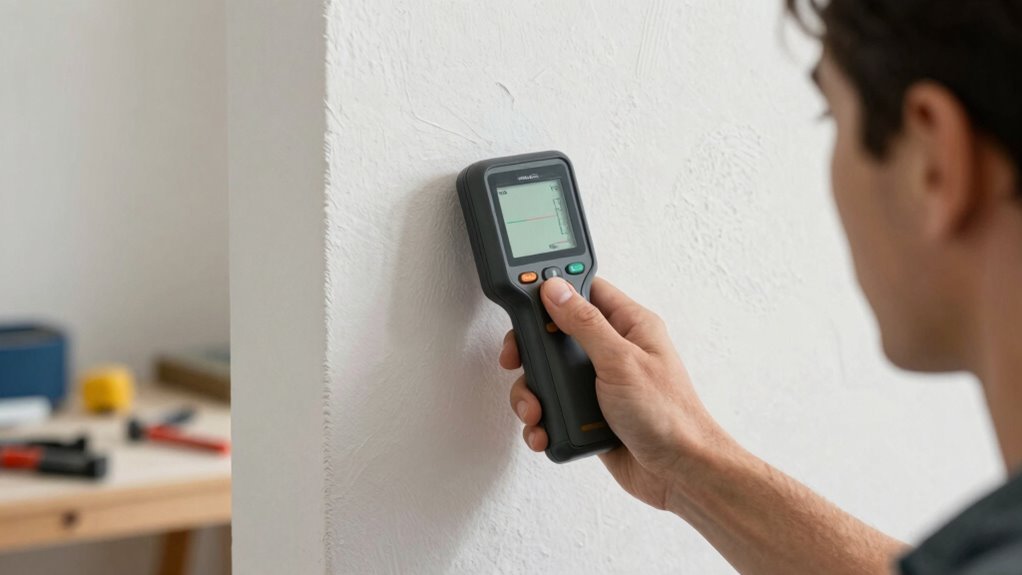
When you start scanning, remember that wall scanners are tools to assist you, not infallible detectors. Always verify their readings by taking multiple passes across the same area from different angles. If you detect a stud or pipe, mark it and then double-check by scanning perpendicular to your initial pass. This cross-checking helps confirm the presence of what you’re trying to locate and reduces the risk of mistakes. Keep in mind that some wall materials or electrical interference can cause false positives; don’t rely solely on the device’s indication. Use visual clues, such as outlets or light switches, to help confirm your findings. Additionally, understanding the technology behind wall scanners can help you interpret their readings more accurately and avoid overtrusting them. Being aware of possible sources of false readings can also assist you in distinguishing between real hazards and misleading signals. Proper knowledge of sensor sensitivity can further improve your detection accuracy and confidence in the device.
Safety precautions extend beyond just using the device correctly. Always turn off the power supply to the wall area you’re working on, especially when drilling or cutting. Even if the scanner indicates no wires or pipes are present, you should proceed cautiously—never assume the device’s readings are 100% accurate. Use a continuity tester or voltage detector as an additional safety step before making any holes. Remember, your goal is to prevent accidents, not just to locate objects behind walls. Additionally, having knowledge of how wall scanner sensors work can further improve your confidence in their readings and help you make better decisions during your project. Being aware of potential interference sources can further minimize false positives and ensure safer work practices. Finally, keep your wall scanner well-maintained. Store it in a safe place, protect it from drops, and regularly check the battery life. A poorly maintained device may give unreliable readings, leading you to overtrust its indications. By combining proper safety precautions, diligent device calibration, and cautious verification, you can use your wall scanner effectively without overtrusting it. This approach ensures your projects are safe, accurate, and successful.
wall scanner calibration tool
As an affiliate, we earn on qualifying purchases.
As an affiliate, we earn on qualifying purchases.
Frequently Asked Questions
Can Wall Scanners Detect All Types of Wiring?
Wall scanners can’t detect all types of wiring because of device limitations. They mainly identify live electrical wires, but might miss some low-voltage or non-metallic cables. For electrical safety, don’t solely rely on the scanner. Always double-check with other methods, such as turning off power or using a voltage tester. Remember, understanding device limitations helps prevent accidents and guarantees safer work environments.
How Often Should I Calibrate My Wall Scanner?
Think of your wall scanner like a vintage radio—it needs regular tuning. Calibrate it every 1 to 3 months to maintain scanner accuracy. Frequent calibration helps guarantee you detect wiring and studs accurately, preventing surprises like live wires or hidden pipes. If you notice inconsistent readings, it’s time for a quick recalibration. Regularly maintaining your scanner keeps it reliable, so you’re always confident before making any holes or adjustments.
What Are Common Mistakes When Using a Wall Scanner?
You might mistake the device limitations for absolute accuracy, risking mishaps. Avoid common mistakes like not following safety precautions, which can lead to accidents. Always read the user manual thoroughly before use, and don’t rely solely on the scanner’s readings. Remember, wall scanners have limitations in detecting certain materials or depths, so double-check with other methods if necessary. Stay cautious, and prioritize safety to prevent errors.
Do Wall Scanners Work on All Wall Surfaces?
Wall scanners don’t work equally well on all wall surfaces because of different wall materials and scanner limitations. They perform best on drywall or plaster but may struggle with brick, concrete, or metal studs. You should always verify scans with visual cues or manual checks, as some materials can cause false readings. Understanding your scanner’s limitations helps prevent mistakes and guarantees more accurate results when locating studs or pipes.
How Reliable Are Wall Scanners in Different Weather Conditions?
Think of wall scanners as weather-sensitive plants—they can be affected by the elements. Weather impact can cause fluctuations in readings, especially if sensors aren’t well-calibrated. Cold, humidity, or rain may interfere with sensor calibration, reducing reliability. To get accurate results, always check your scanner’s calibration before use, and avoid relying solely on it in extreme weather conditions. Remember, even the best tools need a little human judgment.
stud finder with wire detection
As an affiliate, we earn on qualifying purchases.
As an affiliate, we earn on qualifying purchases.
Conclusion
Remember, a wall scanner is your trusty sidekick, not a magic wand. It’s like a fortune teller with a mischievous streak—sometimes it’s right, sometimes it’s playing tricks on you. So don’t trust it blindly; double-check with a probing tool or a good old-fashioned tap. Treat it like a helpful but slightly mischievous friend, and you’ll avoid surprises—like hitting a hidden pipe or releasing a hidden ghost in your wall!
voltage tester for wall safety
As an affiliate, we earn on qualifying purchases.
As an affiliate, we earn on qualifying purchases.
wall scanning safety kit
As an affiliate, we earn on qualifying purchases.
As an affiliate, we earn on qualifying purchases.