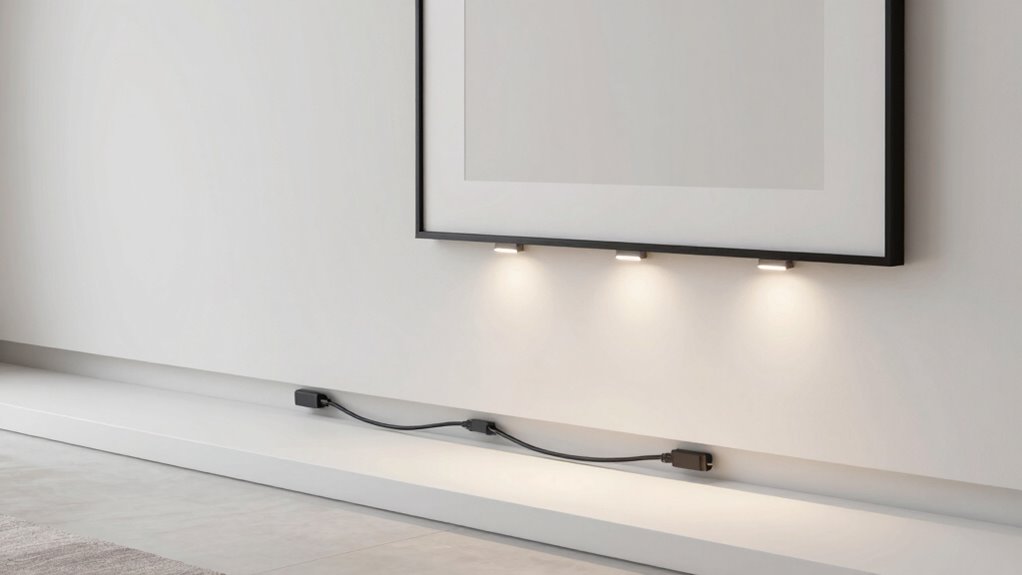

To hide cords for plug-in art lights neatly, hide them behind furniture or within wall cavities if possible. Use cord covers or raceways, painted to match your wall color, to conceal and guide the cables along edges. You can also bundle cords with sleeves or spiral wraps for a tidy look, or position outlet strips behind furniture. For a seamless finish, consider wireless options or running cords inside walls. Keep exploring for more tips to keep your space sleek and clutter-free.
Key Takeaways
- Use cord covers or raceways painted to match the wall to conceal cords neatly along walls or ceilings.
- Run cords behind furniture or within wall cavities for a seamless, clutter-free appearance.
- Reposition outlet strips behind or beneath furniture to hide cords from view.
- Opt for wireless or battery-powered art lights to eliminate visible cords entirely.
- Organize and bundle excess cords with sleeves or spiral wraps for a tidy, unobtrusive setup.
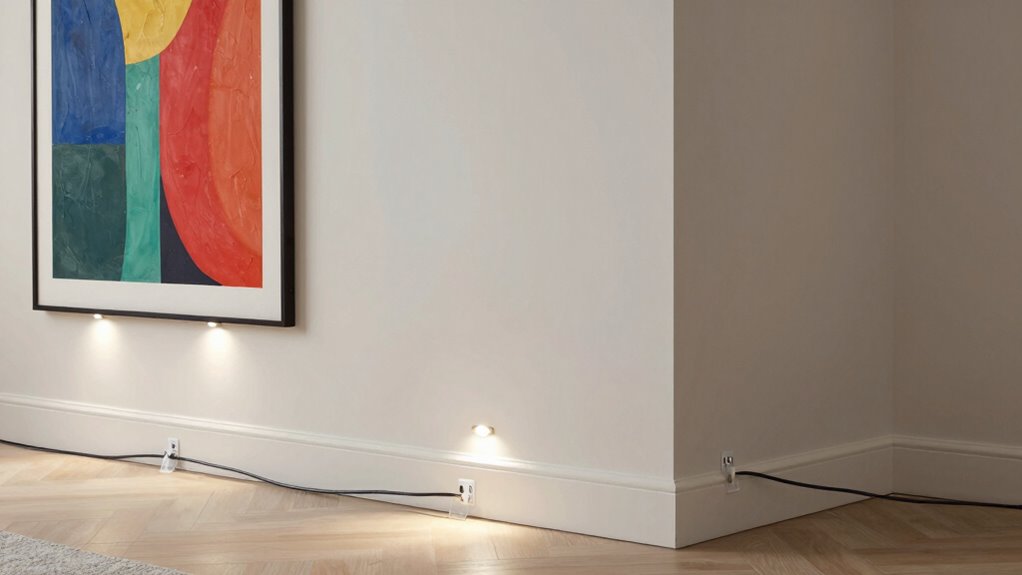
If you’ve ever struggled with visible cords ruining the sleek look of your art lights, you’re not alone. Many people find that cords and wires can detract from the clean, professional appearance they want to achieve. Luckily, there are straightforward cord concealment techniques that can make a significant difference. The key is to focus on aesthetic cable management, which involves organizing and hiding cords so they blend seamlessly into your decor. Start by evaluating where your cords run and look for natural hiding spots, such as behind furniture, along baseboards, or within wall cavities. Using cord covers or raceways can help you create a tidy, uniform look, especially when painted to match your wall color. These covers snap onto the wall and hide the cords completely, making your art lights look like they’re floating effortlessly.
Hide cords behind furniture or within walls for a sleek, professional art lighting display.
Another effective method involves running cords through the wall or ceiling if you’re comfortable with minor electrical work or willing to hire a professional. This approach transforms visible wiring into a hidden system, giving your space an ultra-clean appearance. If running cords through the wall isn’t an option, consider using adhesive cord clips or hooks to guide the cables along edges or corners, keeping them tight and out of sight. These clips are easy to install and can be repositioned as needed, helping you maintain aesthetic cable management without much hassle. Additionally, understanding the importance of wire organization can help you achieve a clutter-free look more efficiently. Properly managing and concealing cables reduces visual clutter and enhances the overall room decor. Using a variety of cable management tools like clips, sleeves, and covers can further simplify the process and help you keep everything neat. Incorporating wire concealment techniques that match your decor can make a surprising difference in the overall ambiance of your space. To make the process easier, researching different cable concealment options can help you find the most suitable solution for your specific setup.
Cable sleeves or spiral wraps are also helpful tools for bundling multiple cords together, reducing clutter and making the setup look more intentional. When using extension cords, select ones with flat plugs, which can sit flush against the wall and be less noticeable. For even more discreetness, opt for wireless or battery-powered art lights, eliminating cords altogether. If your art lights are near power outlets but the cords are still visible, consider plugging them into outlet strips hidden behind furniture or inside decorative boxes to keep the cords out of sight. Finally, choose art lights with built-in cable management features, such as integrated channels or clips, to streamline the process. The goal is to keep cords organized and out of plain sight, so your art remains the star of the room. With a little effort and the right tools, you can achieve a refined, clutter-free look that highlights your artwork without the distraction of unsightly cords.
As an affiliate, we earn on qualifying purchases.
Frequently Asked Questions
Can I Hide Cords Without Damaging the Wall Paint?
Yes, you can hide cords without damaging your wall paint by using cord concealment methods like adhesive cord clips or channels that are gentle on paint. These options keep cords tidy and secure while protecting your wall’s finish. Just make certain you choose products designed for wall protection, and follow the manufacturer’s instructions carefully. This way, you maintain a clean look without risking damage or paint peeling.
What Tools Are Best for Hiding Cords Behind Drywall?
For cord concealment through drywall routing, you’ll want a drywall saw or utility knife to carefully cut a channel where the cords will run. A fish tape or wire puller helps guide the cords through the wall. Use a stud finder to avoid studs and wires. Finish with a drywall patch or cover plate to keep the look clean. These tools make routing cords behind drywall straightforward and neat.
How Long Does It Take to Install Hidden Cord Solutions?
Installing hidden cord solutions typically takes a few hours to a full day, depending on your chosen method and your DIY skills. If you opt for cord concealment options like running cords inside the walls or using cable raceways, plan for installation timelines that include measuring, cutting, and secure mounting. Simple solutions like cable clips or behind-baseboard concealment are quicker, often completed within an hour or two.
Are There Wireless Alternatives to Plug-In Art Lights?
Wireless options are a game-changer, transforming your space faster than you can say “amazing.” You can opt for battery-powered lights, which eliminate cords altogether, providing a sleek, clutter-free display. These lights are easy to install and move around, offering flexibility and convenience. With advances in battery life and brightness, wireless alternatives are perfect for showcasing your art without the hassle of hiding cords, making your decor look effortlessly polished.
How Do I Hide Cords on Textured or Uneven Walls?
To hide cords on textured or uneven walls, you should focus on wall texture concealment and cord painting techniques. Use flexible, paintable cord covers that mold to the wall’s texture, then paint them to match your wall for a seamless look. Alternatively, opt for adhesive cord channels that contour to uneven surfaces, or hide cords behind furniture or trim to avoid disrupting the wall’s natural texture.
As an affiliate, we earn on qualifying purchases.
Conclusion
With a little patience and some clever tricks, you can make your art lights look museum-perfect, hiding cords as if they were never there. Think of it like a wizard’s touch, transforming your space into a sleek gallery, all while channeling the elegance of a Victorian drawing room. Soon, your artwork will shine bright without any clutter in sight, and you’ll feel like you’ve stepped into a modern-day château—sophisticated, tidy, and utterly charming.
As an affiliate, we earn on qualifying purchases.
As an affiliate, we earn on qualifying purchases.