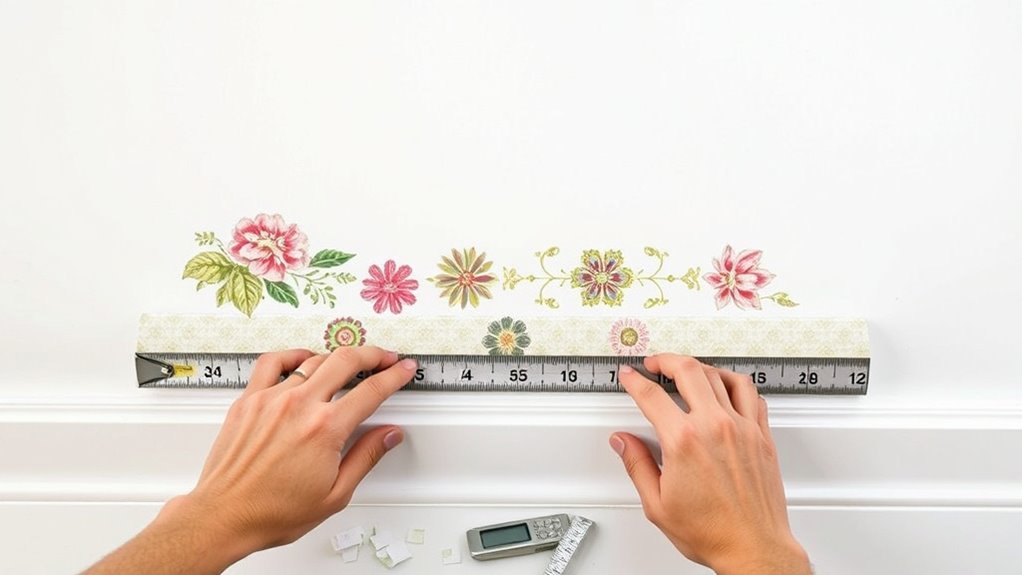

To accurately measure for wallpaper, start by measuring each wall’s height and width, noting irregularities and accounting for doors and windows. Calculate the total surface area and then determine the wallpaper length needed, considering the pattern repeat and match type. Add an extra 10-15% for waste and adjustments. Proper planning helps you avoid shortages and reduces waste. Keep going to discover more tips to ensure a professional, seamless finish with minimal waste.
Key Takeaways
- Measure wall height and width at multiple points to account for irregularities and ensure accuracy.
- Calculate total surface area by multiplying height and width for each wall, then sum for the entire space.
- Consider pattern repeat and match type to determine extra material needed for seamless alignment.
- Add 10-15% extra to total measurements for waste, pattern matching, and future repairs.
- Properly store and handle wallpaper during and after installation to minimize damage and waste.
As an affiliate, we earn on qualifying purchases.
Gathering Necessary Tools and Materials
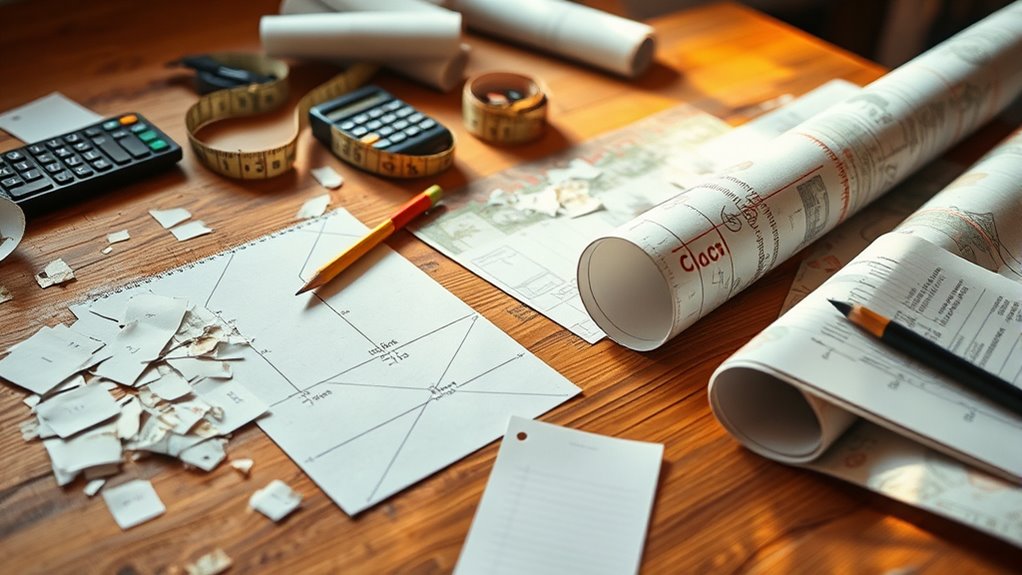
Before you begin measuring for wallpaper, it’s important to gather all the necessary tools and materials. Start with high-quality wallpaper adhesives suited for your wallpaper type, ensuring a strong, lasting bond. You’ll also need a primer for preparation—this helps the wall surface accept the wallpaper more effectively and prevents issues like bubbling or peeling. Collect a tape measure, level, pencil, and a utility knife for precise cutting and measuring. A smoothing tool or brush is essential for eliminating air bubbles and wrinkles during installation. Don’t forget a sturdy ladder if you’re working on tall walls. Proper primer preparation and reliable adhesives are key to a smooth, durable finish, so double-check you have everything before you start measuring and prepping your walls. Additionally, choosing the right wall preparation materials can significantly influence the longevity and appearance of your wallpaper. To ensure optimal adhesion and color accuracy, consider selecting appropriate primer and adhesive types based on your wallpaper material and wall surface. Good preparation also involves understanding the science behind wall priming, which helps achieve a seamless and professional look.
As an affiliate, we earn on qualifying purchases.
Measuring Wall Dimensions Accurately
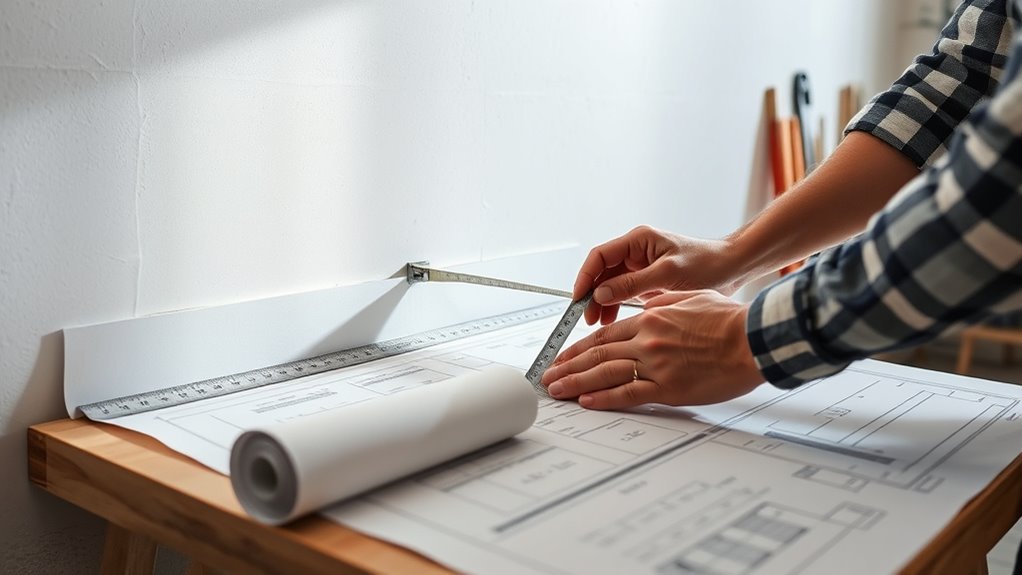
How can you guarantee your wallpaper fits perfectly? Accurate wall measurements are essential. Start by ensuring your wall is properly prepared—clean, smooth, and free of obstructions—before measuring. Consider environmental factors like humidity and temperature, which can affect wall dimensions over time. Use a tape measure to record height and width at multiple points, noting any irregularities or slopes. To visualize, here’s a simple table:
| Wall Section | Height (ft) | Width (ft) |
|---|---|---|
| Section 1 | 8.2 | 10.5 |
| Section 2 | 8.1 | 10.7 |
| Section 3 | 8.3 | 10.6 |
Measuring precisely helps avoid surprises, reduces waste, and ensures your wallpaper looks flawless once installed. Proper measurement techniques are vital for minimizing material waste and achieving a professional finish, especially when accounting for regional differences that may influence wall dimensions.
As an affiliate, we earn on qualifying purchases.
Calculating Wall Area for Wallpaper Coverage

Calculating the wall area is an essential step to determine how much wallpaper you’ll need for your project. Measure the height and width of each wall to find the total surface area. Remember, accurate calculations help you avoid excess waste and ensure you purchase enough wallpaper. When considering wallpaper durability, know that thicker, more durable options may require extra adhesive or specific application techniques. Choose adhesive options suited to your wallpaper type to guarantee proper adhesion and longevity. Using precise measurements and understanding the wall’s surface area allows you to select the right wallpaper and adhesive, reducing waste and ensuring a professional finish. Always double-check your math to prevent underestimating or overestimating the amount of wallpaper needed for your space. Proper planning also involves considering workspace organization to streamline your project and prevent unnecessary waste.
As an affiliate, we earn on qualifying purchases.
Determining Wallpaper Length and Width Requirements
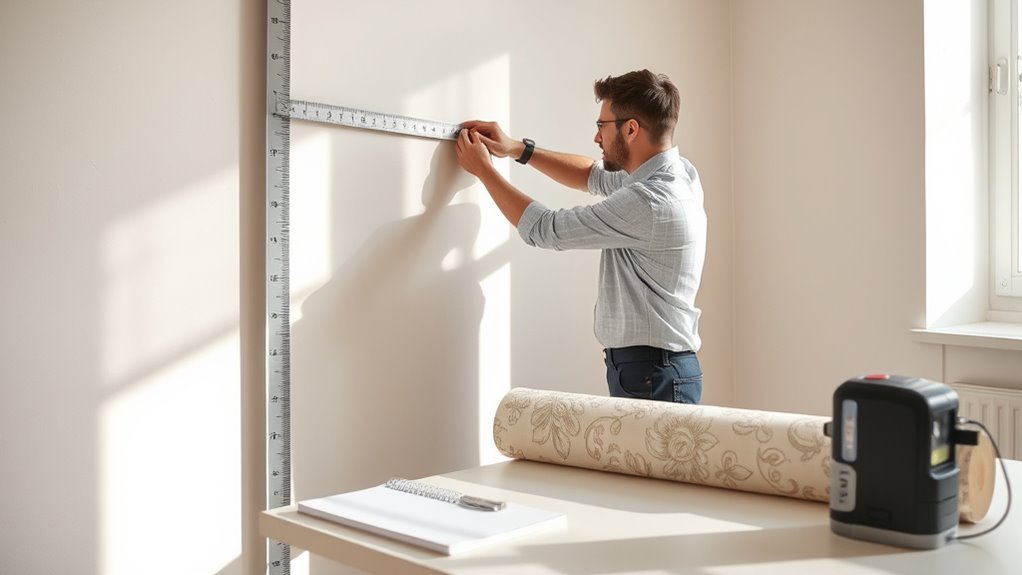
Determining the correct wallpaper length and width is crucial to guarantee you purchase enough material without excess. Start by measuring your wall height and width accurately, considering door and window placements. This careful measurement ensures your wallpaper covers the space properly, aligning with current design trends for a seamless look. Keep in mind eco-friendly options that may have specific measurement guidelines or roll sizes. Additionally, understanding automation in business can inform choices about efficient and sustainable installation processes. To stay on-trend and eco-conscious, consider:
- Using the latest design trends to choose appropriate pattern sizes and directions
- Selecting eco-friendly wallpaper options with standard or custom measurements
- Calculating extra length for pattern matching or future repairs
- Being aware of cookie consent requirements when browsing different suppliers’ websites to ensure privacy compliance
- Incorporating state tax implications to plan financially for potential costs associated with installation or materials
- Reviewing measurement tools and techniques to enhance accuracy during your planning process
Accurate measurements help you avoid waste and ensure your wallpaper installation is smooth and stylish.
Considering Pattern Repeat and Match Type
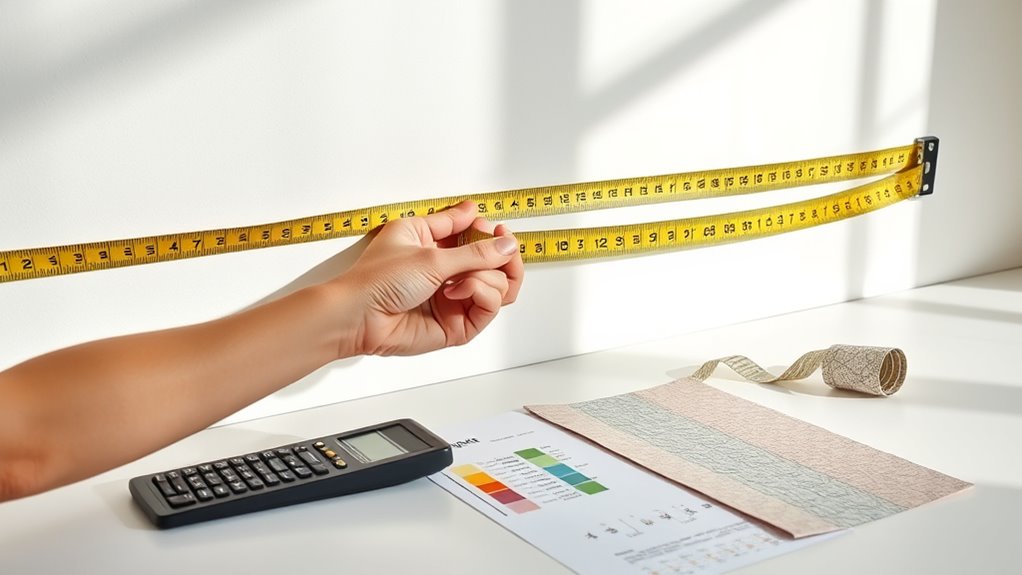
Since pattern repeat and match type directly influence how much wallpaper you’ll need, it’s essential to understand their impact before purchasing. The pattern match determines how wallpaper strips align, affecting waste and quantity. A match type can be straight, offset, or random, each requiring different calculations. For example, an offset match often involves a repeat offset that shifts the pattern, requiring extra length for proper alignment. Here’s a quick overview:
| Pattern Match | Repeat Offset | Impact on Waste |
|---|---|---|
| Straight | No offset | Minimal waste |
| Offset | Half or full repeat | Moderate waste |
| Random | No pattern match | Less predictable waste |
Knowing your pattern repeat and match type helps you order the right amount, reducing waste and ensuring seamless pattern continuity. Considering tape measure accuracy can also help ensure precise calculations for your wallpaper project. Additionally, understanding pattern repeat measurements can prevent costly mistakes during installation. Proper measurement techniques and familiarity with match type nuances are key to a successful wallpaper application. Being aware of manufacturers’ specifications can further refine your estimates and avoid overbuying.
Estimating Total Wallpaper Needed
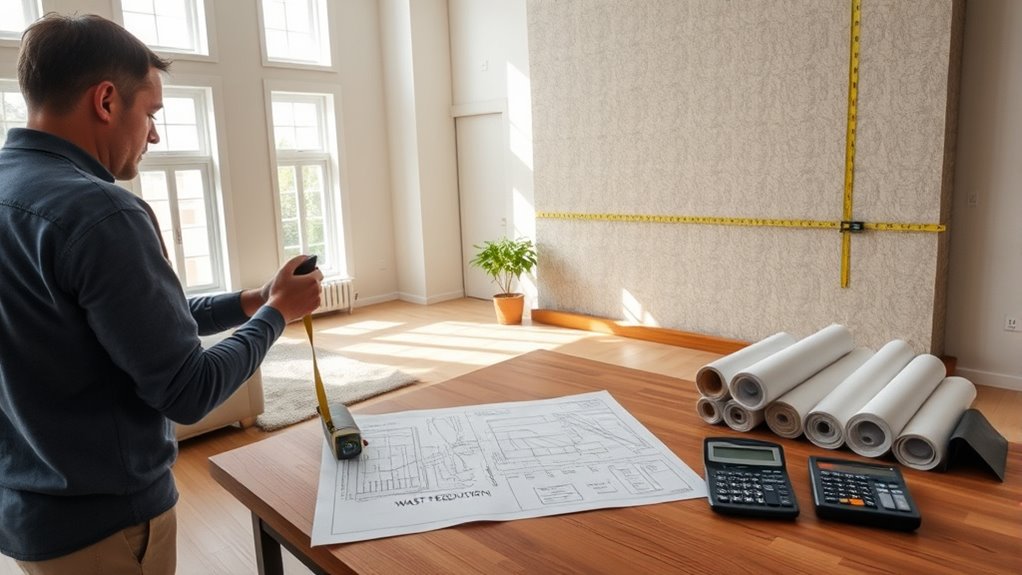
To estimate how much wallpaper you’ll need, start by calculating the total wall area you want to cover. Remember to include all walls and subtract door and window spaces. Don’t forget to account for pattern repeats, which can increase the amount of wallpaper required. Additionally, consider waste and overlaps during installation to ensure you have enough material for cuts and adjustments. It’s also important to understand cookie categories as they can influence how you manage online browsing preferences related to your project planning. Being aware of skin types can also help you choose the right type of wallpaper that accommodates sensitive or specific skin needs, especially if you are prone to irritation or allergies. Incorporating space maximization strategies can further optimize your wallpaper use by minimizing excess and ensuring a seamless look.
Calculating Wall Area
Estimating the total wallpaper needed starts with calculating the wall area you plan to cover. To do this accurately, measure the height and width of each wall, then multiply to find the square footage. Keep in mind that texture options can affect how much wallpaper you need, especially if the surface has a lot of texture or irregularities. Proper wall surface preparation ensures a smooth application and can minimize waste. Before measuring, remove any obstacles, fill holes, and clean the surface thoroughly. Consider the pattern repeat, which may influence how many extra rolls you need. Remember, accurate measurements and preparation are key to estimating wallpaper requirements precisely and avoiding costly mistakes. Additionally, understanding wall surface preparation can help ensure better adhesion and a more professional finish. Implementing a proper surface treatment can further improve longevity and appearance of the wallpaper. Being aware of celebrity lifestyle insights can also inspire stylish and personalized decor choices that complement your new wallpaper.
Accounting for Pattern Repeat
Pattern repeats can considerably impact how much wallpaper you need because they determine how tiles align and match across strips. When estimating wallpaper for your decor pattern or wallpaper style, you must account for the pattern repeat length. Larger repeats often require extra wallpaper to ensure the pattern aligns correctly, reducing waste and the need for reordering. Measure the pattern repeat from tile to tile, then add this length to your wall height to find the amount of extra wallpaper needed per strip. This adjustment is especially important for intricate or bold designs, where mismatched patterns can stand out. Additionally, understanding pattern matching techniques can help you plan more accurately and minimize waste. By factoring in pattern repeats, you’ll get a more accurate estimate of the total wallpaper needed, helping you avoid shortages or excess rolls.
Accounting for Waste and Extra Material
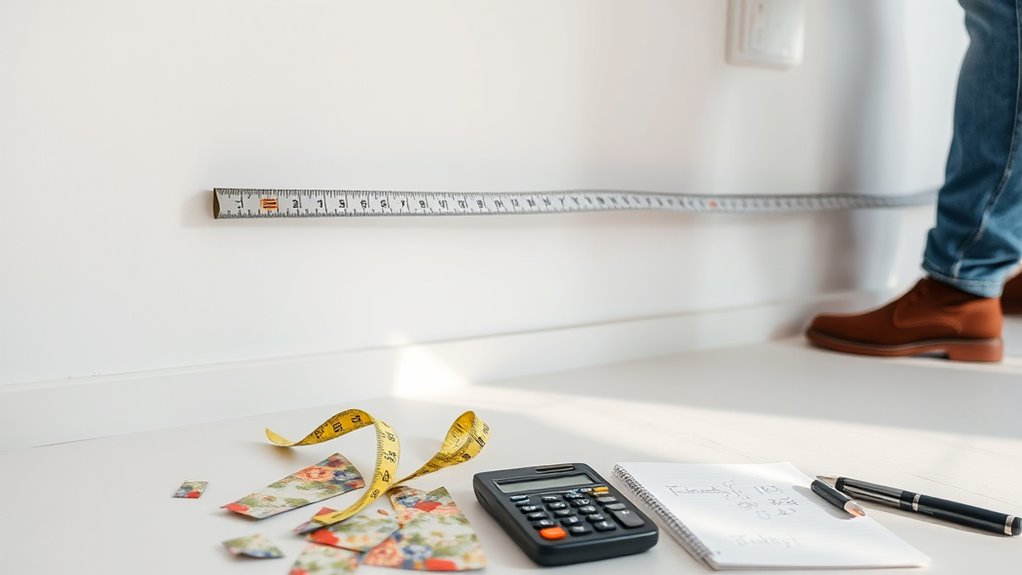
When estimating how much wallpaper to buy, you need to account for extra length to cover pattern repeats and avoid shortages. Pattern repeats can increase your material needs, so understanding how to match them is vital. Additionally, managing waste during installation helps make certain you don’t run out of material or end up with too much leftover. Incorporating safety considerations ensures the use of non-toxic materials and proper handling during installation. Proper planning can also mitigate issues related to paint sprayer maintenance, ensuring your tools stay in optimal condition throughout your project.
Estimating Extra Length
To make certain you have enough wallpaper to complete your project without shortages, it’s crucial to account for extra length when measuring. This ensures you can handle mistakes, pattern matching, and adjustments for decorating styles or historical wallpaper trends. Estimating extra length helps prevent costly delays and reordering.
Consider these key factors:
- Add 10-15% to your total measurement to cover waste and pattern matching.
- Adjust extra length based on the complexity of your decorating style—more intricate designs need additional material.
- Remember, historical wallpaper trends often feature longer, continuous designs, requiring extra length for seamless pattern alignment.
Accounting for Pattern Repeat
Have you considered how the pattern repeat impacts your wallpaper needs? Pattern alignment is key to ensuring your design flows seamlessly, especially with repeat matching. The more frequent the pattern repeat, the more extra wallpaper you’ll need to match patterns across strips. To account for this, measure the pattern repeat and add it to each strip’s length, ensuring enough material for accurate alignment. When calculating total wallpaper, include extra for repeat matching to prevent misaligned designs and waste. Remember, ignoring pattern repeat can lead to shortages or mismatched patterns, increasing costs and time. By understanding how pattern alignment influences your material calculation, you’ll purchase sufficient wallpaper and achieve a professional, cohesive look. Properly accounting for pattern repeat saves you effort, money, and frustration during installation.
Managing Material Waste
Managing material waste is essential to guarantee you have enough wallpaper without overspending. Properly accounting for waste helps you avoid costly shortages and reduces unnecessary expenses. It also minimizes the environmental impact by reducing excess wallpaper disposal. To manage waste effectively, consider these tips:
- Calculate extra material allowance based on pattern matching and room measurements
- Reuse leftover wallpaper for small projects or repairs instead of disposal
- Properly dispose of wallpaper to reduce environmental impact and avoid landfill buildup
Tips for Purchasing and Handling Wallpaper
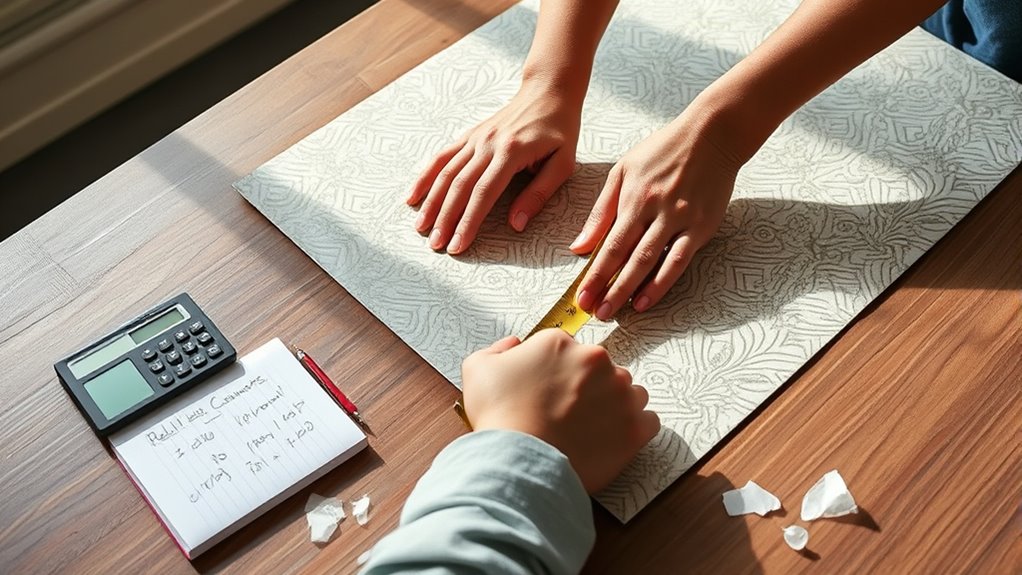
When purchasing wallpaper, taking careful measurements and checking the pattern repeat is crucial to guarantee a seamless look. Measure your walls accurately and buy extra wallpaper to account for pattern matching and waste. Always read the manufacturer’s instructions on wallpaper adhesives, as different types may require specific application methods. Handling the wallpaper properly during installation helps prevent tears and misalignment. Keep removal techniques in mind; choosing wallpapers that are easier to strip can save time and effort later. Store unused wallpaper in a cool, dry place, and keep the rolls upright to prevent damage. Proper handling from the start reduces waste and makes future removal simpler. By being precise and prepared, you ensure a smooth process and a beautiful finished look.
Frequently Asked Questions
How Do I Measure Irregularly Shaped or Curved Walls?
To measure irregularly shaped or curved walls, you should start by accurately capturing irregular wall measurements with a flexible tape measure, following the curves as closely as possible. For curved wall calculations, use a string to trace the curve and then measure the string’s length with a ruler or tape. This method guarantees you get precise measurements for irregular wall measurements and curved wall calculations, helping you order the right amount of wallpaper.
What Is the Best Way to Handle Pattern Matching Across Multiple Rolls?
Ever notice how seamless pattern matching can transform a room? To achieve perfect pattern alignment across multiple rolls, always start by matching the pattern from the first roll’s edge and mark it clearly. When hanging subsequent rolls, carefully align the pattern to the previous edge, paying close attention to roll matching. This precise approach guarantees your wallpaper flows beautifully, creating a professional, cohesive look.
How Do I Calculate Waste When Dealing With Textured or Embossed Wallpaper?
When calculating waste for textured or embossed wallpaper, you need to factor in texture considerations and the complexity of embossed pattern matching. Measure the total wall area and add an extra 10-15% to account for pattern matching and matching textures across seams. For intricate embossing, consider additional waste to guarantee seamless alignment. Always review manufacturer guidelines for specific recommendations related to textured wallpaper to minimize waste and ensure a professional finish.
Are There Specific Tools Recommended for Measuring High or Hard-To-Reach Areas?
When measuring hard-to-reach areas, you should use measuring tools like telescoping poles, extendable rulers, or laser distance meters. These tools help you access high or tricky spots safely and accurately. A laser distance meter especially offers quick, precise measurements without the need for ladders. Always make certain your measuring tools are in good condition and calibrated for the best results. This way, you get accurate measurements even in the most challenging spaces.
How Does Wallpaper Type Affect the Amount of Waste I Should Account For?
Think of wallpaper as a versatile traveler—some are sturdy explorers, others delicate adventurers. Durable wallpaper typically needs less waste, while fragile types, like textured or thin papers, require extra for matching patterns and tears. Consider adhesive requirements too; stronger adhesives might demand more prep and waste. So, choose wisely, accounting for each wallpaper’s durability and adhesive needs, to avoid surprises and minimize waste in your project.
Conclusion
By mastering these measurements and calculations, you become the artist of your space, turning blank walls into a canvas of beauty. Think of each roll as a brushstroke, carefully planned to fit perfectly. With precise planning and a touch of patience, you’ll transform your room into a masterpiece without a stroke of waste. Remember, the right measurements are the key to unfastening a flawless wallpaper installation—your walls deserve nothing less than perfection.