When choosing between cotton rag and alpha cellulose mat boards, you should consider durability and archival quality. Cotton rag offers a naturally acid-free, sturdy surface that resists deterioration, making it ideal for long-term preservation. Alpha cellulose boards are lighter and more budget-friendly but may require verification to confirm they’re truly archival. Understanding these differences helps you pick the best material for protecting and displaying your artwork—stay with us to explore this further.
Key Takeaways
- Cotton rag is naturally acid-free, offering superior archival quality and long-term preservation for mat boards.
- Alpha cellulose boards are made from refined wood pulp and may require verification to confirm archival status.
- Cotton rag provides a dense, durable, and aesthetically refined surface ideal for high-quality framing.
- Alpha cellulose mats are lightweight, cost-effective, and easier to cut, suitable for versatile framing needs.
- For optimal preservation, prioritize high-quality, acid-free cotton rag over general alpha cellulose unless specifically labeled archival.
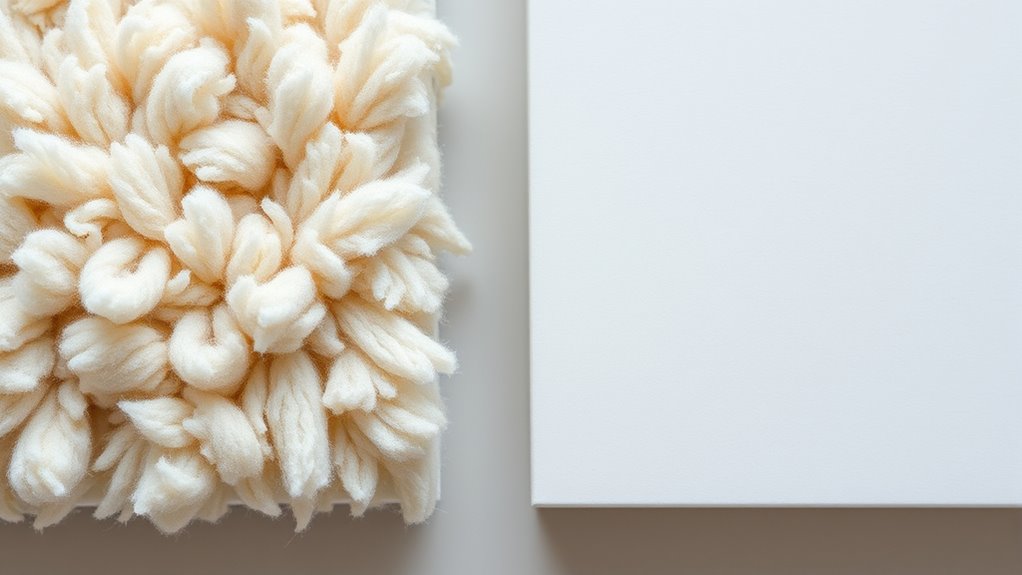
Have you ever wondered what makes a mat board both sturdy and attractive? The answer lies in the materials used and how they’re crafted. When selecting a mat board, it’s essential to consider its ability to protect and preserve your artwork or photographs over time. That’s where acid free preservation and archival quality come into play. These features ensure that your mat board won’t degrade or discolor, which is vital for long-term preservation. Choosing a board made from high-quality materials means you’re investing in a product that maintains its appearance and protects your pieces for years to come.
Two common types of mat board materials are cotton rag and alpha cellulose. Cotton rag mat boards are crafted from cotton fibers, which naturally possess a neutral pH and are inherently acid free. This makes them ideal for archival quality framing, especially for valuable or delicate items. Cotton rag provides a dense, sturdy structure that resists warping and deterioration over time. The acid free preservation qualities of cotton rag mean it won’t introduce acids or lignins that could damage your artwork. Because of its natural composition, cotton rag is often considered the gold standard in archival framing, offering excellent longevity and stability. It’s also appreciated for its refined aesthetic, providing a smooth, matte surface that enhances the visual appeal of your display.
Cotton rag mat boards offer superior durability, a refined matte finish, and long-term archival protection for valuable artwork.
In contrast, alpha cellulose boards are made from wood pulp that has been highly refined to remove most of the lignin and other impurities. While they can be manufactured to be acid free, not all alpha cellulose boards automatically qualify as archival quality. It’s important to check if they’re specifically labeled as acid free preservation, as this indicates they’ve undergone additional processing to ensure longevity and protection. Alpha cellulose mats tend to be less expensive than cotton rag but still offer good durability if they’re of high quality. They’re lightweight and easy to cut, making them popular for a range of framing projects. However, they may not have the same longevity as cotton rag boards if not properly processed, so verifying their archival quality is essential.
Ultimately, your choice depends on your priorities—whether you’re looking for premium archival quality or a more budget-friendly option. Both cotton rag and alpha cellulose can be suitable, but only if they meet strict standards for acid free preservation. By selecting a mat board that’s designed with these qualities, you’re ensuring your artwork stays vibrant and intact, protected from the acids and lignins that cause deterioration. Understanding material composition is crucial when choosing the best mat board for your framing needs. When you prioritize these features, you’re making a smart investment in the longevity and beauty of your framed pieces.

Lineco Cotton Rag Museum Mounting Boards – Pkg of 25, White, 16" x 20"
- Product Name: Lineco Cotton Rag Mounting Boards
- Package Quantity: Pack of 25
- Color: White
As an affiliate, we earn on qualifying purchases.
As an affiliate, we earn on qualifying purchases.
Frequently Asked Questions
Which Mat Board Type Is More Environmentally Sustainable?
You’ll find cotton rag mat boards more environmentally sustainable because they often come from eco-friendly sourcing and are biodegradable. Plus, they typically have better recycling options since they’re made from natural fibers. Alpha cellulose boards may be less eco-friendly, especially if produced with chemical treatments. By choosing cotton rag, you’re supporting sustainable practices and reducing environmental impact, making it the greener choice for your framing needs.
How Does Acid-Free Quality Affect Artwork Preservation?
When you choose acid-free mat boards, you’re enhancing your artwork’s longevity by preventing material degradation caused by acids. Acid-free quality guarantees your piece stays vibrant and intact over time, reducing the risk of discoloration and deterioration. This protective feature is essential for preserving your artwork’s original appearance and value, giving you peace of mind that your work will remain in pristine condition for years to come.
Can Cotton Rag Mats Be Reused or Recycled Easily?
Cotton rag mats have good reuse potential, but recycling options are limited since many recycling centers don’t accept them due to their materials. You can reuse them by repurposing for new framing projects or crafts. To extend their life, consider donating them to art programs or organizations that can reuse or recycle them. Keep in mind, their durability makes them suitable for multiple uses, but recycling options remain somewhat restricted.
What Are the Cost Differences Between Cotton Rag and Alpha Cellulose Mats?
You’ll find that cotton rag mats tend to be more expensive than alpha cellulose mats due to their high-quality, durable material and premium pricing. In a cost comparison, material pricing for cotton rag is markedly higher, often reflecting its superior archival qualities and craftsmanship. Alpha cellulose mats are more budget-friendly, making them a popular choice for cost-conscious framing, but they may not offer the same longevity or aesthetic appeal.
Are There Specific Artworks Better Suited for One Material Over the Other?
Think of your artwork as a story waiting to unfold; choosing the right mat material is like selecting the perfect frame. Cotton rag mats suit delicate, archival pieces, enhancing longevity and subtle textures, making them ideal for fine art or watercolor works. Alpha cellulose mats work well for everyday displays, offering durability and clean aesthetic considerations. Your artwork’s style and intended display environment guide your best material choice, ensuring it speaks beautifully.

Cutplex Matboard & Foamboard Kit 16" x 20" for 11" x 14" Artwork – 5 Pack – 4-Ply Alpha-Cellulose Mat Boards – Acid-Free Foam Board Backing – Photo Matting, Framing & Art Displays – Warm White
- Complete framing kit: Includes 5 mat boards and foam backings
- Conservation-grade materials: Made from 4-ply alpha-cellulose for preservation
- Acid-free foam backing: Supports photos and artwork securely
As an affiliate, we earn on qualifying purchases.
As an affiliate, we earn on qualifying purchases.
Conclusion
When choosing between cotton rag and alpha cellulose mat board, consider your project’s longevity and display needs. For instance, a professional artist framing a valuable watercolor might opt for cotton rag for its durability and acid-free qualities, ensuring the artwork remains pristine for decades. In contrast, a casual hobbyist might prefer alpha cellulose for its affordability. Selecting the right material depends on your specific requirements, balancing conservation with budget to achieve the best presentation.

Somime 25 Pack Backing Boards, 11×14 Uncut White Mats Matboards
- Package Includes: 25 uncut white backing boards
- Durable Material: Thick, sturdy cardboard with 4-ply thickness
- Size Compatibility: Fits 11×14 frames, customizable
As an affiliate, we earn on qualifying purchases.
As an affiliate, we earn on qualifying purchases.
Lineco Cotton Rag Museum Mounting Boards – Pkg of 25, White, 16" x 20"
- Product Name: Lineco Cotton Rag Mounting Boards
- Package Quantity: Pack of 25
- Color: White
As an affiliate, we earn on qualifying purchases.
As an affiliate, we earn on qualifying purchases.