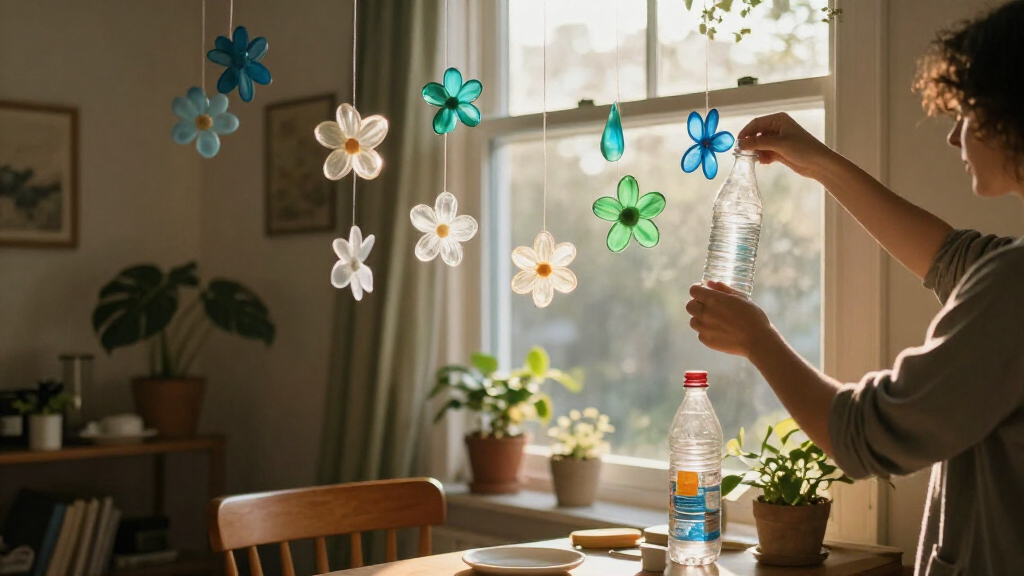
TL;DR
The Peabody Essex Museum’s YouTube channel demonstrates a craft project that transforms painted plastic bottles into a hanging sculpture inspired by colorful glass chandeliers. The five ideas below adapt the basic method through different color palettes, bottle shapes and added materials; the result is decorative art, not a certified light fixture.
The Peabody Essex Museum’s YouTube channel demonstrates a way to turn empty plastic bottles into colorful hanging art, using paint, scissors and cord to create a spiral, chandelier-like sculpture. The project offers a low-cost craft idea for reusing household packaging, though the finished piece is decorative and would need appropriate precautions if fairy lights are added.

Get furniture and decor delivered free with Prime
- Fast, free delivery on millions of items
- Prime Video, Amazon Music and more included
- Member-only deals all year
In the Peabody Essex Museum video, the basic method starts with removing bottle labels and painting the plastic with colors that adhere to it. After the paint dries, the maker cuts off each bottle’s base and cuts the remaining body into a spiral, stopping near the last ridge before the neck narrows. Each cut bottle becomes a long strip that curls outward, similar in shape to a plastic spring.
The video shows the sculpture being assembled by threading strong cord through the bottle necks and nesting the tops together. The curled plastic spreads around the joined necks, creating a layered hanging form. Tying the cord into a loop provides a way to suspend the artwork. The demonstrated project uses a rainbow palette, but the colors and number of bottles can be varied.
Building on the video’s basic method, the source article suggests five ways to personalize the piece: use a single-color scheme, choose a warm or cool palette, arrange colors in a rainbow sequence, vary bottle sizes for a less uniform silhouette, or add other clear plastic packaging such as straws, takeout cups and lids. The video or accompanying article also suggests threading fairy lights through the sculpture for a glow. That changes the project’s use and calls for care: neither source establishes that the plastic sculpture is rated or safe as a permanent electrical fixture.
Turn empty bottles into hanging art
A Peabody Essex Museum craft shows how painted plastic bottles can become a colorful, chandelier-like sculpture. Personalize the look with color, shape and added materials.
Build the sculpture
Paint dry bottles, cut each body into a spiral, then thread the necks together with strong cord.
Remove labels and use paint that adheres to plastic. Let it dry fully.
Remove each base and cut the body into a strip, stopping near the final ridge below the neck.
Nest the bottle tops, thread strong cord through the necks and tie a hanging loop.
Choose your look
Color and scale change the sculpture’s silhouette and mood.
One shade
Use a single color for a coordinated hanging display.
Warm or cool
Choose a warm or cool palette, or arrange colors in a rainbow sequence.
Vary the bottles
Mix bottle sizes for a less uniform outline.
Add clear plastics
Try straws, takeout cups or lids; their shapes may need assembly adjustments.
Plan a secure display
Check the finished piece before placing it overhead.
- Use cord and a support suited to your design’s weight.
- Test the loop, knots and stability at a low height.
- Use care with scissors; children need adult supervision.
Keep it decorative
The sculpture is painted plastic, not a tested lighting product.
A Second Use for Plastic Bottles
The project, as demonstrated by the Peabody Essex Museum, gives readers a practical way to turn empty bottles into a visible decoration rather than sending them straight to the recycling bin. It uses accessible materials and a repeatable cutting pattern, so the main creative choices are color, scale and how the pieces are arranged. The result can suit a playroom, craft area or covered display space, subject to safe hanging and the suitability of the materials for that location.
The idea is also a reminder that reuse crafts have limits. Turning packaging into art does not replace recycling where that service is available, and the museum video and accompanying source article provide no data on environmental savings. Their clear benefit is a hands-on project that extends the decorative use of selected plastic items. Adding lights may make the piece more eye-catching, but it introduces heat and electrical considerations not addressed by the basic bottle-and-cord instructions.
Products Worth Considering

Ring Wired Doorbell Plus (2nd Gen) and Chime Plus Bundle, Nickel Silver and White

Bose SoundLink Max Portable Bluetooth Speaker, IP67 Waterproof, Black

Roborock Q7 M5+ Robot Vacuum and Mop with LiDAR Navigation and Self-Empty Dock
As an affiliate, we earn on qualifying purchases.
How the Bottle Sculpture Works
The Peabody Essex Museum’s video connects the sculpture’s look with the bold, multicolored blown-glass chandeliers associated with artist Dale Chihuly. The project does not use glass or reproduce a glass-making process: its effect comes from painted plastic spirals that fan out from the joined bottle necks. The museum presents the result as an accessible craft interpretation of dramatic hanging art.
Material choice affects the look. The video’s instructions center on plastic bottles, while the accompanying source article suggests straws, takeout cups and lids, and larger juice containers. The provided directions do not explain how every shape should be cut or attached, so makers may need to adapt the assembly. The source recommends paint that adheres to plastic, with pieces allowed to dry before cutting and stringing.
Safety and Results to Check
The Peabody Essex Museum video and the accompanying source article do not specify bottle dimensions, cord strength, a maximum sculpture weight or a tested hanging method. Those details affect whether the finished piece can be securely suspended, so makers should check the weight and stability of their own design and use a suitable support. The source recommends paint that adheres to plastic but does not identify a specific product as necessary.
The suggestion to add fairy lights does not include information about heat output, electrical ratings or whether the lights are suitable for contact with plastic. The available material does not establish whether the demonstration uses lights or whether any version of the sculpture has been tested as a lighting product. Treat the project as decorative art unless using a light strand according to its manufacturer’s directions, keeping it from damage and away from materials that may heat or ignite. Do not present the bottle sculpture itself as a wired fixture.
Plan a Safe Hanging Display
Following the materials described in the Peabody Essex Museum video, gather clean, dry bottles, paint made for plastic, scissors and cord strong enough for the planned piece. Choose a color scheme and decide whether to use bottles of similar sizes or mix shapes. Remove labels, paint the surfaces and let them dry fully before cutting. Use care with scissors, make cuts slowly, and keep the cutting area clear; children should have adult supervision when using sharp tools.
After threading the bottle necks together, tie and test the hanging loop at a low height before placing the artwork overhead. Check that the cord, knots and support hold the sculpture without slipping. If adding fairy lights, follow the light manufacturer’s instructions and inspect the strand for damage; the museum’s craft instructions do not confirm that the sculpture is suitable for use as a fixture. No further release or museum guidance is specified in the available information.
Source: rss
Key Questions
What materials are needed for the basic bottle sculpture?
The Peabody Essex Museum video describes a project using plastic bottles, paint suited to plastic, scissors and strong cord. The bottles should be dry, and the paint should dry before the plastic is cut and assembled.
How do you make the spiral pieces?
As shown in the museum video, remove each bottle’s base, then cut the bottle body into a spiral, stopping near the final ridge below the neck. The cut strip curls outward when the pieces are joined.
Can other plastic packaging be used?
The accompanying source article suggests trying clear plastic straws, takeout cups and lids, or larger juice containers. It does not provide a separate cutting or joining method for each item, so their shapes may require adjustments.
Can the sculpture be used as a light fixture?
The project description suggests adding a strand of fairy lights, but the museum video and accompanying source article do not establish that the sculpture is a tested or certified light fixture. Follow the lights’ instructions, check for damage and keep the strand from unsafe contact with plastic; treat the sculpture as decorative art.
Source: hunker.com