
TL;DR

Get furniture and decor delivered free with Prime
- Fast, free delivery on millions of items
- Prime Video, Amazon Music and more included
- Member-only deals all year
A Hunker home-improvement report describes using a razor scraper to remove paint from French-door glass after painting, instead of masking each pane with painter’s tape. The method may save preparation time, but it depends on using a sharp blade carefully and scraping before paint hardens too much.
A Hunker home-improvement report recommends using a razor scraper to clear paint from French-door glass after the paint dries, rather than applying painter’s tape around every pane before painting. The approach could reduce masking work, but the report says timing and careful blade handling matter to avoid scratching or cracking the glass.
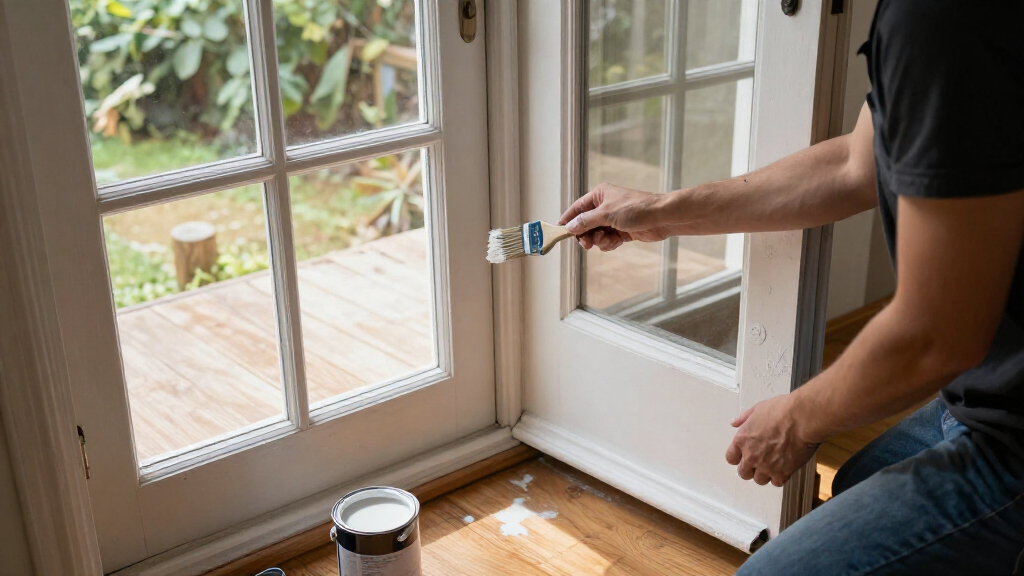
French doors typically have several panes separated by narrow muntin bars, creating many edges to mask before painting. Hunker says painter’s tape can take time to apply and may not prevent all paint from seeping beneath it. The alternative described is to paint the door and then scrape unwanted paint from the glass once it has dried.
The report says many common house paints and primers do not adhere strongly to smooth glass, which can make dried paint easier to remove. It recommends scraping after the paint has dried but generally within 24 hours, because paint may become harder to lift as it cures. The supplied report does not specify a paint brand, door material, or controlled test comparing the method with masking.
For removal, Hunker advises holding a sharp scraper at a 45-degree angle or shallower and gently pushing the blade against the paint, rather than bearing down on the glass. Once the paint lifts, the blade can be guided toward the point where the glass meets the frame or muntin to remove the residue. The report cautions that a dull blade can make the job harder and increase the risk of injury or damage; it also recommends cleaning the glass afterward to remove any haze.
Less Masking, More Careful Scraping
The method addresses a common source of effort in repainting French doors: protecting a large number of small glass edges. If paint comes away cleanly, scraping after painting may mean less time applying and removing tape, particularly on doors with many panes. Hunker also presents it as a possible lower-cost alternative to some masking products, though it provides no price comparison or measured time savings.
The trade-off is that the work shifts from preparation to cleanup. The recommendation is not a guarantee of damage-free results: the scraper must be kept at a shallow angle, and pressure on the glass should be limited. Readers should follow the scraper and paint manufacturers’ instructions and use appropriate eye and hand protection. Anyone unsure whether a pane can be scraped safely should test a small, inconspicuous area first or seek professional advice.
Products Worth Considering

eufy C28 Robot Vacuum Cleaner and Mop for Pet Hair, 15,000 Pa

Dyson W1 PencilWash Wet and Dry Cleaner with Dok Cordless Wet Floor Cleaner

Roborock Q7 M5+ Robot Vacuum and Mop
As an affiliate, we earn on qualifying purchases.
Why Glass Can Release Paint
Hunker’s rationale is based on the difference between a smooth glass surface and the surrounding door frame. The report says common paints and primers tend not to bond as firmly to glass, allowing dried spills to be lifted with a blade. That does not mean paint will always peel away in one piece: results can vary with the coating, surface condition, and how long the paint has dried.
The report contrasts scraping with painter’s tape and liquid masking products. Tape requires placement along pane edges, while liquid masking may still need to be cut or removed with a blade. Hunker says liquid masking could potentially damage the wood frame, but provides no test findings or detailed examples. It also mentions a longer scraper blade as an option for larger panes, which may cover more area per pass.
Results Depend on Paint and Glass
The report does not provide comparative testing showing how much time the scraping method saves, how often paint lifts cleanly, or how its cost compares with tape. It also does not establish that every type of glass, coating, or door finish is suitable for razor scraping. Those details matter because paint formulas and surface conditions differ.
The suggested 24-hour window is presented as general guidance, not a fixed rule for every product or climate. The report does not specify drying conditions, and it does not address manufacturer instructions for particular paints. It is also unclear how the approach performs on textured, coated, or already damaged glass. Readers should check product guidance and avoid scraping a surface if the blade could cause damage.
Check the Coating Before Scraping
For anyone considering the method, the practical next step is to confirm the paint’s drying guidance and use a clean, sharp scraper. After painting, test the blade gently on a small area of glass, keeping it at a shallow angle and away from pressure that could damage the pane. Stop if the paint resists or the glass appears vulnerable, rather than forcing the blade.
Hunker’s report does not announce a product test, follow-up, or change to painting guidance. The recommendation remains a home-improvement technique, and its suitability depends on the specific door, glass, and paint. A careful test and the product makers’ instructions are the main checks before applying it across all the panes.
Key Questions
What is the suggested alternative to painter’s tape?
Hunker recommends painting the door and then removing paint from the glass with a razor scraper after it dries, rather than masking every pane in advance.
When should paint be scraped from the glass?
The report says to wait until the paint has dried, but generally not longer than 24 hours, because paint may be more difficult to remove as it hardens. Follow the paint maker’s drying instructions, which can vary.
How should the scraper be held?
Hunker advises holding a sharp blade at a 45-degree angle or shallower and pushing gently against the paint. Avoid pressing down into the glass, which could scratch or crack it.
Will the method work on every French door?
The report does not establish that it works on every type of glass, paint, or door. Test carefully in a small area, check product instructions, and do not force the blade if the paint or glass does not respond safely.
Source: hunker.com