TL;DR

Get furniture and decor delivered free with Prime
- Fast, free delivery on millions of items
- Prime Video, Amazon Music and more included
- Member-only deals all year
An Ideal Home report identifies three kitchen lighting directions for autumn and winter: sculptural statement fixtures, combinations of materials and portable rechargeable task lamps. The suggestions are design guidance, not evidence of a measured industry-wide trend or a change in building standards.
Ideal Home has highlighted three kitchen lighting ideas for autumn and winter: sculptural pendant fixtures, lighting that combines different materials, and portable rechargeable task lamps. The recommendations address the shift to darker evenings and offer readers ways to add usable light and a warmer atmosphere without relying only on a central ceiling fixture.
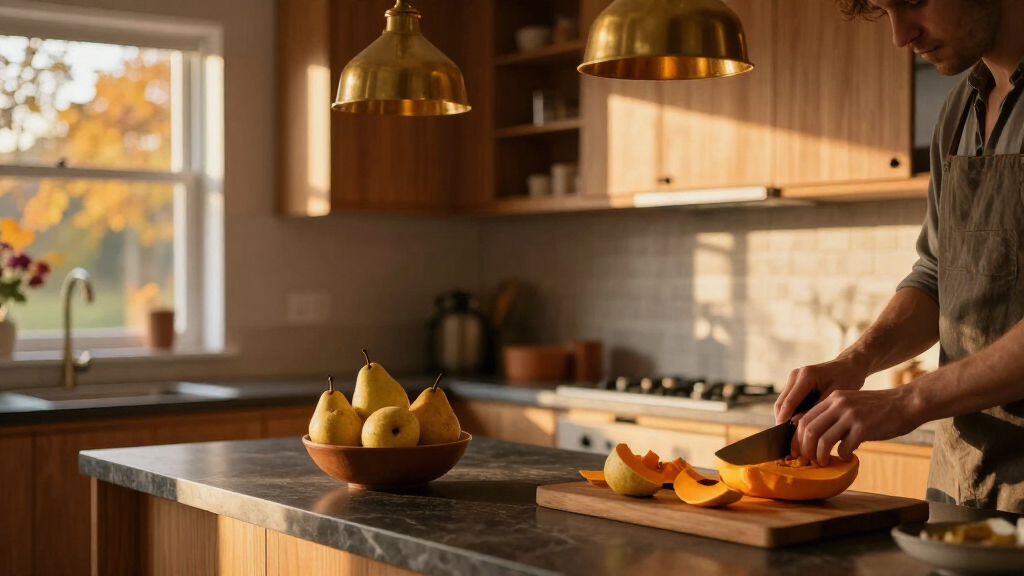
The first idea is to treat a pendant or chandelier as a decorative focal point, particularly above a kitchen island. Lighting designer Tom Raffield says a sculptural fixture can add personality to a room designed around practical tasks. He also points to the island as a place used for everyday activities, from breakfast to evening meals.
The report’s second suggestion is to mix materials rather than coordinate every finish. It describes brass as a popular recent choice, while recommending combinations that can include warm wood, marble, glass and metal. Raffield says contrast can give a room a layered appearance, and suggests repeating materials in smaller accessories such as bowls or coasters.
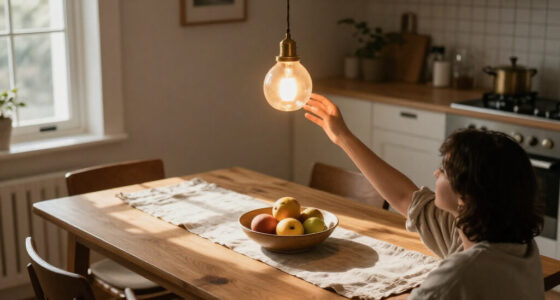
For more adjustable lighting, the report recommends rechargeable portable lamps. Massimo Buster Minale, founder and creative director of Buster + Punch, says movable lights can be shifted between an island, dining area and worktop. The report includes examples of rechargeable lamps with ceramic, lacquer and rattan details, but does not compare their prices, brightness, battery life or performance.
Lighting for Darker Kitchen Evenings
Kitchen lighting has to serve both practical and atmospheric purposes. As daylight hours shorten, a single bright ceiling light may not suit every activity or mood, especially in an open-plan room that also functions as a dining or social space. The ideas in the report offer different ways to layer light: a pendant can define a focal area, while a portable lamp can be repositioned as needs change.
These are design suggestions rather than guarantees of better visibility or energy savings. For readers planning changes, the distinction matters: a decorative fixture may contribute to a room’s look, but it should not be assumed to provide sufficient light for food preparation. The report does not offer technical guidance on illumination levels or electrical installation.
Products Worth Considering

Philips Hue Festavia 65-Foot Smart LED String Lights, 250 Color-Changing Mini LEDs

Sonos Play Portable Wi-Fi and Bluetooth Speaker, White

Philips Hue Bridge Pro Smart Lighting Hub
As an affiliate, we earn on qualifying purchases.
Three Approaches in the Report
The Ideal Home article frames its recommendations around autumn and winter, when dark evenings can make additional kitchen lighting more appealing. It also looks ahead to 2027 and describes the suggestions as ideas that may have staying power. The material provided does not establish that these styles are independently measured market trends or widely adopted by homeowners.
The three approaches range from fixed decorative lighting to movable lamps. Sculptural pendants and chandeliers are intended to draw attention to a particular part of the kitchen; mixed finishes bring variation to a scheme; and portable rechargeable lights allow users to change where light falls. The report’s product examples illustrate those categories, but are not presented as a comparative test or a complete buying guide.
“Decorative lighting is a great way to add a little personality to a functional space.”
— Tom Raffield, lighting designer
How Broad Are These Trends?
The report does not provide sales figures, consumer research or market data to show how common the three looks are, or whether they are gaining popularity across the industry. Its use of “trends” reflects the article’s editorial framing and design recommendations; no independent trend analysis is included in the supplied material.
It is also unclear how well specific rechargeable lamps will suit individual kitchens. The report gives no measurements for light output, battery runtime, charging time, durability or suitability near cooking areas. Readers should check product specifications and follow manufacturers’ safety instructions before placing lamps near heat, water or food-preparation surfaces.
Choosing Lights for Your Kitchen
The report points readers toward considering how they use their kitchens as the seasons change, rather than treating one fixture as the answer for every task. Those interested in the ideas can compare fixture size, light output, material and placement, and check whether a rechargeable model’s stated battery life and cleaning instructions fit their needs.
Ideal Home’s article does not announce a forthcoming product launch or a formal industry forecast. Any wider adoption of these looks, and how they compare with other seasonal styles, remains to be seen. For fixed electrical work, homeowners should consult a qualified electrician and follow applicable local requirements.
Key Questions
What three kitchen lighting ideas does the report recommend?
It highlights sculptural pendant fixtures, mixing materials in lighting and decor, and using portable rechargeable lamps for task or ambient light.
Where does the report suggest placing a sculptural pendant?
Lighting designer Tom Raffield suggests placing a statement pendant or chandelier above a kitchen island, where it can act as a focal point and light a frequently used area.
Why use a portable rechargeable lamp in a kitchen?
According to Buster + Punch founder Massimo Buster Minale, a portable lamp can be moved between areas such as an island, dining space or worktop. The report does not provide battery-life or brightness comparisons.
Does the report prove these are widespread kitchen trends?
No. It presents them as seasonal design ideas but includes no market data or consumer research showing how widely they have been adopted.
Source: rss